For decades, the Nigeria Police Force has struggled under the heavy weight of public distrust, accusations of brutality, corruption, and institutional decay. To many Nigerians, the police uniform has often symbolised fear as much as protection. But inside the Force Headquarters in Abuja, Vanguard Deputy Crime Editor, Evelyn Usman, reports that a different narrative is now being shaped.
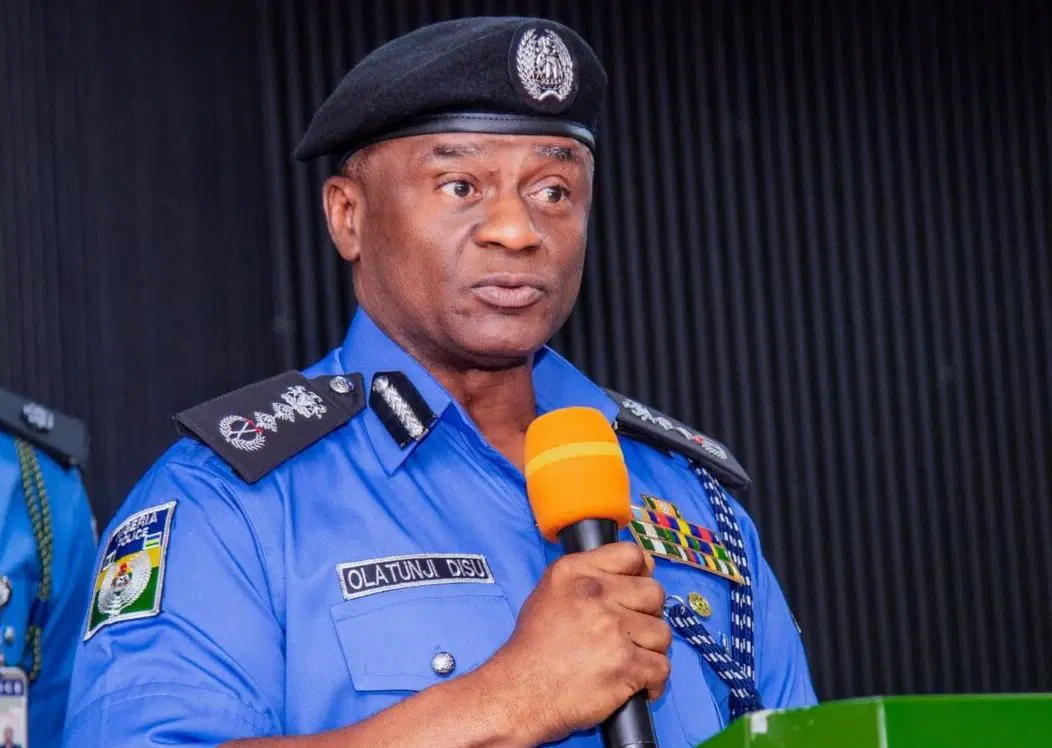
Since assuming office as the 23rd Inspector-General of Police two months ago, IGP Olatunji Disu has launched what appears to be one of the most aggressive attempts in recent years to redefine the operational culture, internal accountability system, and public image of the Nigeria Police Force.
Yet, the task before him is enormous. The Nigeria Police Force is not merely battling criminals; it is also battling years of eroded public confidence, internal indiscipline, welfare crises, and rising demands for professionalism in a rapidly evolving security environment.
*Fighting crime with intelligence, not noise*
At the heart of the current police strategy is a major shift toward intelligence-led policing.
Unlike the old reactive style, often criticised for arriving after damage has been done, the Force under Disu is increasingly focusing on coordinated intelligence gathering, surveillance, and targeted operations.
The results released by the Police for April 2026 paint a picture of a Force attempting to regain operational momentum.
Within one month, police operatives arrested 280 suspects across different parts of the country. A breakdown showed 28 suspected terrorists, 85 kidnapping suspects, 62 armed robbery suspects, 51 murder suspects, and 54 suspected cultists.
In the same operations, 189 kidnapped victims were rescued alive from criminal hideouts, while 140 firearms, 1,074 rounds of ammunition, and 37 stolen vehicles were recovered.
Repatriation of Chinese fugitive, financial crime breakthroughs
Behind the statistics lies a clear strategy: restore public confidence by improving operational visibility and effectiveness.
The Force’s renewed focus on anti-kidnapping operations, financial crimes, and transnational criminal networks also signals an effort to modernise policing beyond conventional street patrols.
This was evident in the Police Special Fraud Unit’s exposure of a ¦ 713.9 million banking fraud syndicate and the INTERPOL-led arrest and repatriation of a Chinese fugitive linked to a $245 million Ponzi scheme in the month of April.
For a police institution often criticised as outdated and reactive, these operations project a Force attempting to become smarter, faster, and more technologically driven, a senior police officer said.
Killing in Delta and the test of credibility
But perhaps the defining moment of the IGP Disu leadership so far did not come from a successful operation. It came from a killing.
When Mr Mene Ogidi was shot dead by a policeman in Effurun, Delta State, two weeks ago, many Nigerians feared the case would follow a familiar pattern: public outrage, official silence, and eventual disappearance from public attention. That expectation was shaped by years of some unresolved allegations involving police brutality and extrajudicial killings.
Instead, the response from the police hierarchy came swiftly. The officers involved were immediately withdrawn from Delta State and transferred to Abuja on the order of IGP Disu, where internal disciplinary proceedings began without delay.
The findings were damning. According to the Force Disciplinary Committee, ASP Nuhu Usman acted “in gross violation of Force Order 237 regulating the use of firearms.” The committee recommended dismissal and prosecution of the officers involved, recommendations which were approved by the Inspector-General and forwarded to the Police Service Commission.
For many observers, the significance went beyond the punishment itself. The police leadership publicly acknowledged wrongdoing. Disu described the shooting as unlawful, unprofessional, and inconsistent with the values of the Nigeria Police Force.
In a system where institutional protection has often overshadowed accountability, the handling of the Delta incident appeared, to many Nigerians, to mark an important shift, one aimed at reinforcing the principle that uniforms do not place officers above the law.
Whether this momentum will be sustained remains uncertain, but the message was unmistakable.
Rebuilding trust through transparency
Trust remains one of the toughest challenges facing the current police leadership. Years of abuse allegations, extortion scandals, and strained citizen–police relations have created deep public suspicion toward the institution.
Disu appears aware of this reality. During an emergency conference with Commissioners of Police and journalists at Force Headquarters, the Inspector-General of Police declared transparency and accountability as non-negotiable pillars of his administration.
He stated: “Transparency is the foundation of the new Nigeria Police Force I am committed to building. I have nothing to hide, and neither should any officer under my command.” He added that accountability within the Force would continue to be pursued decisively, particularly in matters relating to misconduct, abuse of office, and violations of professional standards.
Nationwide audit of arms and ammunition
The statement was more than rhetoric. One of the boldest internal reforms announced by the Force was the nationwide audit of police arms and ammunition.
For years, concerns have persisted over missing weapons, weak inventory systems, and allegations that firearms sometimes leak from security formations into criminal hands.
To address this, IGP Disu directed all Commissioners of Police nationwide to immediately commence a comprehensive audit of arms and ammunition within their respective commands and formations.
The exercise is not merely administrative; it is designed to confront one of the Force’s most sensitive institutional weaknesses , internal accountability, prevention of misuse of police assets, and enhancement of operational readiness, according to Disu .
Establishment of the VCRU
The establishment of the Violent Crime Response Unit (VCRU) also reflects this reform direction.
Unlike previous tactical formations often accused of excesses, the VCRU is being designed around intelligence-based deployment. It is structured to enhance the Force’s response to serious and violent crimes.
Speaking during an emergency conference with senior police leadership, including Assistant Inspectors-General and Commissioners of Police at Force Headquarters, Abuja, IGP Disu noted that the unit would operate strictly on intelligence-led deployment, supported by specialised training, human rights compliance, and structured accountability, with Commissioners of Police bearing direct oversight responsibility.
He further directed the CPs to strengthen community policing through regular town hall engagements with traditional rulers, religious leaders, and community groups, while also making their contact details accessible to improve communication and public trust.
Welfare reform and the “forgotten policeman
Beyond operations and discipline, another major pillar of the Disu agenda is welfare.
Inside many police barracks across Nigeria, officers continue to battle poor healthcare, inadequate living conditions, and limited post-service support. For years, welfare discussions within the Force were often overshadowed by operational demands.
The current leadership under IGP Disu appears determined to change that narrative.
Recent engagements with Police Health Maintenance Limited (PHML) have focused on improving medical care for officers, renovating police hospitals, and creating emergency treatment partnerships with tertiary health institutions.
A PHML delegation, which recently paid a courtesy visit to the IGP in Abuja, reaffirmed its commitment to service excellence, highlighting renovations of police hospitals in Akure, Sokoto, Yola, and Lagos.
To further safeguard personnel against the risks of policing, PHML said it had secured agreements with federal tertiary hospitals for immediate, cost-free treatment of gunshot and trauma victims. A partnership with Zenith Healthcare Limited was also announced to provide advanced renal care for officers with chronic conditions.
Particularly striking was the Inspector-General of Police ’s public acknowledgement of retirement and insurance gaps affecting former officers , a rare admission in security institutions.
Disu’s position reflects a growing understanding that officer welfare is directly tied to operational effectiveness. A poorly motivated policeman, security analysts argue, is more vulnerable to compromise, frustration, and misconduct.
Reforming the institution from the classroom
The reform effort is also extending into police education and training. Plans to establish a new Nigeria Police Academy campus in Ogun State, alongside the upgrade of 42 police colleges nationwide, suggest a long-term strategy focused on institutional renewal.
The goal is not merely to produce armed officers, but to develop professionals equipped for modern policing challenges , cybercrime, intelligence operations, forensic investigations, and community engagement.
That shift may prove critical in the years ahead because while arrests and tactical operations may deliver short-term results, sustainable policing reform ultimately depends on institutional culture shaped through training, leadership, and accountability.
The road ahead
Still, the road ahead remains difficult. The Nigeria Police Force continues to grapple with manpower shortages, inadequate logistics and a volatile national security landscape.
Changing such deeply rooted perceptions will require more than speeches, statistics, or policy announcements. It will require consistency.
Questions on many Nigerians lips are : Can the current Police leadership sustain accountability even when influential officers are involved? Can welfare reforms truly reach rank-and-file officers outside major cities? Can tactical efficiency coexist with respect for human rights? These questions will ultimately shape the legacy and long-term impact of the Disu era.
But one reality is becoming increasingly difficult to ignore. Under IGP Olatunji Disu, the Nigeria Police Force appears to be attempting something many Nigerians had almost stopped expecting : reforming itself while still fighting crime. And for an institution burdened by decades of public mistrust, that may prove to be its most demanding undertaking yet.