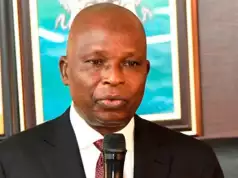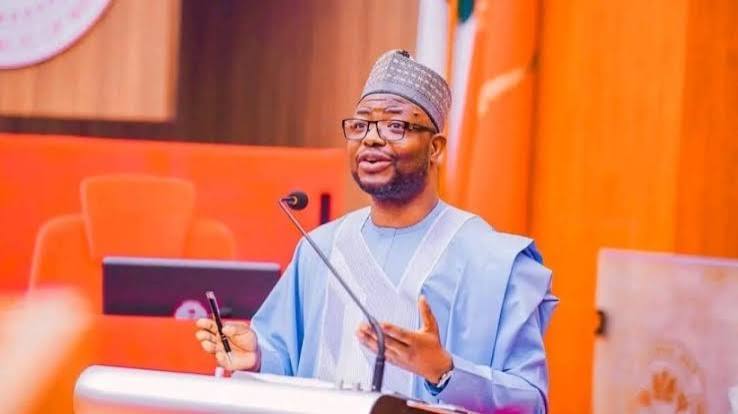
The minister of humanitarian affairs and poverty reduction, Dr. Bernard Doro, announced on Tuesday that the federal government will take complete control of Nigeria’s humanitarian coordination system by January 1, 2027.
Doro made the disclosure while briefing journalists after the opening of the Joint Humanitarian Transition Workshop, co-hosted by the Federal Ministry of Humanitarian Affairs and Poverty Reduction and the United Nations at UN House, Abuja.
“The transition is on, and by 1 January 2027, government will assume full leadership of the transition,” the minister said, describing the transition as a major shift in the country’s aid architecture since the Boko Haram insurgency began in 2009.
The workshop drew major stakeholders to map a six-month roadmap for handing over the coordination of Nigeria’s humanitarian response from the UN system to national institutions.
Doro explained that Nigeria was among eight countries globally identified by the Inter-Agency Standing Committee for what he described as a humanitarian reset, where international organizations are withdrawing from the center of humanitarian coordination and repositioning national governments as the primary actors.
Responding to concerns that the withdrawal of international support could leave millions of Nigeria’s most vulnerable citizens without protection, Doro said Nigerians had nothing to fear.
According to him, “It is Nigeria’s constitutional mandate, the government’s constitutional mandate, to ensure that our people are properly looked after. So we have nothing to worry about; we have nothing to be scared of.”
He said the president had demonstrated the disposition required for the transition.
“President Bola Tinubu has shown a high level of compassion and a high level of care for those vulnerable people in Nigeria.
“The government will continue to lead, will continue to ensure that our constitutional responsibility is taken seriously,” the minister said.
Tuesday’s transition workshop comes amid a global humanitarian financing crisis that has been building since 2024 and reached a breaking point in 2025, when OCHA, the UN’s humanitarian coordination arm, announced a reduction of at least 20 percent in its global program budget following confirmed funding cuts from the United States, Sweden, France, and Japan.
OCHA’s 2025 approved program budget of $426.4m faced a shortfall of at least $75m as major donors either scaled back or exited.
Facing funding cuts, the UN’s 2026 Global Humanitarian Overview sought $23bn for the most urgent needs but warned that much of it would not come.
As of the end of June 2025, less than 17 percent of the $46 billion needed to meet global humanitarian needs had been received, a 40 percent drop compared to the same period in 2024.