The Federal Government has begun engaging state governors, transport unions, and commercial fleet operators to enforce lower transport fares for commuters using Compressed Natural Gas-powered vehicles, as its CNG initiative attracts more than $2.5bn in private-sector investment.
The Presidential Initiative on Compressed Natural Gas and Electric Vehicles said it would introduce stickers displaying designated routes and approved fares on buses deployed under its program to improve transparency and prevent operators from overcharging passengers.
However, findings by The PUNCH across several states show that implementation remains uneven, with commuters in some areas yet to benefit from fare reductions despite government investments in alternative-energy transportation.
The Head of Brand and Communications at Pi-CNG and EV, Onyekachi Eke, disclosed in an exclusive interview that the initiative had begun meeting state governors to identify transport routes and develop arrangements for enforcing lower fares.
Eke said a meeting with the Jigawa State governor was scheduled to map out routes and determine the program’s implementation in the state.
“So as we said, we are working with state governors, fleet operators, and different transport unions to enforce the reduction in fare. In line with the presidential directive, we have started meeting with governors. Tomorrow we are going to be in Jigawa to meet with the state governor. The meeting will be to map out all routes,” she said.
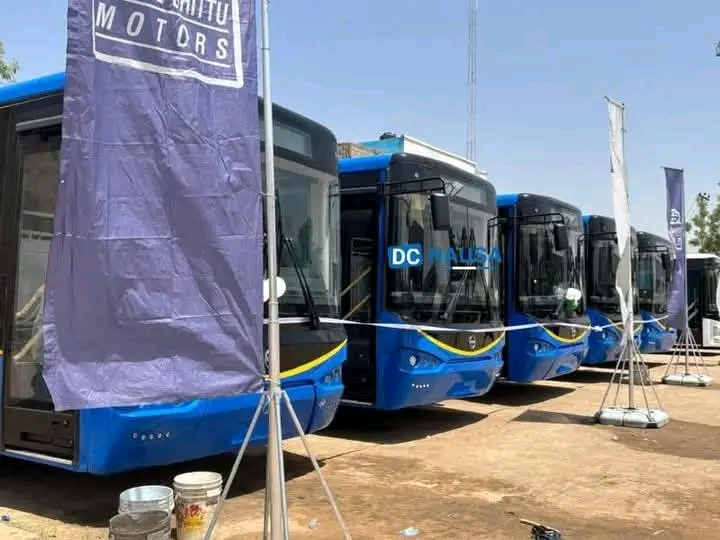
She explained that buses distributed under the program would carry stickers indicating their designated routes and fares, enabling passengers to know the approved charges before boarding.
“Henceforth, for every bus we give, there will be a sticker to map out the intended routes. The routes will be placed on the buses as stickers, and the fare will be there. So everyone can see it, and customers will know what they should pay,” Eke said.
The initiative is working with transport unions and fleet operators to ensure compliance, although Eke did not disclose the specific fare reductions or penalties for operators who failed to comply.
She said Abuja was already recording reductions on designated routes, with CNG-converted commercial vehicles operating under the National Union of Road Transport Workers partnership offering passengers a 40 per cent fare cut. Similar reductions, she added, were being recorded through CNG and electric mobility interventions in Borno, Enugu, Niger, and Abia states.
Eke acknowledged, however, that the reductions had not reached every route or passenger, saying the program was being expanded while officials followed up with state governments and transport operators to improve compliance.
“Pi-CNG & EV’s position has always been clear. The benefit of cheaper energy must ultimately reach the passenger. It is not enough for a commercial operator to reduce operating costs by switching to CNG while commuters continue to pay fares based on petrol operating costs.
“This is one of the issues being addressed through the National Affordable CNG Transit Program. Pi-CNG & EV is working with state governments, transport unions, and commercial operators to develop and implement fare-reduction frameworks on routes where CNG and electric mobility interventions are being deployed,” Eke said.
She added, “However, we recognize that these reductions are not yet being experienced on every route or by every commuter. This is why the program is being scaled and why we are following up with states and transport operators on implementation. The objective is not simply to increase the number of CNG vehicles on Nigerian roads but to ensure that the lower operating cost is reflected in what passengers actually pay.”
Eke said the initiative had mobilized more than $2.5bn in private-sector investment across the CNG value chain, including refueling infrastructure, conversion centers, and vehicle assembly.
“On investment, it is important to distinguish federal government investment from private-sector investment attracted into the CNG ecosystem. The program has mobilized significant private investment across refueling infrastructure, conversion centers, vehicle assembly, and other parts of the value chain. Current Pi-CNG and EV figures put investments secured at over $2.5bn,” she said.
According to her, federal government interventions had supported vehicle and conversion-kit procurement, conversion incentives, infrastructure development, training, and other measures to accelerate CNG adoption.
She said the initiative would provide a consolidated figure for federal government investment separately to ensure that public spending was not conflated with private-sector investment.
The program also includes efforts to extend affordable transportation to students through Project Sprout, under which buses will be provided to 20 universities in the first phase.
“We have also scaled up our Project Sprout, where buses will be given to 20 universities in the first phase. So that it would ease transportation for them,” the Pi-CNG and EV official said.