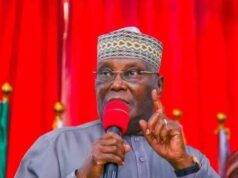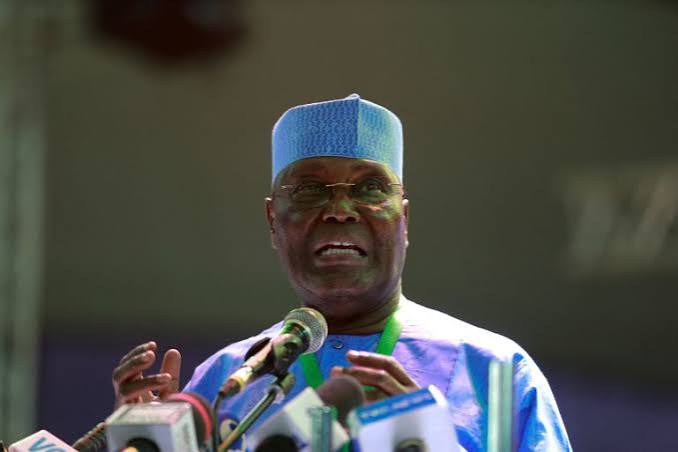
The African Democratic Congress presidential candidate Atiku Abubakar has argued that the current administration’s claims of economic recovery are contradicted by worsening living conditions and the declining state of Nigeria’s manufacturing sector.
In a statement issued on Monday by his Senior Special Assistant on Public Communication, Phrank Shaibu, Atiku said the presidency was relying on “propaganda” and macroeconomic statistics that bear little resemblance to the realities confronting ordinary Nigerians.
The opposition leader said the closure of hundreds of manufacturing firms and the distress facing many others were clear evidence that the economy was deteriorating despite official claims of progress.
The statement partly read, “A government cannot claim its economic policies are working when the country’s industrial sector is actively shutting down. Nations do not build prosperity by celebrating macroeconomic statistics while their factories close their gates.”
Citing figures from the Manufacturers Association of Nigeria, Atiku said 767 manufacturing companies had shut down, while another 335 were operating under severe distress.
He added that manufacturers were holding about ₦2.14tn worth of unsold finished goods, blaming the situation on the collapse in consumers’ purchasing power.
According to him, several multinational companies, including Procter & Gamble, GlaxoSmithKline, Sanofi, and Kimberly-Clark, have either exited local manufacturing or shut down production in Nigeria, while local firms have also suspended operations.
Atiku further stated that manufacturers spent about ₦1.1tn on diesel to power their factories because of unreliable electricity and higher energy costs.
“Factories do not shut down because the opposition writes press statements. Manufacturers do not accumulate trillions of naira in unsold goods because critics hold press conferences. They leave because the economic environment has become increasingly hostile to production, investment, and enterprise,” he added.
He further argued that while the presidency continued to celebrate GDP growth, debt ratios, and other macroeconomic indicators, millions of Nigerians were grappling with rising food prices, unemployment, and declining purchasing power.
He questioned why poverty and food insecurity remained widespread if government reforms were yielding the benefits being advertised.
“Governments are not elected to improve spreadsheets. They are elected to improve the lives of their people. Nigerians cannot eat GDP. They cannot cook with debt-to-GDP ratios. They cannot pay school fees with statistical projections,” he said.
Atiku also criticized the administration’s continued borrowing despite claims that government revenues had improved following the removal of the petrol subsidy and reforms in tax administration.
He asked the Federal Government to explain why borrowing remained at record levels if fiscal reforms had significantly strengthened public finances.