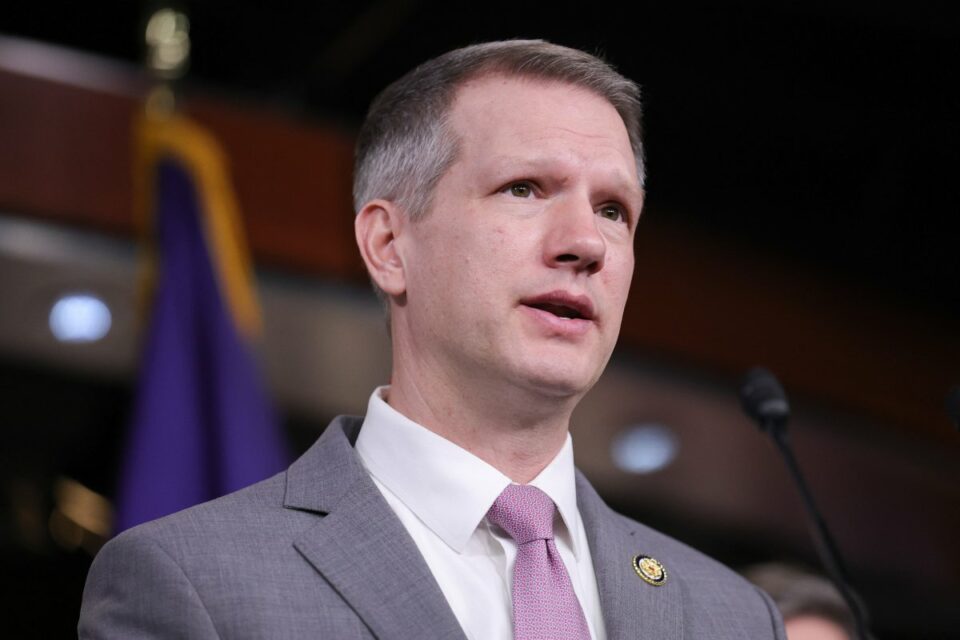
A United States lawmaker, Riley Moore, has welcomed the Nigerian Senate’s passage of the Constitution Alteration Bill seeking to establish state police, saying the reform would help states better protect citizens, particularly persecuted Christians.
Moore, who represents West Virginia’s 2nd Congressional District in the U.S. House of Representatives, made the remarks in a post on his X handle on Wednesday.
His reaction followed the Senate’s approval of the bill which seeks to decentralise policing by allowing states to establish their own police services alongside the Nigeria Police Force.
Moore, who has previously spoken on attacks against Christians in Nigeria, said the reform was one he had advocated publicly and privately.
“I’m encouraged to see Nigeria’s Senate approve legislation to establish state-level police forces—a reform I’ve called for publicly and privately since I first started investigating the genocide against Christians in Nigeria.
“I can’t stress how critical this law that will empower states to protect their own citizens and reducing dependence on decision makers in Abuja is to the effort to defend persecuted Christians and address insecurity,” he wrote.
The U.S. lawmaker also commended President Bola Tinubu for backing the proposal but noted that the amendment must still secure the approval of at least two-thirds of the state Houses of Assembly before it can take effect.
“President Tinubu deserves credit for pushing it forward, but now we need 2/3rds of the states to ratify before it will take effect,” he added.
PUNCH Online reports that the Senate on Wednesday passed the Constitution Alteration Bill seeking to establish state police across the federation after more than two-thirds of senators voted in support during a manual voting process.
The proposed legislation seeks to establish a state policing framework operating concurrently with the federal police system, empowering governors to appoint Commissioners of Police for their respective states, subject to confirmation by their state Houses of Assembly.
The bill also includes safeguards against abuse, providing that state police cannot be deployed against individuals or groups merely for criticising a state government except in accordance with the law. It will only become part of the Constitution after securing the required approvals from state legislatures and completing other constitutional processes.