•How centralised system, foreign interests, elite compromise fuel insecurity
•We’re ignoring sponsors of terrorists to our peril
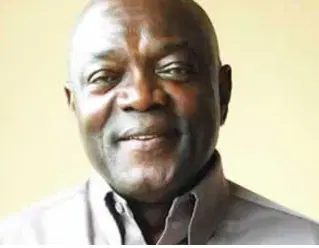
Lt. Col. Tony Nyiam, retd., one of the principal actors in the 1990 Orkar coup attempt aimed at overthrowing the military government of Ibrahim Badamasi Babangida, in this encounter called for a sweeping and far-reaching restructuring of Nigeria’s security architecture, warning that the country’s current centralised framework is fundamentally incapable of addressing the complex and evolving nature of insecurity across the federation.
He argued that decades of structural imbalance, inherited colonial frameworks, and deep-seated internal contradictions have combined to weaken the country’s ability to effectively respond to threats such as terrorism, banditry, kidnapping, and communal violence.
Why is Nigeria grappling with widespread insecurity? Where did we go wrong?
Nigeria is continuously ignoring the truth. One aspect of the truth we are collectively ignoring is the fact that we, the Nigerian majority, are, literally, being subjugated in a ‘neo-colonialism, a system dominated by politically and economically connected oligarchs who find it easy to throttle any form of competition, and, in turn, the most fraud-engendering nation-state that humans have built.’
What is, however, ironic is that, for the first time since 1914, we have the best window of opportunity to liberate ourselves. An opportunity which a favourite man of Divine Wisdom Jalal al-Din Muhammad Rumi (1207 – 1273) have wisely described by saying that: “One of the marvels of the world is the sight of a man sitting inside a prison with the keys of the jail in his hand”.
The keys represent President Donald Trump of the USA, and President Bola Tinubu of Nigeria. It’s now left for us to see how we can twist the keys of the jail doors and liberate ourselves.
What we have been ignoring to our detriment is what has been referred to as “The Natural Resource Curse (NRC). Let us, in the context of Nigeria, bring out some highlights of the devastated effects of the curse. One of the most negatively impacted states of Nigeria is Zamfara State.
While the importance of natural resources for the well-being of humanity cannot be overemphasised, there is, however, the challenge of natural resources coming along with the referred curse.
A curse is defined as ” the phenomenon where countries with an abundance of natural resources like minerals, crude oil, gas and timber, experience less democracy and worse development outcomes than countries with fewer resources. Instead of our rich resources fueling shared prosperity among our people, it has become the cause of political and economic instability, worse practices of corruption and associated violent conflicts. Lest we forget that the Western neo-colonialists are often the perpetrating forces behind the natural resources curse. They, in the last decades, have been joined by the Chinese.
So, Nigeria’s security problems are caused by foreign nations?
The indigenous Nigerian ethnic-nations of the Hausa, Middle Belt, Kanuri, the South-South region, Omo-Oduduwa and Ndigbo, etc, are located in lands that possess the most valuable natural resources a people can be endowed with on earth. We are talking here of highly sought-after minerals- gold, lithium, crude oil, gas – and high grades of timber.
It is because of the rich endowment that the indigenous peoples of Nigeria have that the French/ British/ American neo-colonialism inclined minds, and the Chinese, are ensuring that Nigerians suffer from the natural resource curse.
The main objective of the behind-the-scenes perpetrators of terrorism in Nigeria is to outright cart away our natural resources without paying much for them.
For the neo-colonialists to achieve their goals, they form an alliance with older colonialists, made up of some Fulani. This is why the rogue elements of the French/Americans and the Chinese give arms to Fulani ethnic militias to chase away the indigenous Nigerians from their ancestral land. Also, they have been arming Boko Haram.
Let us make no mistake about the bloody-minded, and consequent cut-throat threat which both “the Fulani ethnic militias” and “Boko-Haram terrorists” pose to their foreign backers.
But related to the threat is the contemptuous attitude of most Fulani towards the indigenous Nigerians, especially against the indigenous people who are most rebellious against their hegemonic tendencies.
Are you saying that the neo-colonialists arm the Fulani to fight indigenous Nigerians?
Most members of the Fulani ethnic militias are from the Sahel region of Africa, which has been most affected by global warming. It is indeed these Sahel-originated Fulani’s desire for land-grabbing of the indigenous Nigerian ancestral landed property that has made them the willing tools of the rogue elements of the Western powers and their Chinese equivalent.
The analogy of the waves of an ocean, which are visible to us, and the ocean’s undercurrent, which the waves depend on, we often ignore, comes to mind at this juncture. The reason for our ignoring the sea undercurrents has to do with their functioning below the ocean’s water surface. Similarly, what we Nigerians see are heavily armed and sophisticated transnational Fulani ethnic or Boko Haram militias. The providers of the funding and arms, we ignore to our detriment. A most disturbing consequence of the continuing ignorance is the danger inherent in our gross under-estimation of the military threat we face as a people.
This reminds one of the great writer, Mark Twain’s pregnant statement that “the common eye sees only the outside of things, and judges by that, but the All-Seeing Eye pierces through and reads the heart and soul, finding there capacities which the outside didn’t indicate or promise, and which the other kind could not detect.”
There is, indeed, a seed of bad omen at the heart of the existing Nigerian State. This is traceable to the falsehood of the collective mind of the Nigerian ruling elites. It is what is, in plain sight, false that most members of the elites go on worshipping, protecting or defending. Hence, for example, titles like Honourable and Your Excellency do in practice imply their opposites in Nigeria. The meaning of Your Excellency, which refers to living a life to be emulated by other citizens, raises the question of how many of those we address as “His Excellency” are good role models.
Related to the ruling elites’ lack of integrity is the heavy corruption that comes along with the natural resource curse we have highlighted earlier. The curse has been most corrupting of a number of the Nigerian Armed Forces’ and other national security agencies’ personnel.
The consequential corrupting mindset of many armed services personnel, and those within the other security services, who are much more loyal to their ethnicity’s hegemonic pursuit than to Nigerians’ well-being, account for the “compromised military” that we have been dealing with.
Because of how richly endowed the Nigerian indigenous communities are, they will continue to be the targets of acquisition by the rogues of the West and the Far East, and the transnational Fulani overseers of their evil trade. This is just as the Fulani were the slave-catchers that the Arab slave merchants used during the trans-Saharan Desert slave trade.
The geo-political situation in which we Nigerians find ourselves has become worsened. Particularly, because of the impact of global warming, and the resultant struggle for the increasingly scarce resources. These are , atleast, two of the qualities of the determinants of the threats to the Nigerian security.
Is the current Nigerian security architecture structurally positioned to handle insecurity?
Of course not. The extent of how flawed the Nigerian security structure has been can be summed up by the phrase: “garbage in, garbage out.
There is, indeed, no better description of how not befitting the existing Nigerian security architecture is than the statement: “the quality of output is directly determined by the quality of input.”
The inappropriateness of the current Nigerian security architecture is, for those who care to look deeply and widely, in the following crucial aspects: First, there is at causal root of the war which has been waged, and, in fact, being intensified, against Nigerians, no strategy for identifying and exposing the international sources of the funding and arming of the Fulani ethnic militias for instance. Another example is the Boko Haram terrorists.
There is no structure of the Nigerian security system for carrying out high tech tasks such as Signal Intelligence (SIGINT), Cryptology or advanced CyberSecurity functions .
What is ironic here is that we have intelligent Nigerian youths but lack the national security institutions to harness the tech talents of our young ones.
There is a need for the likes of the United Kingdom (UK) Government Communications Headquarters (GCHQ), which, along with MI6, protects the UK against terrorism and cyber threats. The United States equivalent of the UK is the National Security Agency (NSA), which, along with the Central Intelligence Agency (CIA) provide signal intelligence and cyber security to the US government and armed forces.
The Nigerian security establishment is in dire need of the above-highlighted national security intelligence capacities and capabilities.
The possession of such security services’ capabilities will enable our National Intelligence Agency (NlA ), for instance, to be more effective.
There is presently no equivalent of the Israeli MOSSAD strategy and resultant execution of plans to name and shame, not to mention eliminate the foreigners funding and arming the terrorists in Nigeria.
There is also the improper recognition of the development that drones have evolved from specialised reconnaissance tools into a distinctive transformative domain of military operations, adding thereby a ‘fourth dimension’ to the traditional land, sea, and air combat.
Secondly, I have for over 20 years been warning about the danger of getting a mainly conventional armed forces that the Nigerian federal government, solely possess, stuck in an asymmetric warfare which, as we are experiencing, they cannot win.
For those who might need to be reminded, ‘Asymmetric Warfare’ is defined as “that between opposing forces that differ greatly in the military tactics they resort to.”
The over two decades of Nigerians’ war experiences have not been of the type of the army of a nation versus the army of another nation but a mix of the conventional Nigerian Army to fight numerous unconventional warfare tactics-driven militias.
These unconventional forces of non-state actors have used their expertise in ‘hit and run ambushes’ and sniping tactics to dangerous effect on the Nigerian Army. Such as the April 9 2026 ambushing and killing of the Commander of the 29 Task Force Brigade, Brigadier-General Oseni O. Braimah.
The commander of the 25th Task Force Brigade, Brigadier-General Samaila Uba, on November 14 2025, fell into a similar ambush. So, also was the earlier November 13 2021 case of the murder of Brigadier-General Dzarma Zirkusu.
In all the above case studies, the compromised nature of the Nigerian security system was taken advantage of by the terrorists and their Nigerian and foreign backers. I am referring to the terrorists’ collaborators within the Nigerian security establishment.
As if this compromising of some Nigerian military personnel is not bad enough, there is the compromising at the top governance level, or the oligarchs. The building up of saboteurs of the Nigerian security, by the major powers, has, since the time of slavery been in the form of the cultivation of some Nigerian public officials as what is referred to as “intelligence assets or agents,” or friends of their embassies in Nigeria. Hence, the talk of this or that General/business mogul being an asset of a foreign intelligence organisation.
The President of the Nigerian Senate, Senator Akpabio, may be right in his linkage of the national insecurity surge to the impending 2027 presidential election. This is similar to the terrorists built up that was used to intimidate President Goodluck Jonathan out of office by the then General Muhammadu Buhari-led APC.
The foreigners and their Nigerian surrogates, who are benefitting from the political instability of Nigeria, are the main remote controllers of what is playing out before us all.
How can we improve the current security structure?
What I am advocating is the creation of a multi-layered and decentralised security architecture that includes federal forces, state-based formations, and locally rooted defence units, all operating within a coordinated framework designed to maximise efficiency and responsiveness.
The structure we have currently is vulnerable to internal compromise, suggesting that divided loyalties within the system often lead to operational failures, intelligence leaks, and an inability to sustain long-term victories against criminal networks.
The present arrangement is such that it is compromised. When you have individuals within the system whose loyalty is not entirely to the Nigerian state but to other interests, you create a situation where operational plans are leaked, intelligence is compromised, and the enemy is always a step ahead of the state. That is why you see situations where operations fail or where gains are quickly reversed.
What we need is a proper, well-defined national security architecture that reflects the diversity and complexity of Nigeria as a federation. There should be federal forces, there should be state-level forces, and there should be local community-based units that act as first responders. Security must become truly everybody’s business, not just a slogan that we repeat without implementing in practical terms.
How would you get the police and the military to work together?
We must not make the mistake of confusing the role of the police with that of the military. The police are a civil force. Its primary responsibility is to maintain law and order, enforce the law, and ensure public safety. It is not trained, equipped, or structured to engage in full-scale combat operations against insurgents or heavily armed groups operating in forests and remote areas.
If you begin to turn the police into a combat force, then you are gradually creating a police state. That is not what we need as a democratic society. What we need is clarity of roles, proper structuring, and a clear distribution of responsibilities within the security framework so that each arm functions within its defined mandate.
So, you are supporting regional security outfits like Amotekun?
Amotekun is a step in the right direction, but it has been deliberately limited in its operational capacity. These are people who understand their environment, who know the terrain, who know the communities, and who have a direct stake in defending their homeland. Yet, they are not allowed to carry the kind of arms that would make them truly effective in confronting well-armed criminal elements.
Let them be armed legally, let them be properly trained, and let them operate within a clearly defined legal and operational framework. If you do that, you will see a significant improvement in grassroots security, intelligence gathering, and rapid response. Without that, we will continue to win some battles and lose many more because the system itself is not designed to sustain success.
In the United States, each state has its National Guard. These are locally based forces made up of people from those communities, and they can be mobilised to support federal operations when necessary. That model allows for flexibility, local ownership of security, and rapid mobilisation. That is the kind of system we should be studying, rather than insisting on a rigid, overly centralised structure that is clearly not delivering results.
And that was why you remember, when a president was trying to invade the Congress, the Capitol in the U.S., the president’s people were trying to invade the congress, the people arose, the people rose against the president, with the National Guard that stopped them from invading the Capitol.
Until we address the structural foundation of our security challenges, we will continue to go in circles. It is not just about changing strategies or leadership; it is about changing the system itself so that it reflects the realities of our society and empower the people to be part of their own security.