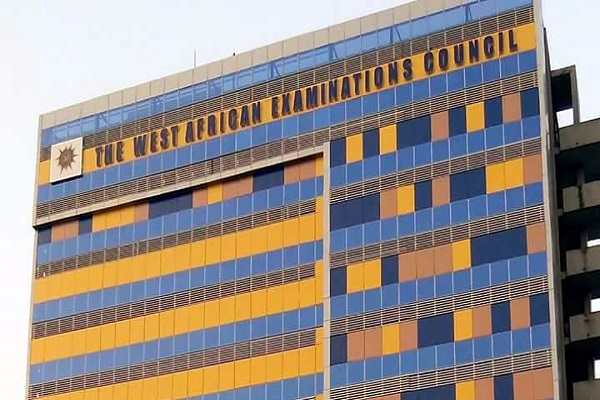
If the Federal Government had not reversed the proposed N50,000 registration fee per candidate for the Senior Secondary Certificate Examination conducted by the West African Examinations Council, WAEC, and the National Examinations Council, NECO, the examination bodies would have been able to generate more than N175 billion annually.
An analysis by our reporters of the 2025 figures of candidates who sat the examinations conducted by the two bodies shows that 3,506,489 candidates registered for the examinations, including both internal and external candidates.
At the proposed fee of N50,000 per candidate, the total revenue from the combined registration would amount to N175,324,450,000.
A breakdown of the examination statistics shows that 1,973,365 candidates registered for the 2025 May/June West African Senior School Certificate Examination, WASSCE, in Nigeria, while 1,969,313 candidates eventually sat the examination.
For WAEC’s private candidates’ examinations, 9,054 candidates participated in the 2025 First Series WASSCE, while 65,752 candidates sat the 2025 Second Series Computer-Based WASSCE for Private Candidates.
On NECO’s side, 96,979 candidates registered for the 2025 Senior School Certificate Examination, SSCE, External, with 95,160 candidates eventually sitting the examination.
In addition, 1,367,210 candidates wrote the 2025 NECO Internal SSCE, bringing the cumulative number of candidates who participated in WAEC and NECO examinations in 2025 to 3,506,489.
The revenue projection comes against the backdrop of the Federal Government’s controversial proposal to increase the registration fees for both WAEC and NECO examinations to N50,000 per candidate.
The projected revenue would not come from internal candidates alone. For thousands of Nigerians who miss the May/June examinations or want a second shot, the WAEC GCE for private candidates is the lifeline. But behind the registration PINs and CBT centres, it has also become one of WAEC’s biggest revenue drivers.
From 2021 to 2025, the West African Examinations Council generated an estimated N7.39 billion from WASSCE for Private Candidates alone, a figure driven by a 50 per cent fee hike and a full switch to computer-based testing.
From N13,950 to N27,000, the great fee jump
For three years, school candidates and private candidates paid the same fee. That changed in 2024.
WAEC blamed rising costs on printing, logistics to over 5,000 centres, security, examiner remuneration, COVID-19, and the rollout of CBT.
The N27,000 is just the base. Banks, agents, and cybercafés add processing and biometric fees, pushing the real cost to between N28,000 and N32,000 per candidate.
The fee for school candidates remained N18,000, creating a N9,000 gap that WAEC said funds the cost of running two GCE diets per year.
Number of candidates reduces, revenue rises
One would expect revenue to fall when fewer people write the examination, but the opposite happened.
For private candidates who wrote the examination from 2021 to 2025, WAEC generated a total of N7.3 billion, even though the number of candidates was relatively low because of the higher registration fee.
From 2021 to 2023, the number of candidates grew by 52 per cent, while revenue nearly doubled. Despite 27 per cent fewer candidates, revenue hit a record N1.76 billion, largely due to the N27,000 registration fee and the introduction of 5,067 hybrid centres.
In 2025, WAEC reduced the number of centres from 5,067 to 370 dedicated CBT centres nationwide.
What N7.4bn bought
WAEC said the money went into four things that private candidates benefit from directly:
CBT infrastructure: Stabilised to hybrid in 2024 and transitioned to full CBT in 370 centres in 2025.
Security and logistics: Safe distribution of examination materials across Nigeria amid insecurity.
People: Higher pay for supervisors, invigilators, and examiners.
Digital: PIN system, Information VCD, online results, and digital certificates.
The 2024 examination was also WAEC’s first major anti-malpractice test under CBT. Out of 65,023 candidates who sat the examination, 2,577 results were withheld, while 53.64 per cent obtained five credits, including English Language and Mathematics.
The private candidates’ GCE matters because it is predictable, held twice a year, and generates more revenue per candidate. With the fee now locked at N27,000 and CBT fully in place, analysts expect WAEC’s private candidate revenue to stay above N1.7 billion annually.
The GCE used to be the “second chance” examination. Today, it is also WAEC’s second-biggest business line.