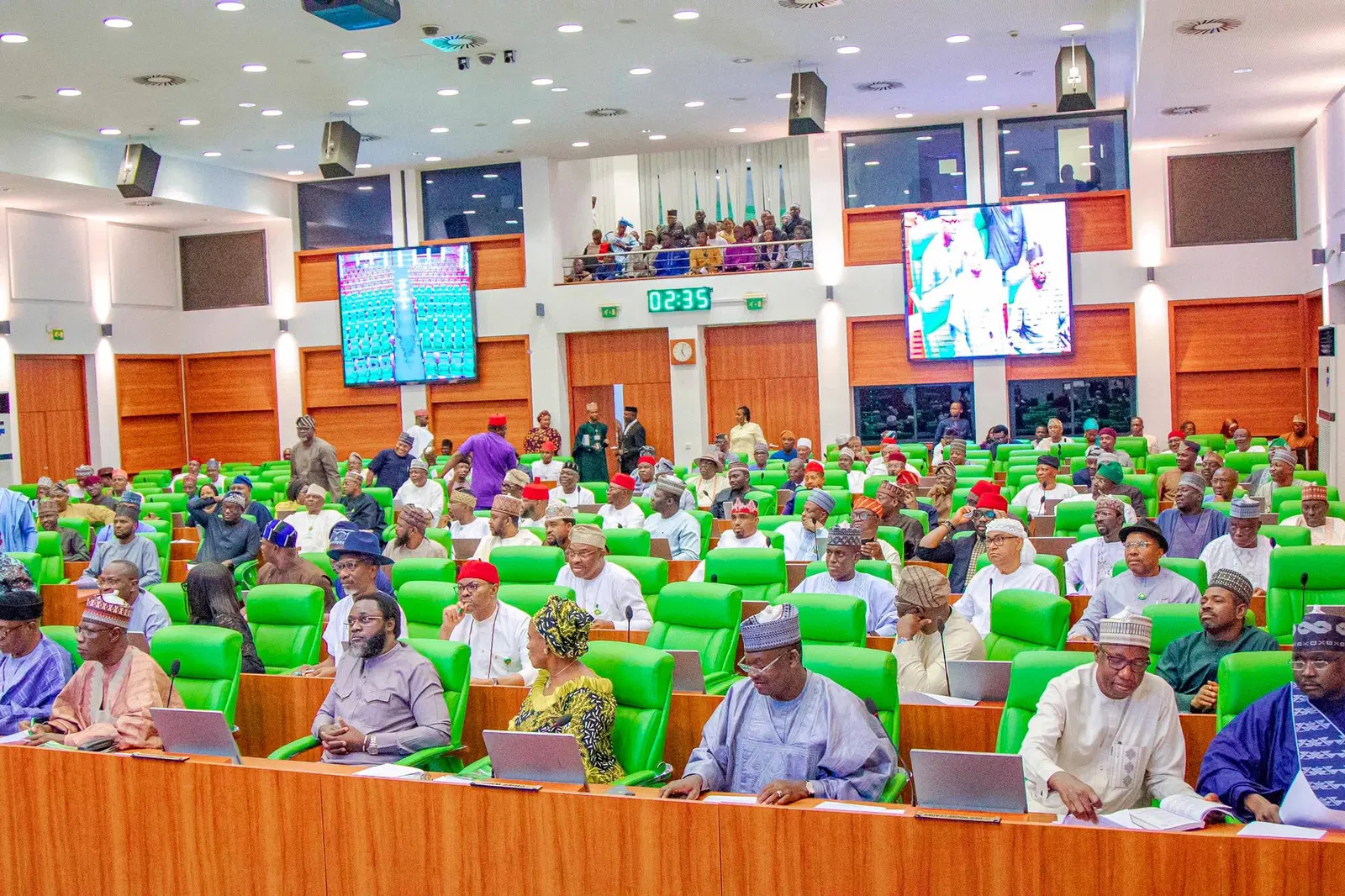
The House of Representatives ad hoc committee investigating the controversial establishment and operations of the Presidential Foreign Investment Promotion Council is set to question the Accountant-General of the Federation, Mr. Shamseldeen Ogunjimi, today as its high-profile investigation enters the third week.
The committee, chaired by the lawmaker representing the Kanke/Kanam/Pankshin Federal Constituency of Plateau State, Yusuf Gagdi, is probing how an organization the Federal Government has described as non-existent allegedly secured official office accommodation within the Federal Secretariat Complex in Abuja and received a budgetary allocation of more than N1.32 billion in the 2026 Appropriation Act.
The investigation has drawn significant public attention following allegations that the agency operated within government structures despite lacking legal recognition, raising concerns about possible lapses in public financial management and institutional oversight.
At today’s hearing, Ogunjimi is expected to explain the processes through which the PFIPC obtained a government budget code, a development that enabled the agency to appear in the national budget despite questions surrounding its legal status.
His testimony is expected to provide further insight into the budgetary and financial procedures that facilitated the agency’s inclusion in the federal government’s expenditure framework.
Since the commencement of the probe, the committee has heard from several top government officials whose testimonies have highlighted apparent gaps in administrative processes that allowed the agency to function as though it had official government approval.
Among those who have appeared before the lawmakers are the Head of the Civil Service of the Federation, Mrs Didi Walson-Jack; the Director of Banking Services at the Central Bank of Nigeria, Abdullahi Hamisu; and the Director-General of the Budget Office of the Federation, Mr Tanimu Yakubu.
Their submissions focused on the sequence of events that enabled the PFIPC to navigate bureaucratic procedures, obtain official documentation and become integrated into aspects of the federal administrative system despite questions over its legitimacy.
The committee’s investigation gathered further momentum following the arrest of Mr Adeyemi Adeniyi, who presented himself as the Director-General of the PFIPC.
Adeniyi was arrested by operatives of the Nigeria Police Force after allegedly claiming that he paid N400m through an intermediary to the Chief of Staff to the President, Mr Femi Gbajabiamila, to facilitate his appointment as head of the council.
The allegation generated widespread public interest because of its implications for transparency and accountability within government institutions.
However, both the Presidency and Gbajabiamila have firmly denied any connection to Adeyemi or the claims attributed to him.
The Presidency described him as an impostor, while the Chief of Staff dismissed the allegations as false, maintaining that neither he nor the presidency had any involvement in the establishment or operations of the purported agency.
Government officials have consistently maintained that the PFIPC is not a legally established federal agency, a position that has deepened concerns over how it was able to obtain office space, process official documentation and secure budgetary provisions.