ESTABLISHED in 1932 as a sanctuary for sick and abandoned leprosy patients, the Uzuakoli Leprosy Colony once stood as a beacon of hope for people afflicted with leprosy. For decades, it offered treatment, dignity, and a second chance at life to tuberculosis and leprosy patients drawn from across the old Eastern Region, including parts of the present-day South-South zone and all the states in the South-East geopolitical zone.
Dilapidated structure
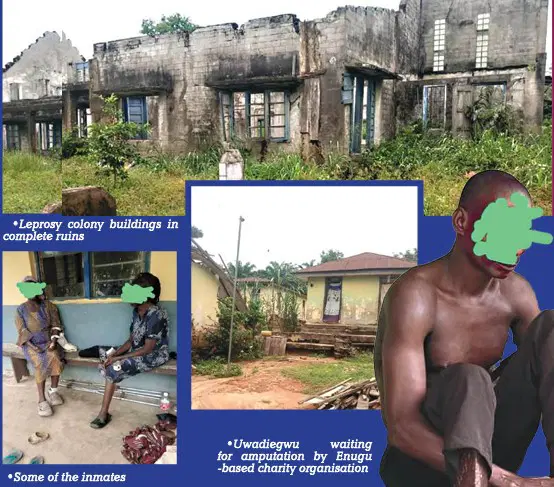
Today, that hope lies in ruins. What used to be a refuge for the rejected has deteriorated into a haunting portrait of neglect. Crumbling buildings, collapsed wards, and broken infrastructure now define a place that once symbolised healing and compassion.
The colonial-era hospital structures, which once served as a referral centre, have all but given way to decay, their roofs caving in, walls dangerously cracked, and corridors overtaken by silence and the hum of insects.
For the inmates, many of whom have been medically treated but remain socially exiled, the colony has become both refuge and prison.
Leprosy: cause and transmission mode
According to experts, leprosy is a bacterial infection that affects the skin, peripheral nerves, eyes, and respiratory tract. It can cause patches of pale or discoloured skin, loss of sensation (numbness), and permanent disabilities.
Leprosy is not directly hereditary or genetic, but some people may have a genetic predisposition to the disease. Early diagnosis and treatment can prevent severe disabilities and deformities.
Dr Godswill Ogbonnaya, a Community Medicine Physician at the Federal Medical Centre, Umuahia (FMC Umuahia), said transmission occurs through droplets from the nose and mouth of an untreated infected person, adding that infection requires prolonged, close, and repeated contact with a patient.
NEGLECTED, ISOLATED: Untold story of Uzuakoli leprosy colony inmates
- After treatment, our traditional ruler told my father to chase me away — INMATE
- Colony Director blames withdrawal of foreign partners on misinformation about eradication claims
- We’re tired of farming to survive; we need a skills acquisition centre — INMATES
- Colony not abandoned; we have bigger plans for it — ABIA GOVT
Life of rejection and survival
Behind the dilapidated walls of the Uzuakoli Leprosy Colony live about 30 inmates and scores of their children and grandchildren, forgotten citizens battling not just the scars of the disease, but the deeper wounds of stigma and abandonment.
Many cannot return home. Some were deserted by spouses. Others were rejected by their communities long after being declared free of the disease.
However, in the face of such rejection, they have built a fragile community among themselves, finding love, marrying, raising children, and even welcoming grandchildren within the confines of the colony.
Healed but not accepted by society
The Administrative Secretary of the Colony, Pastor Akindele Victor Olusegun, painted a grim picture of abandonment and appealed for urgent intervention.
He said, “After treatment, they are healed. The only thing you see is deformity. But society refuses to accept them. That is why many remain here.”
According to him, patients undergo treatment, often for about a year, supported in the past by the German Leprosy and TB Relief Association, which provided free drugs for leprosy and tuberculosis.
However, he said support dwindled after foreign partners withdrew, reportedly due to the false belief that leprosy had been eradicated in Nigeria.
“Once discharged, they are on their own. The Methodist Church provides accommodation as a humanitarian service, but feeding and survival depend largely on charity and support from the Welfare Department of the church.”
Living in darkness and want
Basic amenities are either broken or non-existent. The colony’s transformer has long collapsed, leaving residents in perpetual darkness.
Access to clean water is a daily struggle, with inmates trekking long distances to fetch water because a borehole donated to them by a philanthropist cannot be powered by the small generator available.
Healthcare needs persist too. Though cured, many inmates still require routine medication and treatment for lingering wounds, expenses they struggle to meet.
“They go to farm just to survive. Imagine people without fingers, without toes, some with artificial limbs, still going to farm,” Pastor Olusegun said.
Factories gone silent
Once, the colony thrived with activity. It housed functional workshops, factories that produced artificial limbs and wheelchairs, providing both livelihood and dignity to inmates.
Today, those facilities are abandoned and in ruins.
“Our greatest need is to revive these factories. We also need a skills acquisition centre so they can learn trades instead of relying solely on farming,” Olusegun said.
Children of uncertainty
Yet, their resilience contrasts sharply with the harshness of their reality. Their homes, barely habitable, resemble detention facilities or holding centres more than shelters for human beings.
Leaky roofs drip through the night. Walls have frightening cracks, while darkness engulfs the settlement at sunset due to lack of electricity. Despite all these, life still goes on.
Perhaps most heartbreaking is the fate of the children born into the colony, innocent victims of circumstance.
With no functional public school nearby, many are forced into costly private education their parents can barely afford. The nearest public secondary school requires daily transport expenses many families simply cannot sustain.
Abia State currently runs free education from primary to Junior Secondary School, but the colony is in an isolated environment.
Cry for help
Beyond infrastructure, the needs of the inmates are urgent and human: food, shelter, dignity.
The cleric called for government intervention, monthly stipends for inmates, solar power installation, improved access roads, and the rebuilding of critical structures, especially the Chapel of Hope.