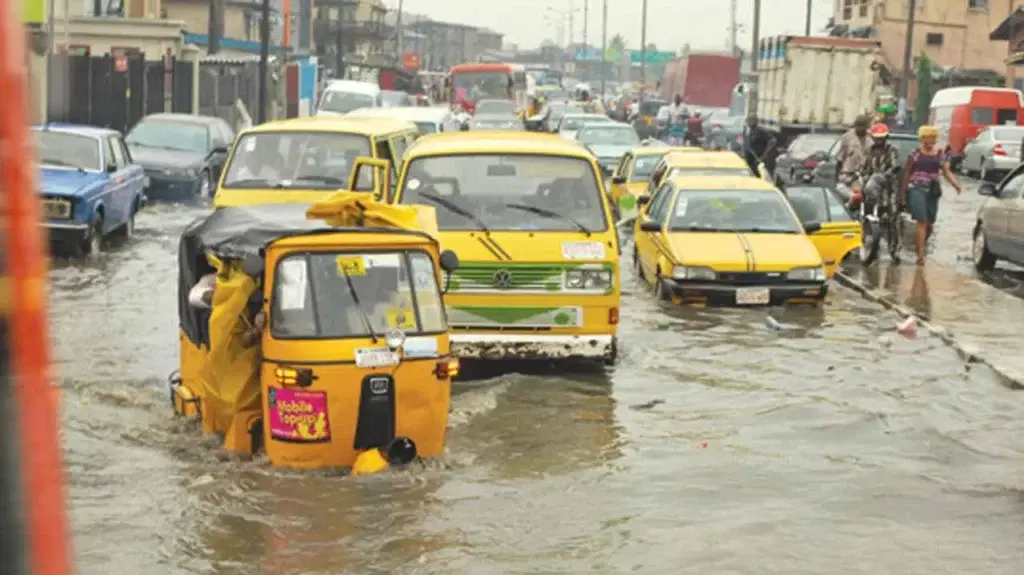
LAGOS—Torrential rainfall brought commercial and vehicular activities to a standstill across Lagos, yesterday, as flash floods submerged major roads, caused motorists and commuters, to be stranded and triggered hours of traffic gridlock in several parts of the metropolis.
The heavy rain, which began at about noon and lasted until around 4 p.m., inundated highways and inner-city roads, leaving many vehicles trapped in floodwaters while others broke down, worsening traffic congestion across the state.
Many motorists were forced to abandon their vehicles temporarily, while commercial bus operators struggled to navigate waterlogged roads. In several locations, commuters trekked long distances after public transport operators suspended services due to rising floodwaters.
The development came just days after the Nigerian Meteorological Agency (NiMet) forecast thunderstorms and widespread rainfall across the country, warning that flash floods could occur in some states during the period.
The agency had urged residents in vulnerable areas to remain vigilant and take necessary precautions as heavy rainfall intensified.
Several motorists and commuters who spoke to Vanguard lamented the situation, blaming the flooding on blocked drainage channels, indiscriminate refuse dumping and poor maintenance of existing drainage infrastructure.
One of the affected motorists, Johnson Alaba, who was trapped along the Apapa-Oshodi Expressway, expressed frustration over the situation.
He said: “The blocked drainage channels worsened the flooding situation. The entire road is submerged, no movement. The drainage channel is not functional here.”
Another motorist, who identified himself simply as Tony, recounted his ordeal while driving through the flooded Apapa-Oshodi Expressway.
He said: “I practically swam through the flood from Isolo to Mile 2 along the Apapa-Oshodi Expressway with my car. The problem was compounded by heaps of refuse dumped along the expressway. The state government should live up to its responsibility and deal with the issue of refuse dumps along the roads. If care is not taken, the state may witness a serious epidemic.”
Residents in several flooded communities also expressed concern that recurring flash floods continue to disrupt economic and commercial activities whenever there is prolonged rainfall, urging the government to intensify drainage maintenance and enforce environmental sanitation laws.
No cause for alarm— Commissioner
Reacting to the flooding, the Lagos State Commissioner for the Environment and Water Resources, Tokunbo Wahab, appealed to residents to remain calm, insisting that the flooding recorded in many parts of the state was temporary and would naturally recede within a few hours.
He explained that flash flooding is common in coastal cities around the world during periods of intense rainfall and should not be mistaken for prolonged flooding.
According to him, “Let me assure you that our State will continue to reap the benefits of careful and rigorous planning, as our flood control measures are being stepped up to contain any imminent rainfall.
: “To ensure a flood-free and hygienic environment in the state, the Ministry has embarked on an all-year-round drainage maintenance programme for effective and efficient flood control, in addition to an efficient and sustainable solid waste management system.”
The commissioner added that the government was also working closely with relevant agencies to minimise the impact of flooding across the state.
According to him: “To effectively contain flooding in our state, we are determined to continue the long-established synergy and partnership with relevant authorities. It is only when such floods remain on the roads for several hours that we can report that a particular area is flooded. I therefore wish to plead with the media to educate our public in order to dispel panic.”
Explaining the scientific reasons behind the flooding, the commissioner said rising lagoon water levels during periods of high tide often prevent stormwater from flowing freely into the lagoon.
According to him: “We all need to be wary of another contributory factor to flooding, which is the rise in lagoon level. Anytime there is high tidal movement, it may ‘lock up’ the discharge points of drainage channels and until it recedes, there will be no discharge.
“Such occurrences also cause backflow, resulting in flash flooding. But as soon as the lagoon water level recedes, all the generated stormwater will immediately be discharged, and our roads will be free. To our people, we sincerely appeal that they refrain from acts that can lead to flash flooding, such as encroachment, illegal reclamation, among other acts of indiscipline by residents.
“They should stop indiscriminate dumping of refuse in unauthorised places, clogging drains with silt or construction materials, and erecting structures within and around drainage rights of way and setbacks.”
The commissioner attributed the noticeable reduction in severe flooding across Lagos in recent years, despite persistent heavy rainfall, to the state government’s sustained investment in resilient drainage infrastructure and strict enforcement of environmental regulations.
According to Wahab, “Resilience and intentional enforcement have been responsible for the improved drainage system in Lagos.”