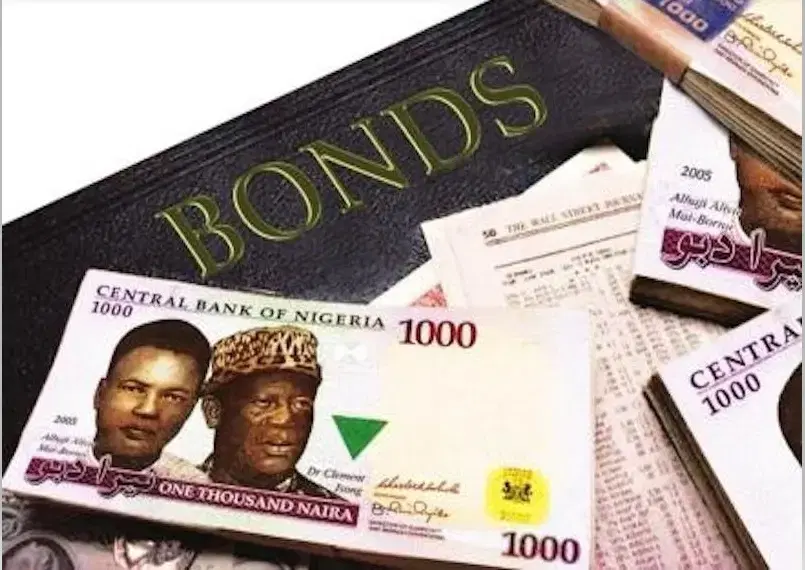
With the Federal Government’s debts to power generation companies hitting the N6 trillion mark at the end of 2025, the government has gone to the bond market to raise funds to make up for its inability to fund electricity subsidies from the national budget.
NERC, in its 2025 industry report, put the Federal Government’s gross tariff subsidy obligation at N1.928 trillion for the year, representing 57.44 percent of the total NBET invoice.
The amount translates to an average subsidy obligation of N160.69 billion per month. The government’s subsidy obligation was distributed across the four quarters, with N536.40 billion recorded in the first quarter, N514.36 billion in the second quarter, N458.76 billion in the third quarter and N418.79 billion in the fourth quarter.
The 2025 figure represented a slight decline from the N1.949 trillion subsidy obligation recorded in 2024.
The government had in September 2026 signed the N728.979 billion Series 2 bond under its N4 trillion Power Sector Debt Reduction Programme, in a fresh move to settle verified legacy debts owed to electricity generation companies and restore liquidity to Nigeria’s power sector.
The transaction comprised N402 billion in cash bonds raised from the domestic capital market and N326.979 billion in non-cash bonds allotted to participating generation companies.
The Managing Director/CEO, Nigerian Bulk Electricity Trading Plc, Akin Odeyemi said,
at the backdrop of weak growth in power supply the GenCos appear to be shackled by indebtedness by the Federal Government with outstanding debt put around N6 trillion at the beginning of this year.
Consequently, the government had in September 2026 signed the N728.979 billion Series 2 bond under its N4 trillion Power Sector Debt Reduction Programme, in a fresh move to settle verified legacy debts owed to electricity generation companies and restore liquidity to Nigeria’s power sector.
The transaction comprised N402 billion in cash bonds raised from the domestic capital market and N326.979 billion in non-cash bonds allotted to participating generation companies.
Odeyemi said at the weekend that NBET has commenced the settlement of participating Generation Companies (GenCos) and their associated Gas Companies following the successful issuance and signing of the N728.979 billion Series 2 Bonds under the N4 trillion Power Sector Multi-Instrument Issuance Programme.
He noted that the milestone “represents a significant step in the implementation of the Presidential Power Sector Debt Reduction Programme, under the visionary leadership of President Bola Ahmed Tinubu, and in furtherance of the objectives of the Renewed Hope Agenda.
“The settlement is being undertaken through a combination of N402,000,000,000.00 in Cash Bonds and N326,979,000,000.00 in Non-Cash Bonds, in accordance with the approved settlement framework”, he added.
Power supply has improved, Power Minister insists
Despite concerns over the sector’s performance, the Minister of Power, Mr. Joseph Tegbe, has insisted that electricity supply has improved over the past three months.
Tegbe, who acknowledged that some parts of the country continued to experience poor supply, said the government was working to address the challenges.
According to him, “Operational record reports show generation and transmission above 5,000MW over the past couple of weeks, compared to the 3,700 to 4,700MW range before June, and a generation peak of 5,330MW during August and September.
“Our next task is to sustain these gains and translate them into more dependable supply at customer level. We are aware that a national peak alone cannot describe the experience of every community.”
He said the government’s efforts to address the challenges were anchored on three pillars: stabilising the value chain, restoring market discipline and strengthening governance.
“Under the first pillar, the 375MW Alaoji open-cycle power plant was restored to the national grid after three years offline.
“A number of substations have been upgraded. For instance, new transformers have been commissioned at Apapa, Ijora, Alausa and Lekki in Lagos, unlocking 672MW of transmission capacity, while a new 300MVA transformer has been energised at Katampe in Abuja, unlocking another 240MW of transmission capacity.
“These interventions restored existing assets and strengthened the network serving major centres of demand.”
The Minister said the government was also working to diversify the country’s energy mix, with emphasis on solar power.
He said the completed electrification portfolio under the REA and its partners comprised 62 solar and mini-grid installations across 30 states, representing about 43.6MW of installed solar capacity and 41,735 new connections, with an estimated reach of more than 208,000 people.
Reform remains unfinished —Babalola
Speaking on the state of the power sector, Special Adviser to the President on Power and Chairman, Presidential Task Force on Power Sector Reset and Restoration, Dr. Lanre Babalola, said the reforms initiated by the government remained incomplete.
Babalola noted that Nigeria’s electricity challenge was not simply a lack of generation capacity.
“Our deeper problem is that we have not yet built a system capable of consistently converting available capacity into reliable electricity, commercial value and sustainable investment,” he said.
According to him, “We must also recognise that Nigeria’s electricity reform remains an unfinished transition.
“We unbundled the old vertically integrated utility. Generation and distribution assets were privatised. A bulk trader was established. And we expected private capital and commercial discipline to progressively transform the industry.
“But we never fully completed the transition to the competitive electricity market envisaged by those reforms.
“The single-buyer model was conceived as a transitional mechanism. NBET provided a credible intermediary while market participants developed the creditworthiness required for direct contracting.
“But a transitional mechanism becomes a structural constraint if the transition never happens. The objective cannot be to preserve the institutions of transition indefinitely. The objective must be to complete the transition.”
Nigerians have been paying for darkness’ — Fadipe
Reacting to the figures, lawyer and Lead Consultant at Sage Consulting on Power Sector, Mr. Bode Fadipe, said the data raised questions about whether consumers had received commensurate value for the money paid for electricity.
“What this data has just confirmed is that Nigerians have been paying for darkness,” Fadipe said.
He identified inadequate investment as one of the major challenges responsible for the limited improvement in electricity supply, arguing that the figures also justified NERC’s directive requiring DisCos to retain part of their revenue for investment.
“You will recall that the DisCos vehemently protested this order, but NERC thankfully insisted on the implementation of the order,” he said.
Fadipe, however, said the level of compliance with the investment directive remained a separate issue that needed to be established.
He called for closer monitoring of DisCos and strict enforcement of NERC’s investment directives.
“NERC must dutifully enforce its order on investment. NERC must also set timelines for certain levels of improvement,” he said.
He further advocated forensic audits of investments by DisCos to determine whether funds earmarked for infrastructure were being properly utilised, while urging NERC to work with market participants on debt recovery.
Consumers demand stronger protection
Also reacting, consumer rights advocate and Executive Director, Electricity Consumer Protection Advocacy Centre, Chief Princewill Okorie, said the revenue figures raised questions about the quality of service delivered to consumers.
Okorie said the decentralisation of the electricity sector under the new legal framework had brought regulation closer to consumers in the states, but argued that enforcement of consumer protection provisions remained a major challenge.
According to him, consumers continued to face issues including estimated billing, infrastructure charges and alleged non-compliance with regulatory directives.
He alleged that in some communities, consumers had been compelled to contribute money for transformers and other distribution infrastructure despite regulatory obligations on DisCos.
“Consumers are not paying” has often been cited as a reason for poor service, Okorie said, but argued that the quality and basis of bills issued to consumers must also be examined.
“The appropriate question to ask is: how did they generate these bills? Were they justifiably, accountably and transparently generated?” he said.
He called for stronger enforcement of electricity regulations and greater protection for consumers, particularly in rural communities.
Okorie also advocated a dedicated mechanism for investigating alleged electricity-related violations and improving consumer awareness of their rights.
He questioned why the Federal Ministry of Power did not have a dedicated consumer protection unit and urged stronger involvement by consumer protection authorities in educating electricity users about their rights.
He also questioned claims that the Federal Government was paying subsidies in the sector, noting that electricity consumers provide much of the equipment used by DisCos, including poles, cables and transformers, without reimbursement from the utilities.