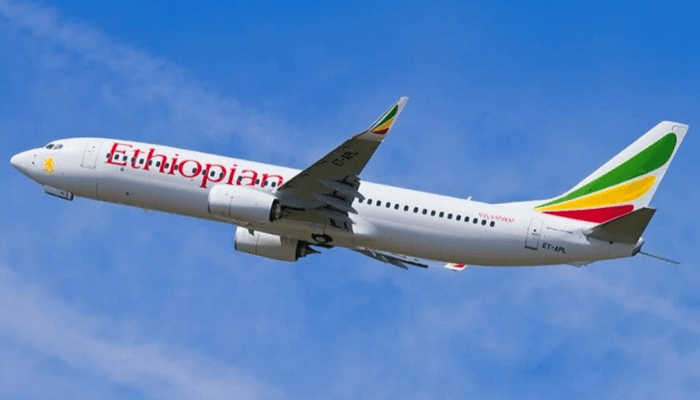
Ethiopian Airlines has lamented the negative impact of the Middle East crisis on the aviation sector, specifically pointing to the disruptions in jet fuel supply and the inconvenience or stranding of passengers in some countries.
On February 28, 2026, Israel and the United States began a series of strikes against Iran, which escalated the tension in the Middle East.
The airline, however, said its operations in Nigeria have continued to expand, adding that since last July, it has increased flight frequency from 24 to 38 weekly passenger flights, as well as more than 50 cargo flights in and out of the country.
General Manager of Ethiopian Airlines in Nigeria, Firiehiwot Mekonnen, also said aside from infrastructure challenges, the airline’s operations in Nigeria had remained largely smooth.
Addressing newsmen in Lagos where the airline celebrated its 80 years anniversary recently, she said: “ET has been the face of aviation in Africa, and that is because of the resilience, the management and the entire staff. When it comes to competition, all the products that we use, including our aircraft, are modern and new. Our onboard customer service is excellent.
“In fact, most of the feedback that we get is not even about the price or anything, but the aircraft types, onboard experience and their transit experience, all of which makes them choose Ethiopian Airlines. When it comes to price, we are competitive. Now, the competition or the advantage that we get is the product type and the customer service experience that we have.
“Operations in Nigeria have grown. Nigeria is a big market. Lagos or Abuja is not just a destination, we also value the partnership that we have with Nigeria and Nigerians as well. Since last July, we have increased our frequency from 24 weekly flights to 38 weekly flights. That is for passengers. We have more than 50 up to 60 cargo flights in and out of Nigeria. The operation in Nigeria is really big.”
On challenges experienced operating on the Nigeria route, she said: “Sometimes, it is infrastructure-wise, but other than that, nothing. We don’t have any currency issues. We don’t have that much of a challenge. Rather, it is a place where we believe that we can grow more together with the partners, the stakeholders and our passengers.”
On the Middle East crisis, she said: “It is affecting the whole world. It is a global issue. It is not only for Africa or for the Middle East. It is a global issue, both in terms of fuel supply and also passengers being inconvenienced and being stuck or stranded in one country, not able to go back to their country. As Ethiopian Airlines, we try to be there for our passengers. Whenever the airspaces are opened, we try to be there so that we can do relief evacuation flights, depending on the situation.”