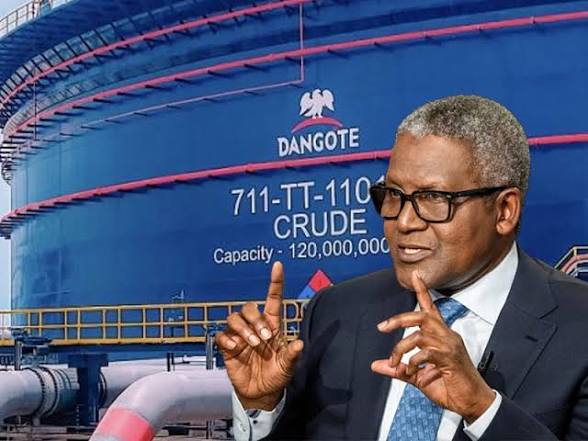
Africa’s richest man and President of Dangote Industries Limited, Aliko Dangote, has said he is prepared to confront legal challenges to his businesses, stressing that he is also willing to reduce his ownership of the Dangote Petroleum Refinery to 25 per cent as more Africans buy shares in the company.
The Dangote Group had earlier said a Kenyan court ruling over a land rights dispute would not stop the groundbreaking ceremony for its planned 700,000-barrel-per-day refinery in Lamu on Wednesday, although the order might affect some activities at the project site.
During a fireside chat at the Nairobi Securities Exchange in Kenya, Dangote spoke on the company’s planned investments in Africa, the Lamu refinery and its proposed public ownership structure in Kenya and other African countries.
The Malindi Environment and Land Court had ordered that the “status quo prevailing” on the land be maintained until a hearing on October 14. The order, dated September 25, was made public on Monday.
According to Reuters, the lawsuit was filed by 133 residents of Chandavai, an area in Lamu County, who claim that the land earmarked for the refinery is their ancestral heritage and that their families have lived and farmed there for generations.
The Dangote Group, in a statement, said, “The court has not halted the groundbreaking ceremony of the refinery at this stage. However, activities at the site may be affected by the ruling as both parties are required not to carry out activities until the case is heard on 14th October.”
Dangote, however, expressed confidence that the project would proceed despite the legal challenge. “I’m sure some of you must have seen that one court has given an order that we shouldn’t do any construction? I said no, no. This is normal for us in Africa. In fact, this is even small,” he told investors at the event.
Dangote challenged his challengers as he said he knew the forces behind the court cases. “Anyone who wants to cause trouble, we are ready for them,” he declared.
He said his business group had encountered more difficult situations in other African countries, citing a case in Senegal where one of its factories was stopped for a year.
“In Senegal, it’s not even the court. They stopped our factory for one year. We went up to the Supreme Court to get a judgement. So anybody who wants to cause trouble, we are ready for them,” Dangote said.
The planned Lamu refinery is expected to have a capacity of 700,000 barrels per day and is intended to replicate the Dangote refinery in Nigeria. Dangote has said the Kenyan refinery will cost between $15bn and $16bn and is expected to be completed by 2030.
The businessman said Kenya has become an important part of his group’s expansion strategy, adding that the company considers African countries its home. “We’re taking Kenya as our home. It is home here, and that’s why we’re here to invest. Anywhere in Africa is home, because we understand the issues, we understand the problems,” he said.
Dangote said the Lamu refinery project had moved quickly from discussions to implementation, noting that the group had already deployed construction equipment to the site.
The refinery is expected to generate significant employment, with Dangote saying more than 60,000 people would be required during the project. “We will try as much as possible to train a lot of people here because part of the project will need over 60,000 people working there,” he said.