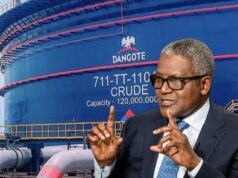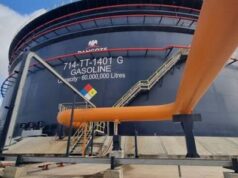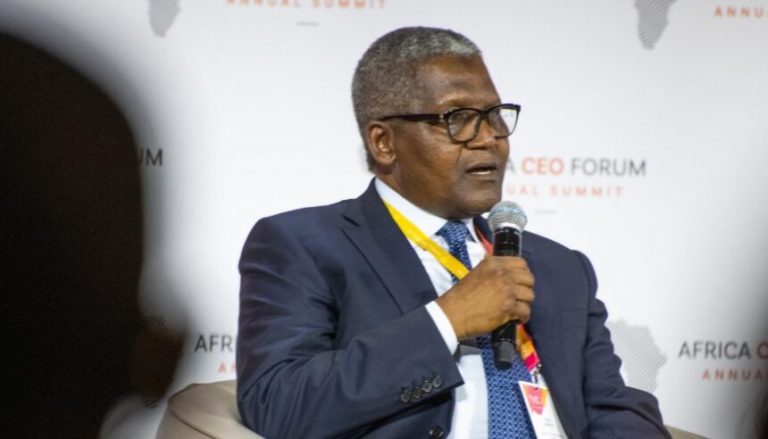
The president of Dangote Group, Aliko Dangote, has said Nigerians were still paying high prices for petrol despite the commencement of large-scale domestic refining, saying local production does not completely insulate the country from global crude oil prices and market disruptions.
Dangote, who spoke in an interview on Arise TV yesterday, said the refinery bought crude at prevailing market prices and sometimes paid significant premiums, making it impossible to sell petroleum products below sustainable market levels.
Responding to concerns over high petrol prices, he said expensive was relative, arguing that fuel prices in neighboring countries remained significantly higher than in Nigeria.
According to him, “There is still a lot of smuggling of the same petrol we are producing to our neighboring countries because those neighboring countries are about 30 percent to 50 percent more expensive than Nigeria.”
Dangote said the refinery had purchased crude for as much as $124 per barrel in May, adding that “we can’t go now and subsidize everything.”
He, however, assured, “Nigerians don’t need to worry. There will not be any shortage from our own part. There will be no queues, and we’ll make sure we keep satisfying the market despite all odds.”
On Nigeria’s industrialization challenge, Dangote identified high borrowing costs as a major obstacle to new investments.
“It is very difficult to industrialize with interest rates at 30 percent. I can’t see the magician who can actually industrialize a country with a 30 percent interest cost,” he said.
He warned that without policies deliberately protecting domestic investments, Nigeria might struggle to attract another major refinery project.
He warned, “Under the current things that are going on, especially downstream, I cannot see any new refinery in our lifetime.
“Government must protect productive domestic industries if it expects businesses to create jobs, generate taxes, and deepen economic activities.
“If you import, what you are doing is you are importing poverty and exporting jobs that you are supposed to create out of the country,” he said.