Every new helmsman at the Independent National Electoral Commission, INEC, deserves a window of time to demonstrate their worth before the gavel of public opinion falls. We have seen, throughout the convoluted arc of our national history, that the character of a Chief Electoral Umpire can become the pivot upon which our democracy turns. Character is the main currency of this realm.
In the 1980s, within the lecture halls of the University of Nigeria, Nsukka, UNN, I sat before Professor Humphrey Nwosu, a man who did not merely teach political science, he preached the gospel of political and governmental integrity with the fire of an evangelist. When history finally summoned him to the National Electoral Commission, NEC, to “walk his talk,” he did so with a towering stride that remains Nigeria’s finest hour on record.
Nwosu’s conduct of the June 12, 1993 election was so sterling, so morally transparent, that Ghana—now the gold standard of West African democratic credibility—consciously modelled its own Electoral Commission, ECG, after the Nwosu blueprint. The law establishing their commission is, for all intents and purposes, a carbon copy of the establishment law of Nwosu’s NEC.
The tragic divergence, however, is that while Ghana nurtured those seeds of integrity and patriotic neutrality, Nigeria went rogue. The “new breed” politicians nurtured in the petri dishes of General Ibrahim Babangida’s endless and cynical transition programmes became a nursery bed of political buccaneers. Their electoral and governing philosophy was eventually distilled into that infamous, chilling mantra voiced by Bola Tinubu himself during the 2023 campaign season: “Grab it, snatch it, and run away with it.”
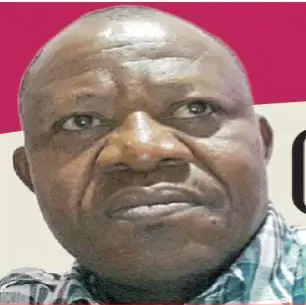
Since the dawn of the Fourth Republic in 1999, the Presidency has largely treated the INEC chairmanship not as a sacred trust, but as a strategic appointment of people ready to tilt the scales toward the ruling party. The only brief, shining departure from this script occurred in 2010. Former President Goodluck Jonathan, in a moment of rare institutional deference, appointed a man he did not know from Adam: Professor Attahiru Jega. A former ASUU President and a darling of civil society, Jega’s appointment was Jonathan’s most noble act—and, ironically, his political undoing. Jega leveraged digital reforms to insulate the process, yet even he was not immune to the Nigerian “factor,” ultimately facing accusations of favouring his ethnic kinsman, Muhammadu Buhari, and the rising opposition.
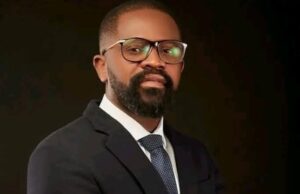
Buhari and Tinubu clearly learned a lesson from Jonathan’s perceived patriotic “mistake”. They resolved never to leave the chairmanship to chance again. Consequently, we saw a retreat into the familiar comfort of ethnic and personal loyalty: Buhari chose Prof Mahmood Yakubu, and now, Tinubu has settled on Prof Joash Amupitan. Having fought a long, gruelling war to wrest power from the PDP, the APC appears determined to utilise every lever of statecraft to ensure their maximum tenure remains undisturbed.
As the October 2025 exit of Mahmood Yakubu approached after eight unprecedented years, the air was thick with anticipation. I initially suspected the President would reward Olusegun Agbaje, the Lagos REC, for his proximity to the seat of power. Perhaps Agbaje’s failure to prevent Peter Obi from humbling the “Jagaban” in his own Lagos fiefdom rendered him “untrustworthy” in the eyes of the president. Instead, we were presented with a dark horse: Joash Amupitan, a Senior Advocate of Nigeria and Professor of Law from the University of Jos.
When the Supreme Council for Sharia in Nigeria, SCSN, clamoured for Amupitan’s sack, citing a position paper he once authored on the genocide of Christians in Nigeria, I felt compelled to defend him. I am a firm believer that these genocides have been allowed to fester for decades under the indifferent gaze of the Federal Government. I argued then, in this very column, that we must not crucify a man for speaking truth to power; we must give him the room to prove his worth before we judge.
However, the “stealth” nature of his appointment and the lightning-speed screening by a compliant, rubber-stamp Godswill Akpabio Senate left little room for genuine due diligence. It is only now, through the unfiltered and persistent lens of social media, that we are beginning to see why the President might have been so keen on this particular legal luminary.
Recent scandals involving an alleged “X” handle have painted a troubling portrait of Amupitan. The handle linked to him was seen applauding a partisan post by APC Youth Leader, Dayo Israel, just before the controversial 2023 polls. Furthermore, investigative reports suggest his media team’s language mirrors that of the President’s own media aides “almost verbatim”. The most damning allegation involves the attempted manipulation and erasure of digital records—metadata and old tweets—that purportedly tie Amupitan to the Tinubu and APC inner circle. The Professor has met these storms with “hot denials,” insisting he has no social media account and pledging a non-partisan tenure. INEC says it is hiring “forensic experts” to examine these alleged digital footprints. While that is a welcome step, we cannot leave the fox to guard the henhouse alone.
We must demand an independent, private-citizen-led forensic investigation. The stakes are too high. If an independent audit confirms that Prof Amupitan: (a) Made posts that showed him as a card-carrying APC supporter; (b) Is politically or professionally connected to President Tinubu; or (c) Attempted to digitally alter or “cleanse” his social media history to deceive the public, then he is not merely a partisan appointee, he is unfit for the INEC chair.
Once such partisanship is established, he must go. But if an independent investigation clears his name, let him return to his desk and face the monumental tasks ahead. We are fast approaching the campaigns and elections. We need a Chief Electoral Umpire who puts Nigeria first.
Let the forensics begin.