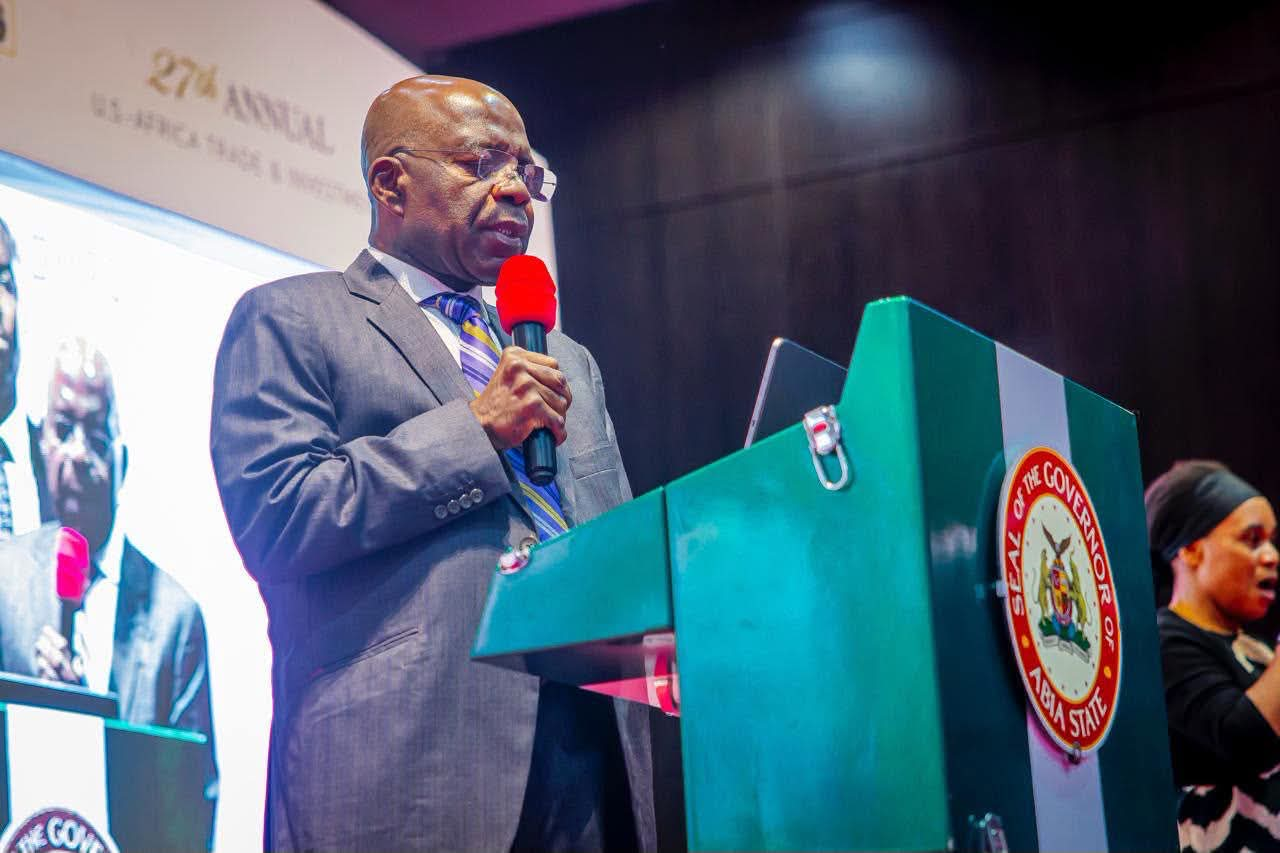
Abia State Governor, Dr. Alex Otti, has presented a proposed ₦1.2 trillion budget for the 2027 fiscal year to the Abia State House of Assembly, with ₦960 billion, representing 80 per cent of the total budget, earmarked for capital expenditure.

The proposed spending plan, which represents an 18 per cent increase over the 2026 budget, signals the administration’s intention to prioritise infrastructure development, public investment and other capital projects across the state.
Under the proposal, ₦960 billion has been allocated to capital expenditure, while ₦240 billion, representing 20 per cent of the budget, is set aside for recurrent expenditure, including the day-to-day running of government institutions and other operational obligations.
The substantial allocation to capital projects suggests that the Otti administration intends to sustain its development agenda, with emphasis on investments expected to deliver long-term economic and social benefits to residents.


According to the budget figures, the state government projects total revenue of ₦647.33 billion, while ₦552.67 billion is expected to come from concessional loans to finance the proposed expenditure.
The government also projects internally generated revenue of ₦199.8 billion, highlighting the importance of revenue mobilisation in financing its programmes and reducing dependence on statutory allocations.
The proposed ₦552.67 billion in concessional loans represents approximately 46 per cent of the total budget, making borrowing a significant component of the government’s financing plan.
Concessional loans generally come with more favourable repayment conditions than conventional commercial loans, including relatively lower interest rates and longer repayment periods.
However, the proposed borrowing is expected to attract attention during legislative consideration of the budget, particularly regarding debt sustainability, repayment obligations and the projects to be financed.
The 80 per cent capital allocation also places considerable responsibility on government ministries, departments and agencies to ensure that approved funds translate into completed projects and measurable improvements in public services.
With the proposed budget increasing by 18 per cent compared with 2026, attention will equally focus on the government’s capacity to generate projected revenues, secure the anticipated financing and implement its spending priorities effectively.
The budget proposal will now undergo legislative scrutiny by the Abia State House of Assembly, where lawmakers are expected to examine the allocations, revenue projections and financing arrangements before considering its passage.
If approved, the ₦1.2 trillion spending plan will provide the financial framework for the Otti administration’s development priorities in the 2027 fiscal year.
For Abia residents, the key expectation will be how the proposed ₦960 billion capital expenditure translates into visible projects, improved infrastructure, better public services and economic opportunities across the state’s 17 local government areas.