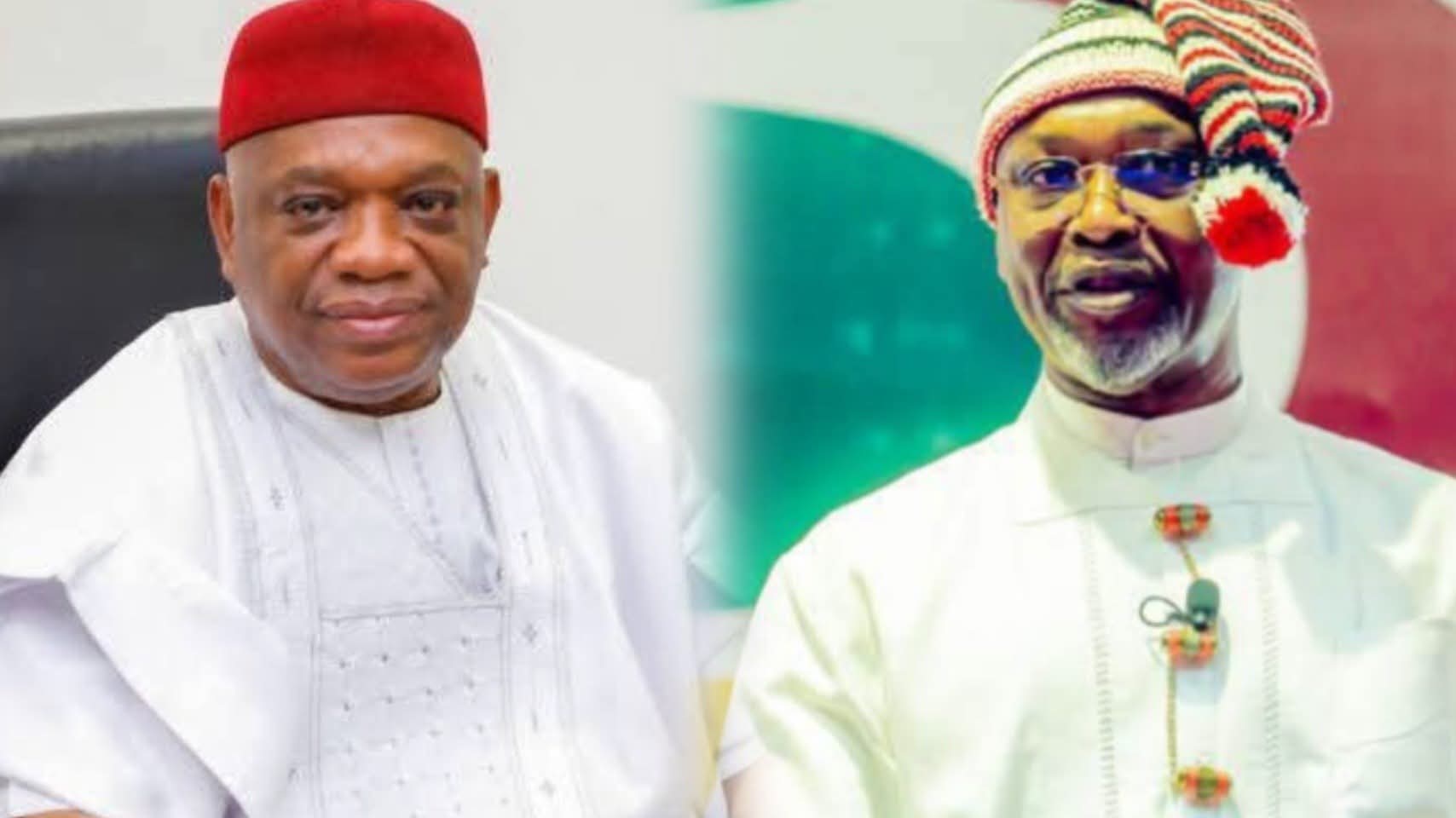
Former Minister of Aviation, Osita Chidoka, has reflected on the political influence of former Abia State Governor, Senator Orji Uzor Kalu, describing his emergence at the beginning of Nigeria’s Fourth Republic as a defining moment that gave Abia State a strong voice in national politics.
Chidoka made the remarks while delivering his Abia at 35 lecture on Thursday, August 27, 2026, as part of activities marking the 35th anniversary of the creation of Abia State.
Speaking on the theme of leadership, institutions and defining moments in the life of a state, Chidoka recalled that at the beginning of the Fourth Republic in 1999, the South-East was searching for greater political voice and relevance within Nigeria’s emerging democratic order.
According to him, Kalu, who became Governor of Abia State at the time, recognised the political moment and used his youth, assertiveness and national visibility to position Abia prominently in national discourse.
“At the beginning of the Fourth Republic, the South East was searching for voice and relevance in the new democratic order. Orji Uzor Kalu understood that moment,” Chidoka said.
Describing Kalu at the time as “young, assertive and politically visible,” the former minister said his leadership ensured that Abia’s influence extended beyond its geographical and political size.
“He put Abia firmly in the national conversation. Abia punched above its weight,” Chidoka stated.
He, however, observed that the momentum was not sustained indefinitely, noting that over time, infrastructure deteriorated and the state’s national standing declined.
Chidoka particularly referenced Aba, the commercial hub of the state, arguing that the entrepreneurial city increasingly appeared to succeed through the resilience of its people rather than through sufficient government support.
He said the subsequent decline created another defining moment in Abia’s history, which he believes the administration of Governor Alex Otti has sought to address through infrastructure development and efforts to restore public confidence in government.
Beyond individual administrations, Chidoka used the occasion to raise a broader question about the relationship between strong leadership and strong institutions in developing societies.
While agreeing with the principle that societies should ultimately be governed through strong institutions rather than dependence on individuals, he argued that effective leaders are sometimes required to build those institutions where they are weak.
“The strongman makes himself indispensable. The strong leader builds a system that can eventually work without him,” he said.
Chidoka maintained that the challenge before Abia is therefore not simply to celebrate the achievements of individual leaders, past or present, but to institutionalise standards of governance that can survive changes in political leadership.
He concluded by posing what he described as the critical question for the state as it begins another chapter of its history: “Can the present Abia moment become the permanent Abia standard?”