Home Blog

President Buhari Chairs Council Of State Meeting, Gowon, Abdulsalami, Jonathan Present (PHOTOS)
0
President Buhari Chairs Council Of State Meeting, Gowon, Abdulsalami, Jonathan Present (PHOTOS)
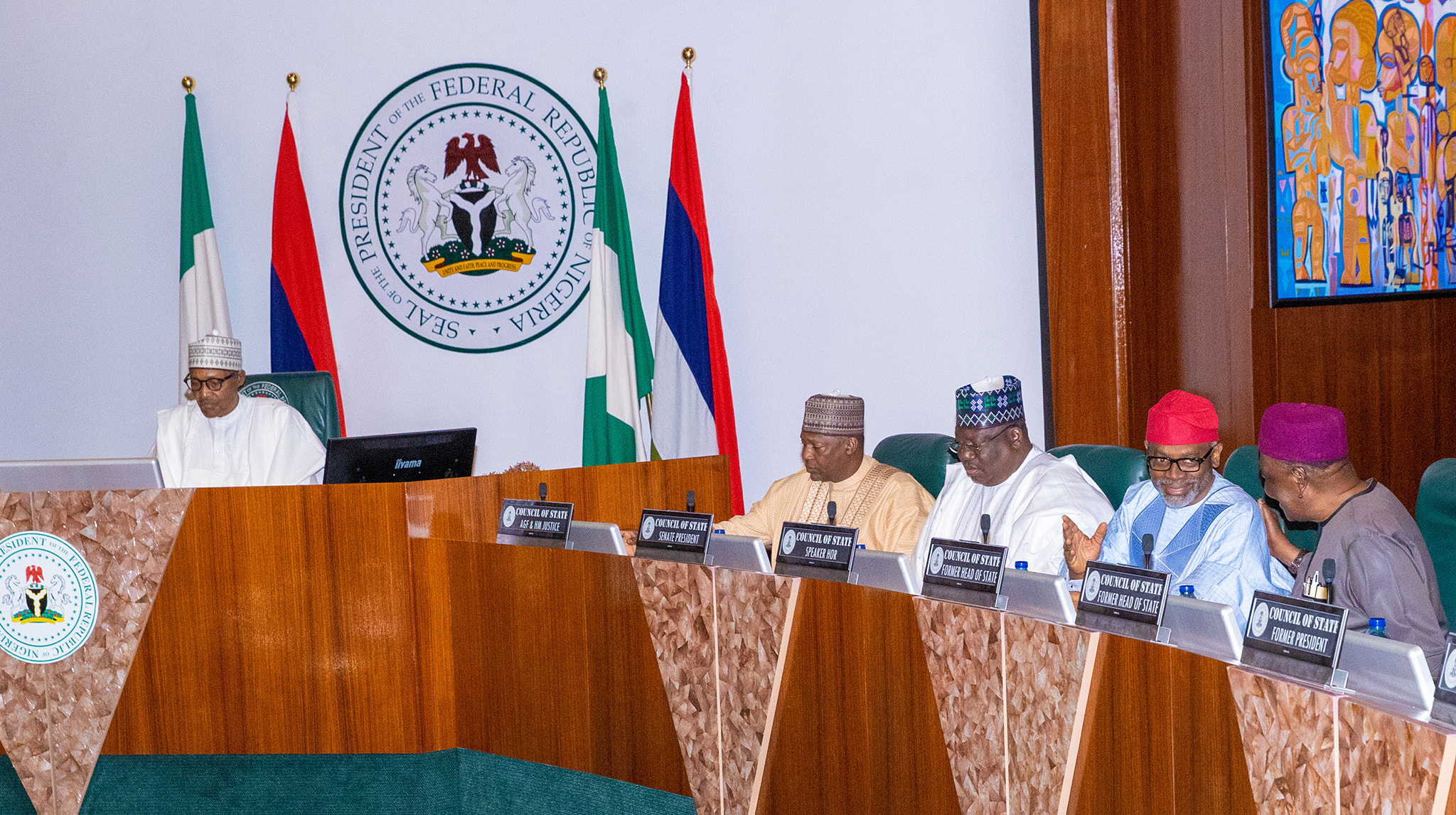
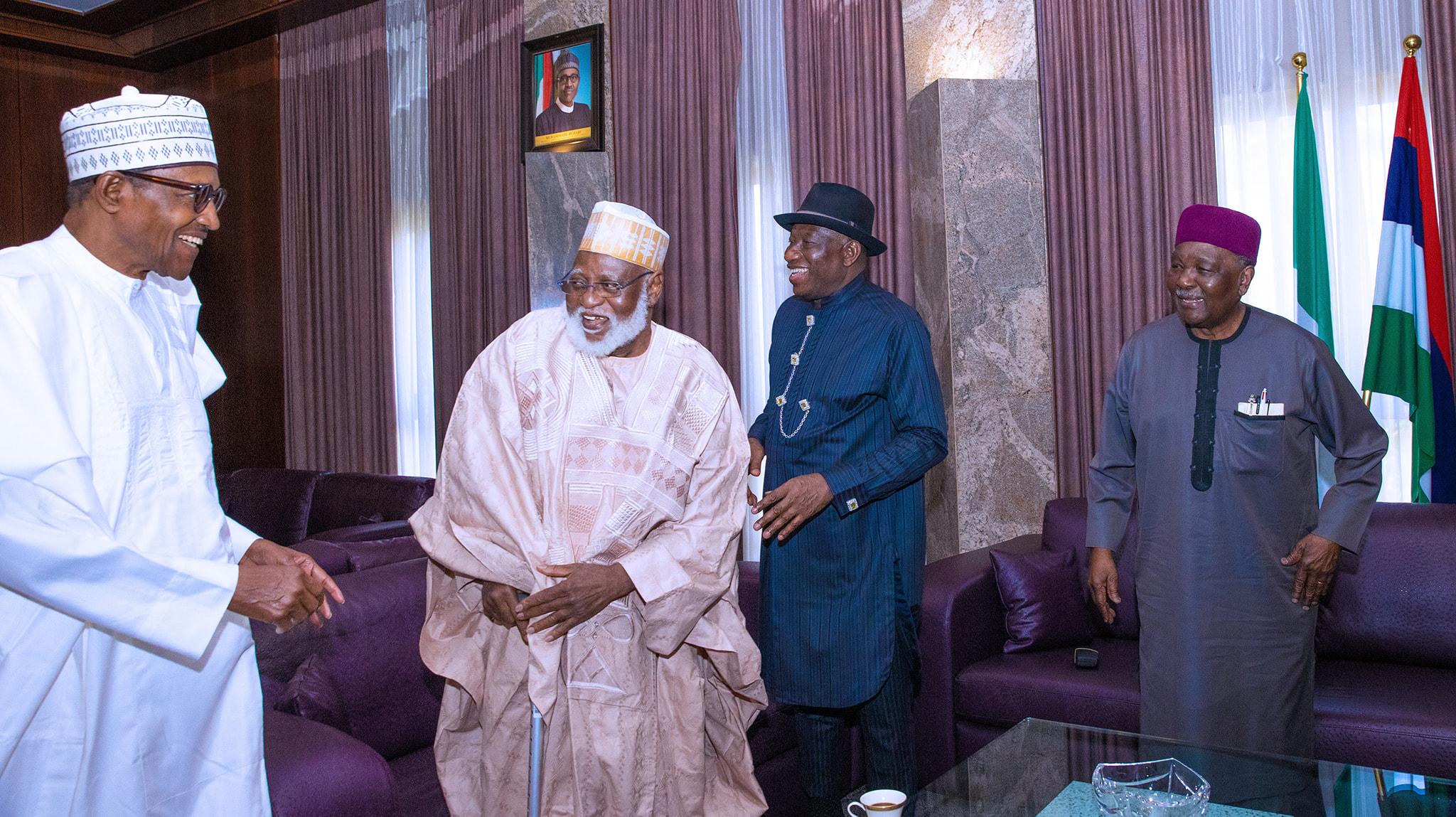
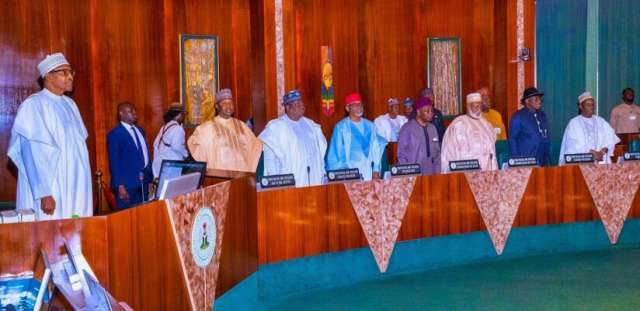
PRESIDENT BUHARI PRESIDES OVER COUNCIL OF STATE MEETING 6. L-R; President Muhammadu Buhari, Minister of Justice, Abubakar Malami SAN, President of the Senate Dr Ahmad Lawan, Speaker Rt Hon Femi Gbajabiamila, Gen Yakubu Gowon, Former Head odf State Gen Abdulsalami Abubakar, Former President, Dr Ebele Goodluck Jonathan, former CJN Hoj Justice Belgore during the Council of State Meeting Head at the Council Chambers State House Abuja. PHOTO; SUNDAY AGHAEZE. PHOTO; SUNDAY AGHAEZE. FEB 10TH 2023

President Muhammadu Buhari is currently chairing a meeting of Council of State at the Council Chambers of the Presidential Villa, Abuja, ABN TV reports.
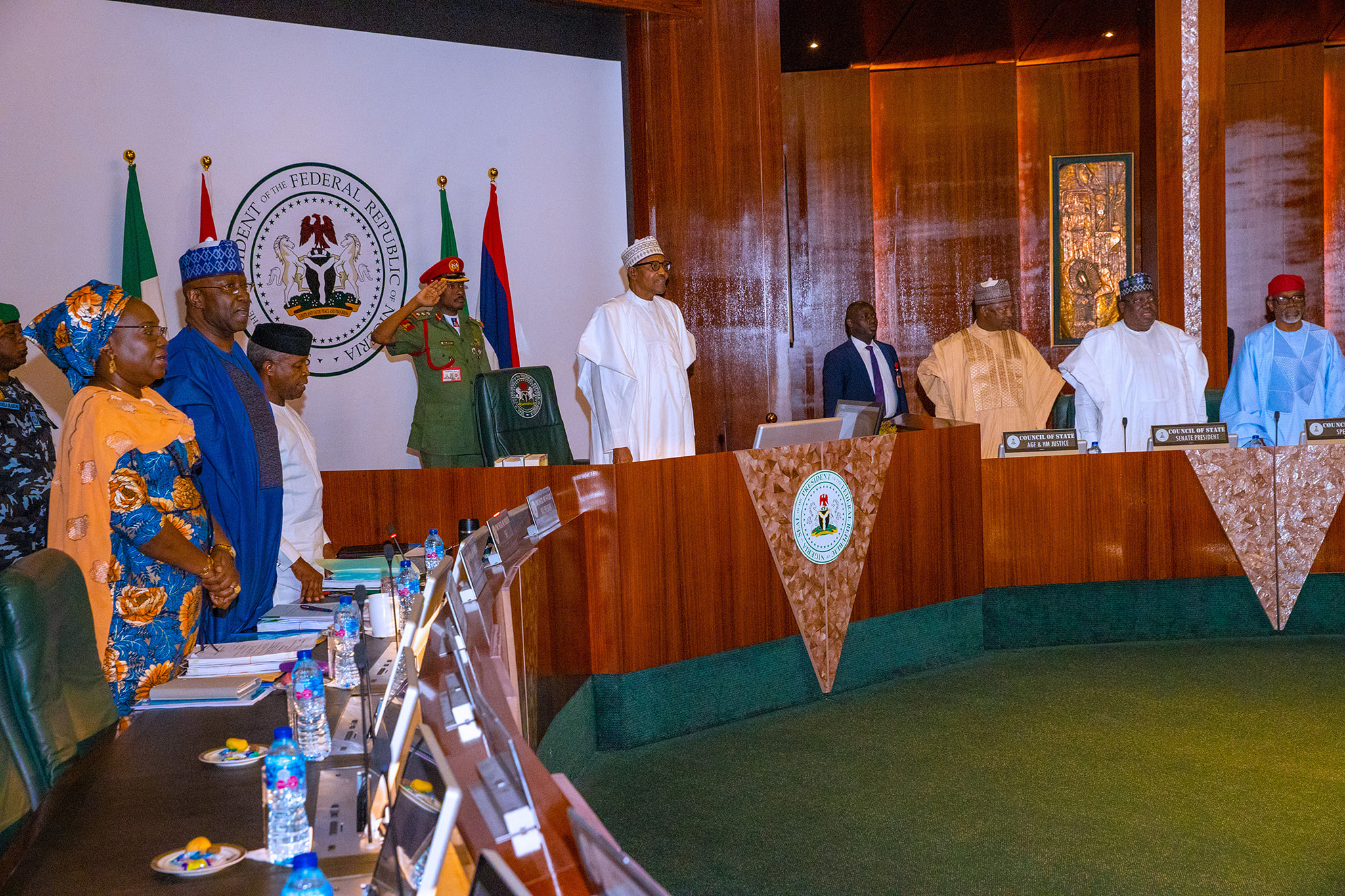
PRESIDENT BUHARI PRESIDES OVER COUNCIL OF STATE MEETING 9. L-R; Head of Civil Service of the Federation, Dr Mrs Folasahde Yemi-Esan, SGF Mr Boss Mustaha, Vice President Yemi Osinbajo SAN, President Muhammadu Buhari, Minister of Justice, Abubakar Malami SAN, President of the Senate Dr Ahmad Lawan, Speaker Rt Hon Femi Gbajabiamila during the Council of State Meeting Head at the Council Chambers State House Abuja. PHOTO; SUNDAY AGHAEZE. PHOTO; SUNDAY AGHAEZE. FEB 10TH 2023
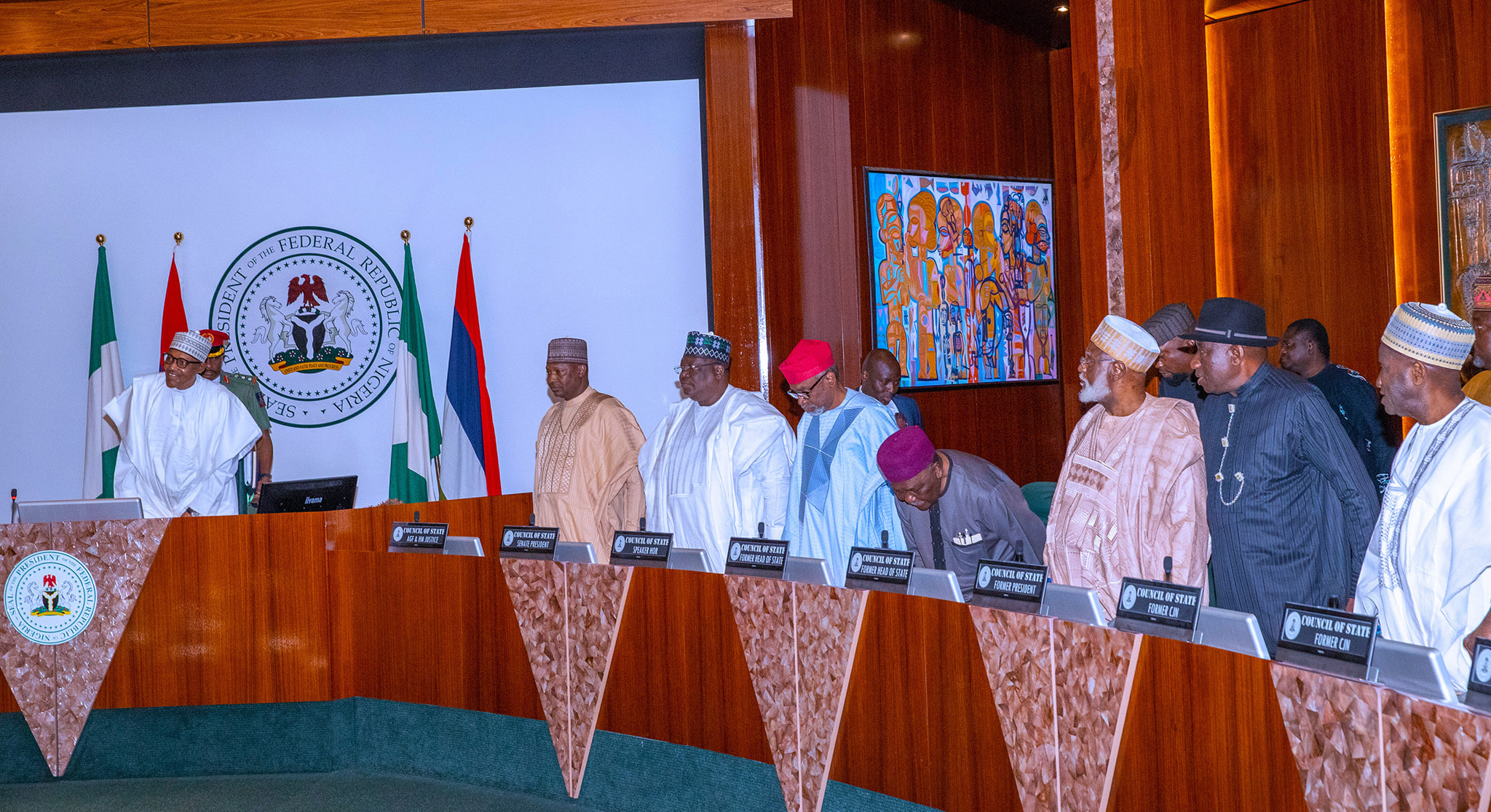
PRESIDENT BUHARI PRESIDES OVER COUNCIL OF STATE MEETING 7A&B. L-R; President Muhammadu Buhari, Minister of Justice, Abubakar Malami SAN, President of the Senate Dr Ahmad Lawan, Speaker Rt Hon Femi Gbajabiamila, Gen Yakubu Gowon, Former Head odf State Gen Abdulsalami Abubakar, Former President, Dr Ebele Goodluck Jonathan, former CJN Hoj Justice Belgore during the Council of State Meeting Head at the Council Chambers State House Abuja. PHOTO; SUNDAY AGHAEZE. PHOTO; SUNDAY AGHAEZE. FEB 10TH 2023

The meeting which started at 10:12am after the rendition of the national anthem is being attended by former heads of state and presidents, including Gen. Yakubu Gowon (retd), Gen. Abdulsalami Abubakar (retd) and Goodluck Jonathan. Former President Olusegun Obasanjo, joined online.

Others who join virtually include Governor of Sokoto State and Chairman of Nigeria Governors Forum (NGF), Aminu Tambuwal, Governor of Kebbi State and Chairman of Progressive Governors Forum (PGF), Abubakar Bagudu, Governor of Plateau State and Chairman, of Northern States Governors Forum, Simon Lalong.

READ ALSO: Buhari Appoints MD/CE For NSITF, Reconstitutes Board

The rest are governors David Umahi, Ebonyi, Yahaya Bello, Kogi, Ademola Adeleke, Osun, Abubakar Badaru, Jigawa, Dapo Abiodun, Ogun as well as Benue State deputy governors Benson Abounu, Nasarawa, Emmanuel Akabe, and Enugu Deputy governor.

Two former Chief Justices of the Federation, Alfa Belgore and Mahmud Muhammad are in attendance.

In attendance physically are Vice President, Yemi Osinbajo, President of the Senate, Ahmed Lawan, Speaker of the House of Representatives, Femi Gbajabiamila, Attorney General and Minister of Justice, Abubakar Malami, Secretary to the Government of the Federation, Boss Mustapha, and Head of Service of the Federation, Folashade Yemi-Esan

Governors physically attending are: Taraba, Dairu Isiaku, Kaduna, Nasir El-Rufai, Borno, Babagana Zulum, Gombe, Inuawa Yahaya, Lagos, Babajide Sanwo-Olu, Kwara, Abdulrahman Abdulrazak and Deputy Governor Bauchi, Baba Talla.

The National Council of State is an organ of the Nigerian government whose functions include advising the executive on policy making.

The meeting is expected to discuss national crises including petrol and naira scarcity, insecurity and others, ahead of the general elections.

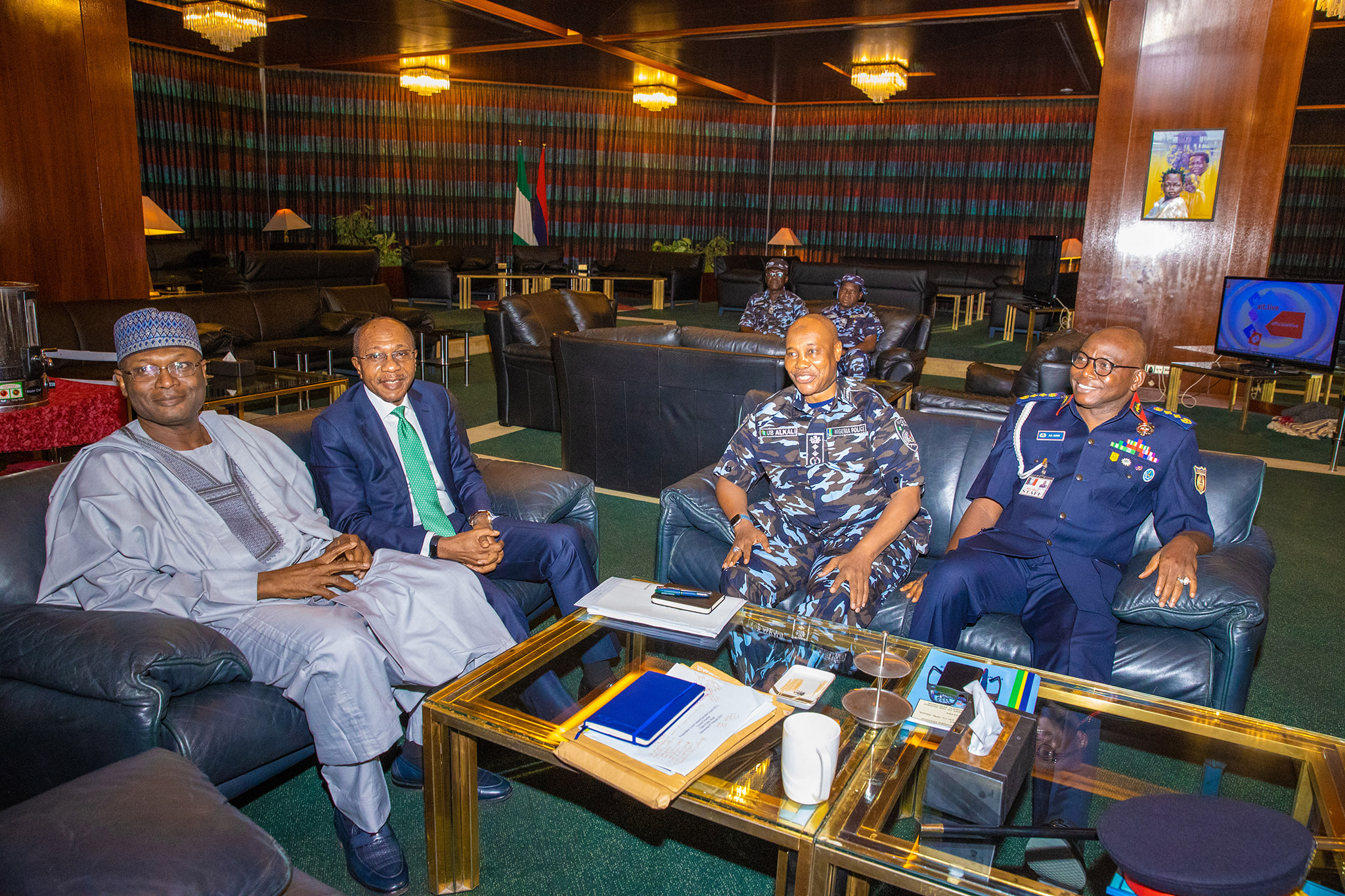
Also present and awaiting their turn to brief the council are Chairman of the Independent National Electoral Commission (INEC), Mahmood Yakubu, Inspector General of Police (IGP), Alkali Baba, Commandant General, Nigerian Security, and Civil Defence Corps, Hammed Audi and Governor of the Central Bank of Nigeria, Godwin Emefiele on the preparation for the February 25 presidential and National Assembly elections as well as March 11 governorship and state houses of assembly polls and new Naira notes respectively.
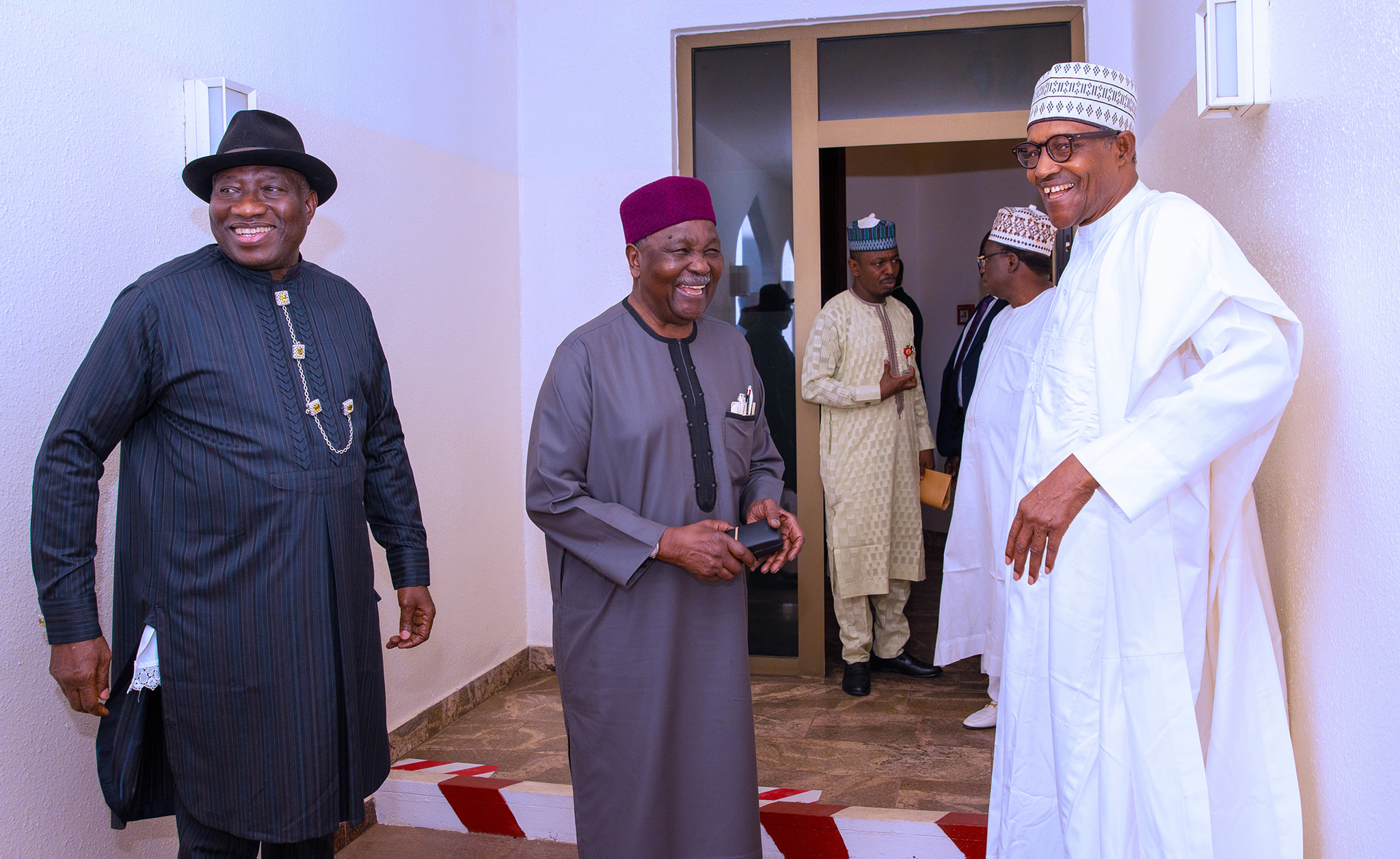
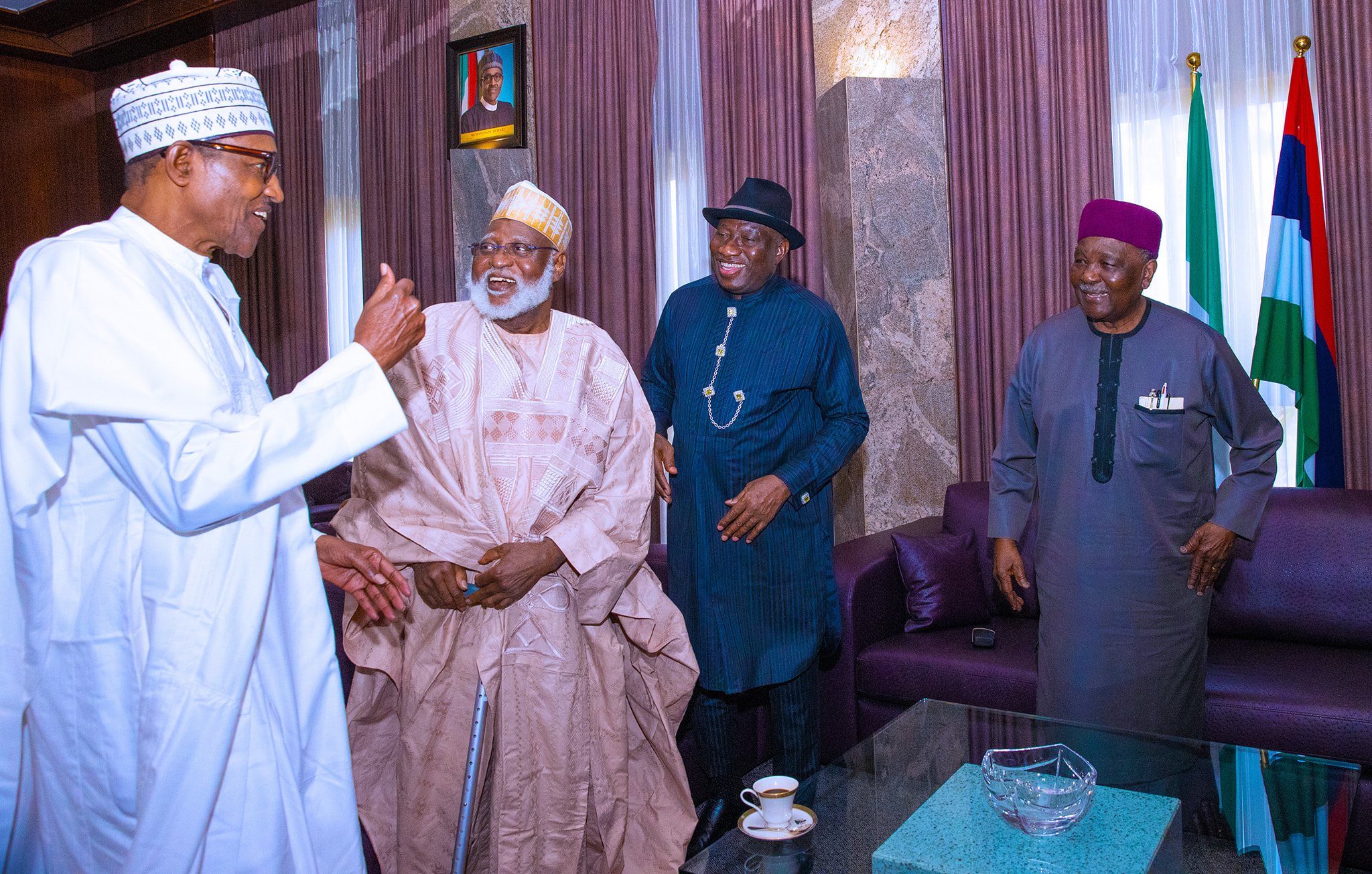
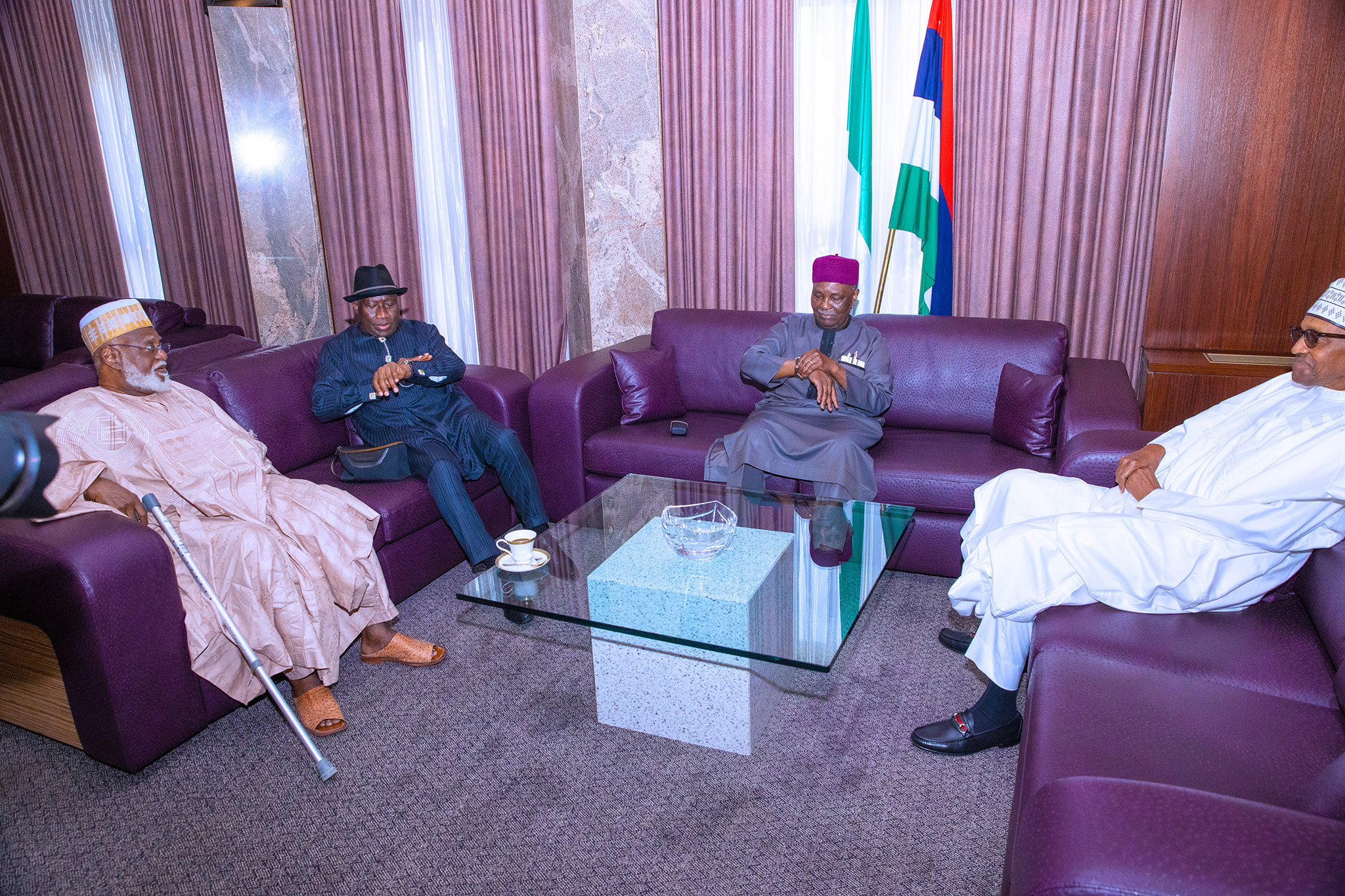
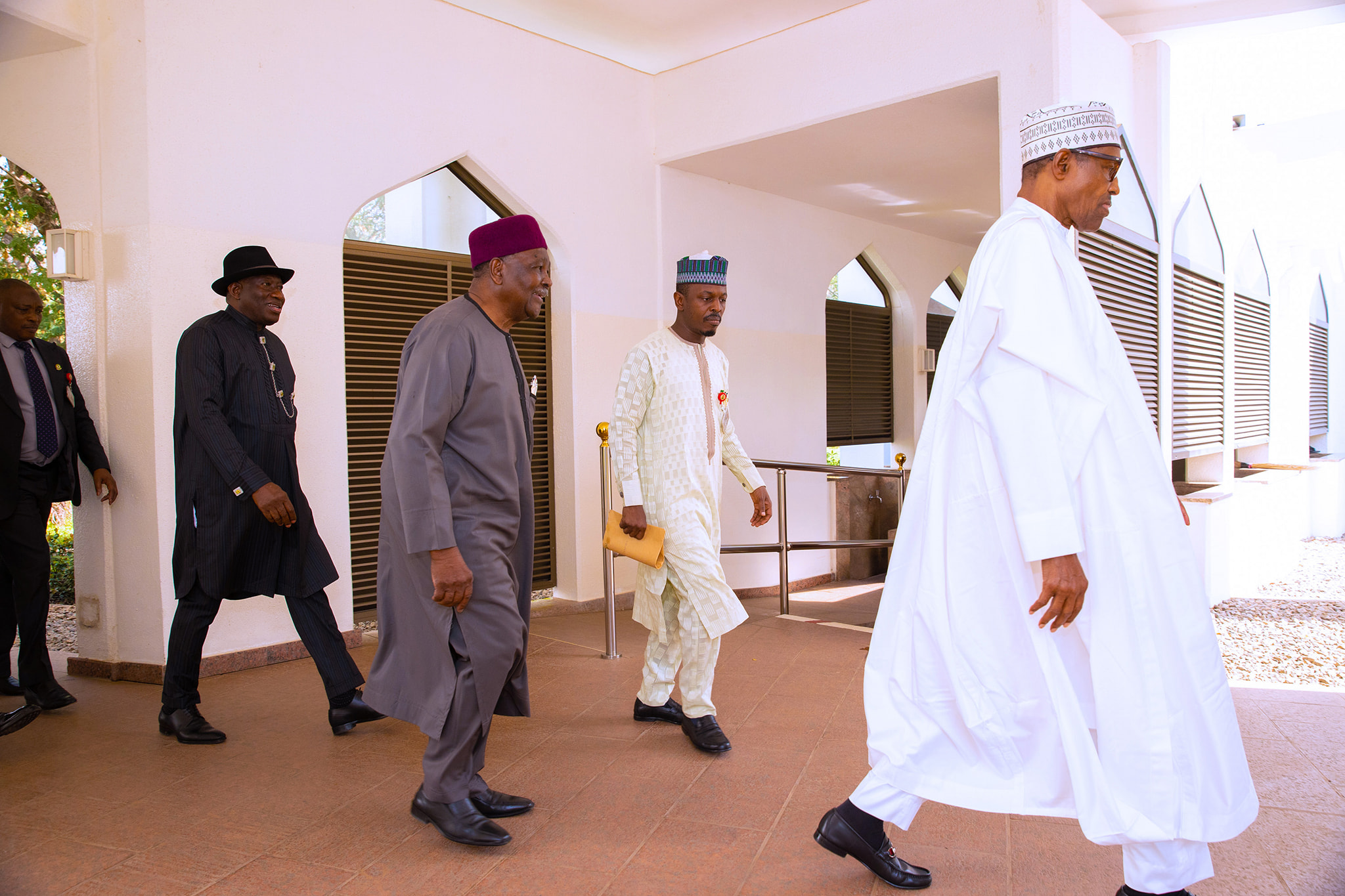
PRESIDENT BUHARI PRESIDES OVER COUNCIL OF STATE MEETING 3B. L-R; Former President Dr Goodluck Jinathan, Former Head of State General Yakubu Gowon and President Muhammadu Buhari during the Council of State Meeting Head at the Council Chambers State House Abuja. PHOTO; SUNDAY AGHAEZE. PHOTO; SUNDAY AGHAEZE. FEB 10TH 2023
PRESIDENT BUHARI PRESIDES OVER COUNCIL OF STATE MEETING 1A&B. L-R; President Muhammadu Buhari, Former Head of State Gen Abdulsalami Abubakar, Former President, Dr Ebele Goodluck Jonathan and Former Head of State Gen Yakubu Gowon during the Council of State Meeting Head at the Council Chambers State House Abuja. PHOTO; SUNDAY AGHAEZE. PHOTO; SUNDAY AGHAEZE. FEB 10TH 2023
PRESIDENT BUHARI PRESIDES OVER COUNCIL OF STATE MEETING 00A&B. L-R; Former Head of State Gen Abdulsalami Abubakar, Former President, Dr Ebele Goodluck Jonathan, Former Head of State Gen Yakubu Gowon. and President Muhammadu Buhari during the Council of State Meeting Head at the Council Chambers State House Abuja. PHOTO; SUNDAY AGHAEZE. PHOTO; SUNDAY AGHAEZE. FEB 10TH 2023
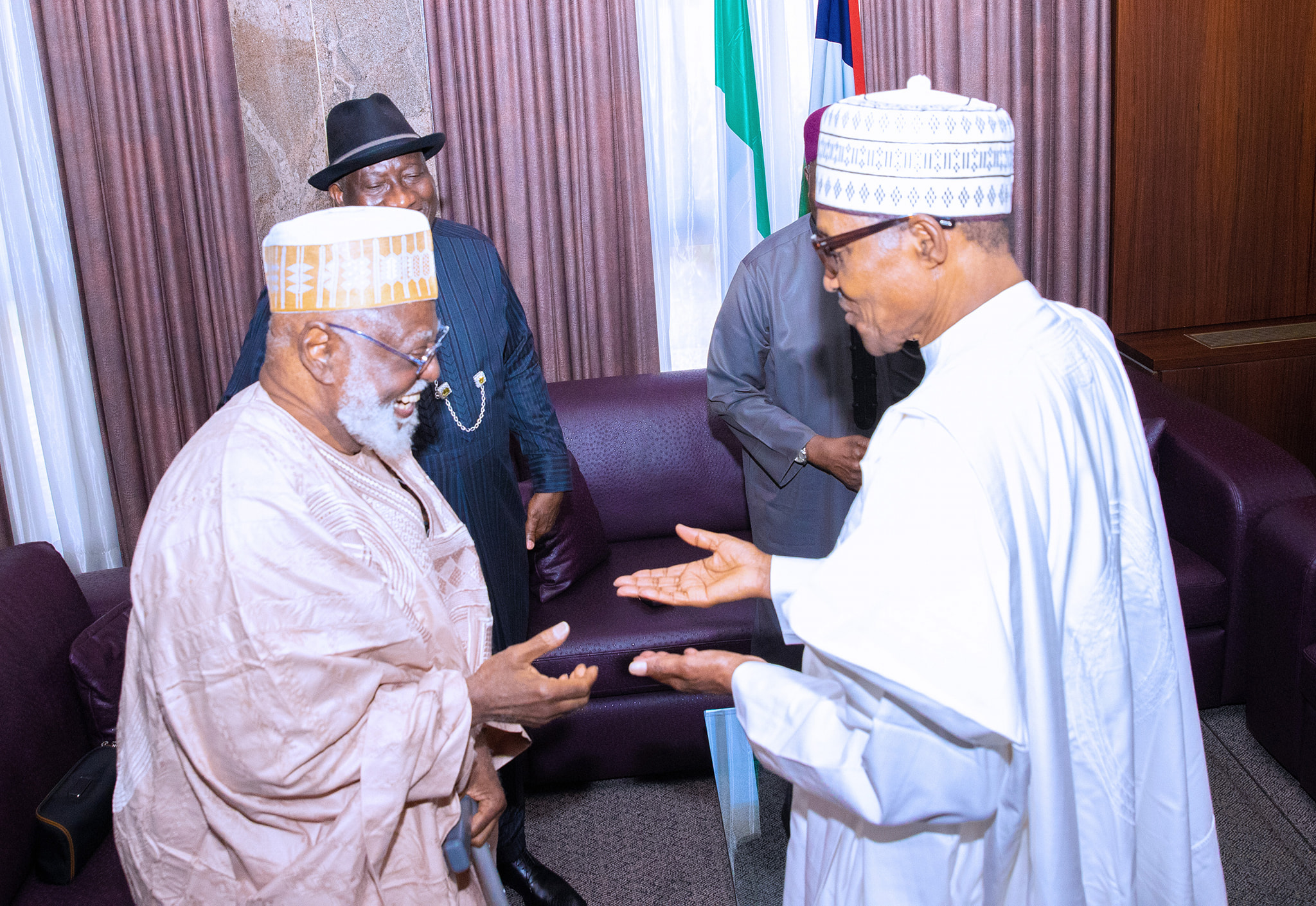
PRESIDENT BUHARI PRESIDES OVER COUNCIL OF STATE MEETING 0A&B. L-R; President Muhammadu Buhari, Former Head of State Gen Abdulsalami Abubakar, Former President, Dr Ebele Goodluck Jonathan and Former Head of State Gen Yakubu Gowon during the Council of State Meeting Head at the Council Chambers State House Abuja. PHOTO; SUNDAY AGHAEZE. PHOTO; SUNDAY AGHAEZE. FEB 10TH 2023

PRESIDENT BUHARI PRESIDES OVER COUNCIL OF STATE MEETING 1A&B. L-R; President Muhammadu Buhari, Former Head of State Gen Abdulsalami Abubakar, Former President, Dr Ebele Goodluck Jonathan and Former Head of State Gen Yakubu Gowon during the Council of State Meeting Head at the Council Chambers State House Abuja. PHOTO; SUNDAY AGHAEZE. PHOTO; SUNDAY AGHAEZE. FEB 10TH 2023
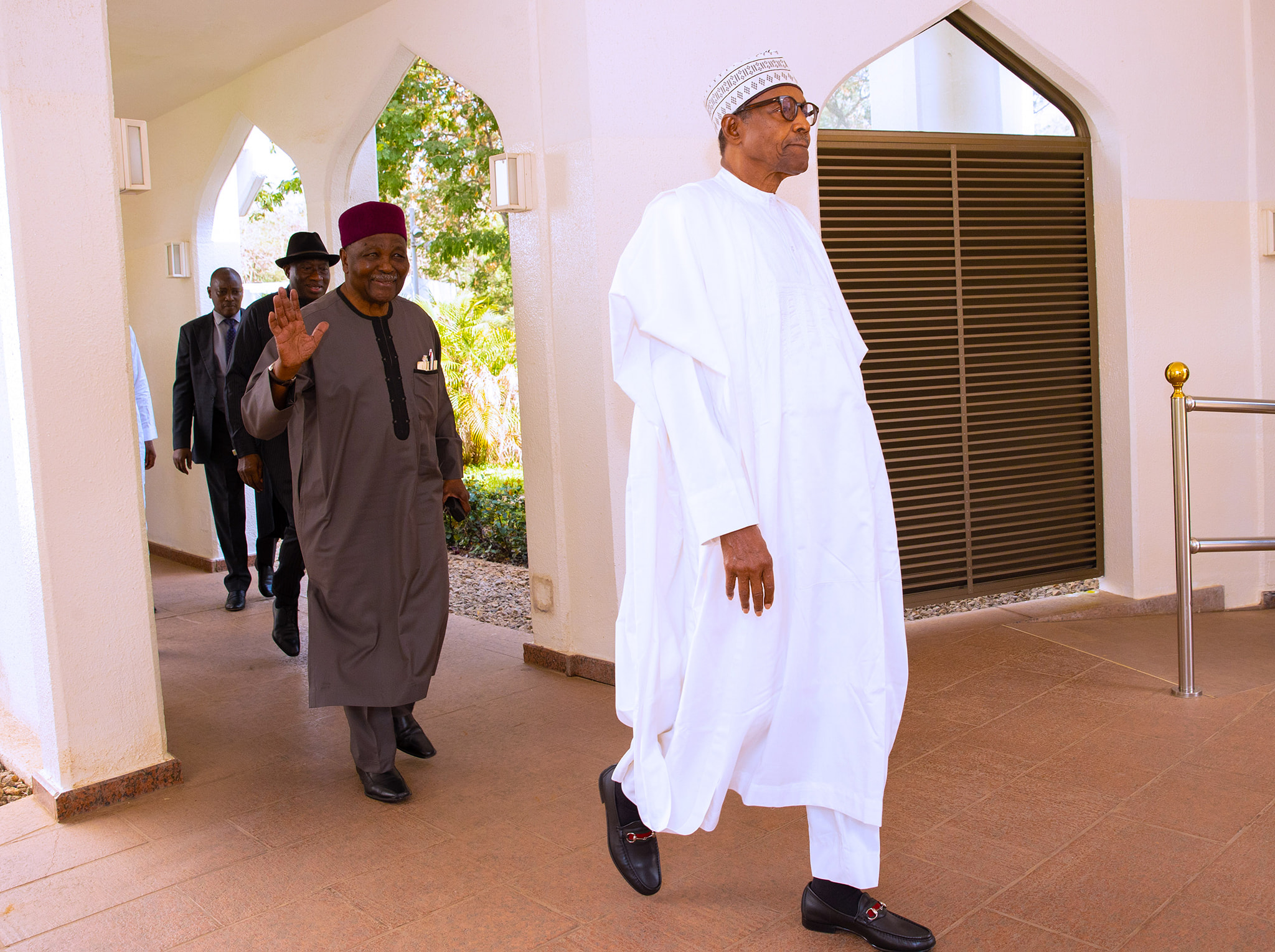
PRESIDENT BUHARI PRESIDES OVER COUNCIL OF STATE MEETING AB. L-R; Former President Dr Goodluck Jinathan, Former Head of State General Yakubu Gowon and President Muhammadu Buhari during the Council of State Meeting Head at the Council Chambers State House Abuja. PHOTO; SUNDAY AGHAEZE. PHOTO; SUNDAY AGHAEZE. FEB 10TH 2023

Supreme Court Affirms Ikechi Emenike As APC Guber Candidate In Abia

0
Abia APC Guber Candidate, Ikechi Emenike, Other Party Leaders Pay Courtesy Visit On National Chairman (Photos)
Ikechi Emenike

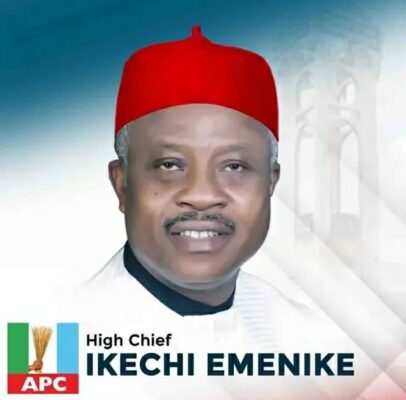
The Supreme Court has affirmed Ikechi Emenike as the governorship candidate of the All Progressives Congress (APC) in Abia State.

A five-member panel of the supreme court led by Tijani Abubakar on Thursday affirmed the judgment of the court of appeal delivered in December 2022.

The Abia APC had held parallel governorship primaries that produced Uche Ogah and Emenike as candidates of the party.

READ ALSO: Atiku Will Defeat Peter Obi In Anambra – Campaign DG

On May 26, the APC declared Emenike the winner of the governorship primary in the state.

On November 11, Binta Nyako, a federal high court judge, sacked Emenike and ordered INEC to recognise Ogah as the party’s governorship candidate in the state.

Both APC and Emenike had filed separate appeals challenging the verdict delivered by Nyako.

Dan Eke, another aspirant, also filed an appeal challenging the judgment of the trial judge that recognised Ogah’s candidacy.

In December 2022, the court of appeal sitting in Abuja affirmed Emenike as the party’s candidate.

In the unanimous verdict, Olabisi Ige, who led the appeal court panel, read out the names of the party members sent by the APC national secretariat to conduct the governorship primary that produced Emenike, affirming that the exercise was valid.

Another candidate, Dan Eke, also filed an appeal in which he contested the trial judge’s decision to recognize Ogah’s candidacy.

The court of appeal in Abuja confirmed Emenike as the party’s nominee in December 2022.

Olabisi Ige, who presided over the appeal court panel, read aloud the names of the party members appointed by the APC national headquarters to oversee the governorship primary that produced Emenike and affirmed the validity of the process in the unanimous decision.

Passport: UK Mission Clarifies £70 Fee, Refunds £50

0
Passport: UK Mission Clarifies £70 Fee, Refunds £50

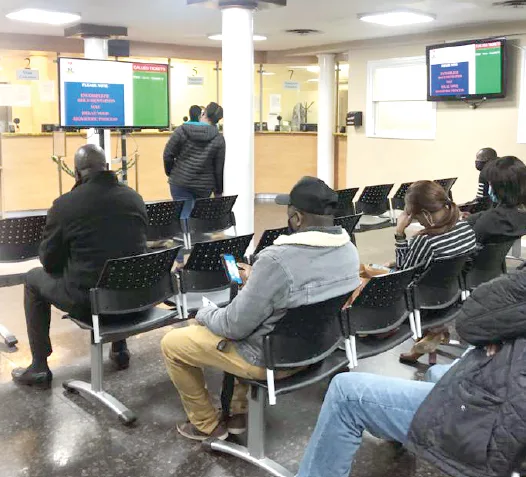
The Nigeria High Commission in London, United Kingdom, has clarified that the £70 administrative fee paid by some Nigerians during the ongoing passport intervention exercise was not approved by the Federal Government, insisting that the standard administrative charge remains £20.

The clarification came barely a day after the mission announced that applicants who had paid £70 would receive a £50 refund, leaving the £20 standard administrative fee.

“This is to inform all passport intervention applicants who have paid a £70 admin fee that £50 will be refunded to you, £20 being the standard admin fee,” the commission had stated in a notice published on its website.

In a fresh public notice on its website dated Friday, September 11th, and signed by the Nigeria High Commission, London, the mission said it was compelled to clarify reports and commentaries circulating over the charges for the intervention exercise.

Inside Ara, the Osun Town Where Nobody Keeps Dogs | Punch

The mission said some of the information in circulation was inaccurate and did not represent its official position.

“For the avoidance of doubt, any claim suggesting that an administrative fee of £70.00 received presidential approval is incorrect. The approved standard administrative charge remains £20.00,” the High Commission stated.

The commission did not, in the statement, explain how the £70 charge came to be applied in the first place.

The issue had also prompted clarification from the Federal Government and the Nigeria Immigration Service.

On September 8, the Federal Government denied introducing additional charges for the passport intervention exercise, saying applicants were required to pay only the official passport fees, apart from applicable bank charges.

The Interior Ministry said neither it nor the NIS had introduced charges outside the approved passport fees.

The NIS subsequently reiterated on September 11 that no additional charges were required to participate in the intervention exercise.

The intervention exercise, which was initially scheduled to end on September 19, has now been extended to October 3 in London and Manchester because of the high turnout of applicants.

The NIS said 1,477 Nigerians had been successfully processed and enrolled within the first four days of the exercise, with more than half of the passports already produced and dispatched to applicants.

The exercise has, however, been accompanied by complaints from Nigerians in the UK over passport processing, charges and operational difficulties.

The PUNCH had earlier reported complaints about delays and difficulties in passport processing at the Nigerian High Commission in London, with some Nigerians also raising concerns over poor communication channels and difficulties reaching the mission.

The High Commission, in its latest statement, however, dissociated itself from any publication or commentary containing what it described as inaccurate or misleading information.

It said such publications “did not emanate from the Mission” and advised members of the public to disregard information that was not communicated through its authorised channels.

The mission added that it remained committed to the delivery of efficient services to members of the public.

Banks Shut 476 Branches In Three Years – CBN

0
Banks Shut 476 Branches In Three Years – CBN

Deposit Money Banks in Nigeria closed a net 476 branches and cash centres between 2022 and 2025, reducing their physical footprint by 8.8 per cent in three years, according to data from the Central Bank of Nigeria.

Figures contained in the CBN’s 2025 Statistical Bulletin for the Financial Sector showed that the number of bank branches and cash centres across the country declined from 5,410 in 2022 to 4,934 in 2025.

The decline occurred despite an increase in the number of banks operating in the country over the period, pointing to a gradual contraction in physical banking locations.

An analysis by The PUNCH showed that the number of branches fell by 37 from 5,410 in 2022 to 5,373 in 2023. The pace of contraction accelerated in the following year, with 229 locations disappearing as the total dropped to 5,144 in 2024. Banks closed another net 210 locations in 2025, bringing the number down to 4,934.

Lagos-Ibadan Expressway Commuters Lament as Kara-Berger Bridge Repairs Trigger Massive Gridlock

Consequently, about 92 per cent of the 476 net reduction recorded over the three-year period occurred in 2024 and 2025. The CBN explained that the figures cover branches and cash centres operated by commercial, merchant and non-interest banks. The data were sourced from the apex bank and the Nigeria Deposit Insurance Corporation.

The reduction in physical banking locations came even as the number of banks increased from 32 in 2022 to 33 in 2023 and 35 in 2024, before declining slightly to 34 in 2025. The number of branches operated abroad remained unchanged at two throughout the period.

A state-by-state analysis showed that Lagos recorded the largest decline in absolute terms. The country’s commercial hub had 1,602 branches and cash centres in 2022, but the figure fell to 1,532 in 2023 and 1,521 in 2024 before dropping further to 1,444 in 2025.

This meant banks closed a net 158 locations in Lagos within three years, representing a 9.9 per cent reduction. The state alone accounted for about one-third of the net decline recorded nationwide.

Despite the reduction, Lagos remained the dominant location for physical banking operations, accounting for about 29 per cent of the country’s 4,934 branches and cash centres in 2025.

The Federal Capital Territory also recorded a decline. The number of locations in Abuja stood at 400 in both 2022 and 2023 before falling to 391 in 2024 and 362 in 2025. This represented a net reduction of 38 branches and cash centres, or 9.5 per cent, over the three-year period.

Ekiti suffered one of the steepest contractions, with its branch network almost halving from 107 locations in 2022 to 57 in 2025, representing a decline of 50 locations or 46.7 per cent.

Enugu followed with a reduction of 44 locations from 162 to 118, while Oyo lost 41, declining from 237 to 196. Other states that recorded sizeable declines included Ondo, where the number fell from 127 to 105; Plateau, from 80 to 61; Osun, from 113 to 96; Cross River, from 83 to 67; and Rivers, from 290 to 275.

The decline was also evident in some of the major commercial centres in northern Nigeria. Kano increased its physical banking locations from 164 in 2022 to 175 in 2023 and 183 in 2024. However, the number fell sharply to 157 in 2025, leaving the state with seven fewer locations than it had three years earlier.

Kaduna followed a similar pattern, rising from 148 locations in 2022 to 156 in 2023 and 164 in 2024 before dropping to 146 in 2025.

Some states, however, recorded an expansion in their banking networks. Delta added 23 locations, with its total increasing from 173 in 2022 to 196 in 2025. Edo also rose from 155 to 165, while Jigawa increased from 31 to 37 and Kogi from 63 to 68.

The data further showed wide disparities in the distribution of physical banking infrastructure across the country. While Lagos alone had 1,444 locations in 2025, Yobe had 23, Taraba 26 and Zamfara 28. Bayelsa and Gombe had 31 each, while Ebonyi recorded 32.

For instance, Lagos alone accounted for more than 29 per cent of all branches and cash centres nationwide in 2025, highlighting the concentration of physical banking infrastructure in the country’s major economic centre.

The latest figures indicate that the contraction in the industry’s physical footprint has accelerated in recent years, underscoring how rapidly banking is migrating from brick-and-mortar to electronic platforms.

The PUNCH recently reported that the Central Bank of Nigeria called for greater adoption of alternative payment channels to expand access to financial services and stimulate economic activity.

Acting Director, Corporate Communications and Investor Relations Department of the CBN, Hakama Sidi-Ali, made the call at the 2026 CBN Fair in Lokoja, Kogi State.

Represented by Zubairu Salihu, Branch Controller of the CBN Lokoja Branch, she said alternative payment channels were particularly important for farmers, traders, small businesses and informal-sector operators who may have limited access to conventional banking services.

Stock Market Losses N1.9trn To Profit-Taking

0
Stock Market Losses N1.9trn To Profit-Taking

The Nigerian equities market reversed bullish trend last week, as N1.9 trillion was lost to widespread profit-taking across major stocks.

The market was bullish penultimate week, as investors gained N3.73 trillion on the Nigerian Exchange Limited, NGX.

However, last week’s trading was characterised by heavy selling pressure across banking, industrial goods, consumer, oil and gas, and insurance stocks, with the bearish sentiment extending to several highly liquid stocks that had supported the market’s earlier rally.

Specifically, the NGX market capitalisation declined to N157.587 trillion from N259.558 trillion recorded penultimate week.

In similar manner, the NGX All Share Index, ASI, another major performance indicator, nosedived by 1.6% to close at 243,052.74 points from 246,992.44 points penultimate week.

Trading on the NGX closed the week with total transactions across equities, bonds and exchange-traded products, ETPs, valued at about N130.73 billion.

Analysts noted that the broad nature of the sell-off suggests that investors were not simply reacting to company-specific developments but actively reducing risk, and locking in gains after the market’s strong Year-to-Date,YtD performance. The sharp deterioration in market breadth further reinforced the bearish tone, as only a handful of stocks attracted buying interest while losses spread across much of the exchange.

The decline also came against the backdrop of increased portfolio repositioning ahead of the Dangote Refinery Initial Public Offering, which is scheduled to open for public subscription on September 14, 2026.

Analysts noted that the forthcoming offer could become an important liquidity event for the domestic market, potentially encouraging investors to raise cash by trimming existing positions. This may be contributing to the increased selling pressure in stocks that have recorded significant gains.

Commenting on market performance and outlook, analysts at InvestData Consulting Limited, said: “The Dangote Refinery IPO adds another layer to the liquidity outlook. ‘‘Investors looking to participate in the offer may reallocate funds from existing holdings, creating additional pressure on stocks with weaker near-term catalysts. The impact could become more visible as the subscription date approaches.

‘‘However, the current correction does not necessarily signal a fundamental deterioration in the Nigerian equity market. Corporate earnings, domestic liquidity and improved investor participation remain important medium-term drivers.

The NGX is likely to remain volatile in the near term as investors balance profit-taking against the market’s underlying fundamental outlook.

‘‘The upcoming Dangote Refinery IPO could remain an important source of portfolio repositioning, while movements in crude oil prices, corporate earnings expectations and domestic liquidity will continue to influence sentiment.”

My Mind Is Pure, I Didn’t Do It — Poco Lee Speaks After UK Bail Release

0
My Mind Is Pure, I Didn’t Do It — Poco Lee Speaks After UK Bail Release

Nigerian dancer and entertainer, Poco Lee, has spoken for the first time since his release on bail in the United Kingdom, saying he remained mentally strong throughout the ordeal because he knew he was innocent of the allegation against him.

Poco Lee made the disclosure during a video call with social commentator VeryDarkMan, which was shared on Sunday.

The dancer said his major concern while he was away was the welfare of his associates and the impact of his absence on their business activities.

“I was just being myself. God sees my heart. My only worries were about my people. Jago could not do anything business, and I didn’t want to stress anyone.

“If I was inside there and I did what I was accused of, I would have felt I was paying for my sins, but since I knew I didn’t do what I was accused of, my mind is pure.

“Nobody would have wanted to associate themselves with something like that, but Burna Boy stood by me, Jago and some of my other guys.”

VeryDarkMan, who shared the video call on social media, also questioned reports surrounding Poco Lee situation while praising Burna Boy and Rahman Jago for their support.

In the caption accompanying the video, VeryDarkMan wrote: “I just got off a video call with @rahman_jago_ and @poco_lee. I guess the next narrative will be this is AI 🤡. THERE IS A REASON WHY I BRAG WITH INTEGRITY, I AM NOBODY’S mate, WHEN I talk take it to the bank.”

Recall that Snaresbrook Crown Court had earlier fixed September 15 for plea and trial preparation in the case.

The case stems from Poco Lee’s visit to the UK in August for the Davido and Friends concert, which was held at the Crystal Palace Bowl in London on August 14.

Poco Lee has not been convicted of any offence, while the allegation against him remains before the court for determination.

NBBF Chair Dikko Dismisses Resignation Calls

0
NBBF Chair Dikko Dismisses Resignation Calls

Chairman of the National Sports Commission, Shehu Dikko, has rejected calls for the Nigeria Basketball Federation board to resign following D’Tigress’ disappointing campaign at the 2026 FIBA Women’s Basketball World Cup in Germany.

D’Tigress lost all three of their Group B matches and were eliminated in the first round, with their campaign ending in a 111–56 defeat to France.

The disappointing performance has triggered questions about the team’s preparation, administration and the future of the NBBF, with some stakeholders calling for the Musa Kida-led board, to step aside with just a few weeks to their election.

But Dikko has resisted that approach, arguing that leadership changes must follow due process and respect the rules of international sports governing bodies.

“We cannot just wake up and start disbanding boards,” Dikko said, stressing that Nigeria must take the position of FIBA, the world basketball governing body, into consideration.

“Whatever we do must be done in collaboration with FIBA.

“We cannot just wake up and start disbanding boards. While Nigerian law gives certain powers, we must also respect the international body because we want to continue participating in international competitions.”

Dikko also warned that any unilateral action could expose Nigeria to sanctions and potentially jeopardise the country’s participation in international basketball.

“If we dabble into the matter improperly and Nigeria gets banned from participating at the World Cup, what happens?” he asked.

The NSC chairman’s position is that the poor World Cup campaign should not automatically translate into the removal of the NBBF leadership, particularly with the federation already heading towards an elective transition.

FIBA has recognised the mandate of the current NBBF board until October 15, 2026, with a newly elected leadership expected to assume office on October 16.

Dikko’s position therefore leaves the election as the immediate and legitimate route to a change in leadership, rather than an NFF-style mass resignation.

D’Tigress’ World Cup collapse nevertheless represents a major reversal for a team that had established itself as Africa’s dominant women’s basketball side.

Nigeria won a record fifth consecutive Women’s AfroBasket title in 2025 and reached the quarter-finals of the Paris 2024 Olympic Games. Expectations were therefore high going into the World Cup, making the winless campaign in Germany particularly disappointing.

The result has inevitably raised questions about whether the NBBF did enough in preparing the team and whether deeper administrative or technical problems contributed to the poor showing.

Dikko, however, maintains that the federation fulfilled its responsibilities in preparing the team and should not be subjected to an automatic leadership purge because of the tournament result.

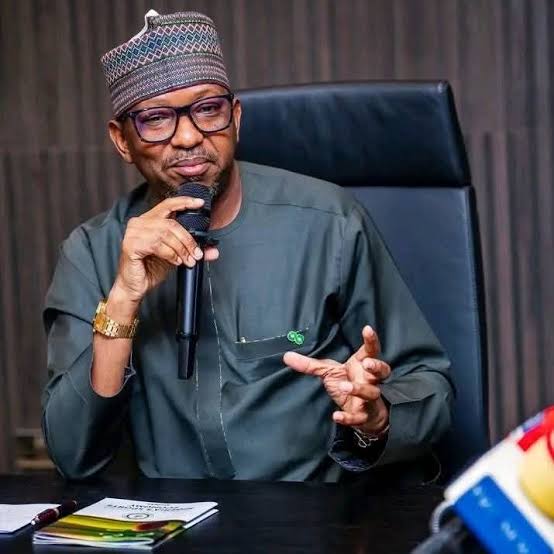
The NSC has also confirmed that D’Tigress players and officials have received the naira equivalent of the $100,000 presidential reward promised after their 2025 AfroBasket triumph.

With the NBBF election now approaching, the focus is expected to shift from calls for resignation to the credibility of the electoral process and the composition of the next board.

Referee Body Admits ‘Error’ For Haaland Goal in Manchester Derby

0
Referee Body Admits ‘Error’ For Haaland Goal in Manchester Derby

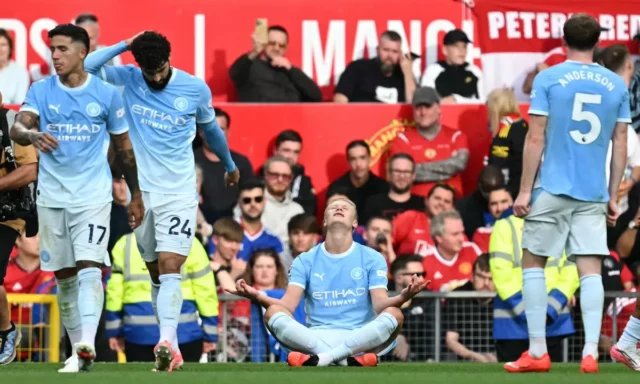
Professional Game Referees (Pro Ref) admitted Sunday that the decision to allow Erling Haaland’s winner in Manchester City’s 1-0 victory over Manchester United was an “error of judgment”.

With City down to 10 men after Phil Foden’s dismissal for kicking Bruno Fernandes, Haaland netted on the hour mark with a close-range finish from Josko Gvardiol’s cross.

The goal was initially disallowed for offside against Haaland but VAR eventually overturned that decision, even though City midfielder Enzo Fernandez was in an offside position and attempted to reach the ball before the Norwegian forward.

Fernandez did not touch the ball so the goal was given, allowing Haaland to celebrate his ninth league strike in Manchester derbies.

Premier League Match Centre posted on social media after the goal to say the VAR “determined that Haaland was in an onside position” and “deemed that while in an offside position, Fernandez didn’t play the ball”.

However, Pro Ref later on Sunday came out to say that the VAR “did not recognise the likely impact” of the Argentine midfielder’s position and “should have recommended an on-field review”.

“Contact has been made with Manchester United this evening to acknowledge what we deem is an error of judgment. A review of the incident will take place,” the statement added.

After the match, United manager Michael Carrick said it was “worrying” that a team of officials had come to the conclusion that Haaland’s goal should stand.

Lisandro Martinez was the United defender at the centre of the controversy.

The Argentine said he was clearly impacted by the presence of his international teammate Fernandez and branded the City goal an “injustice”.

“I went to him because he was in front of me. That’s why Haaland was free at the back,” Martinez told Sky Sports.

“Five or six people (officials) doing this kind of mistake in the Premier League is unacceptable.

“We have to go home with this injustice.”

Insurgency Destroyed Over 5,000 Borno Schools — Zulum

0
Insurgency Destroyed Over 5,000 Borno Schools — Zulum

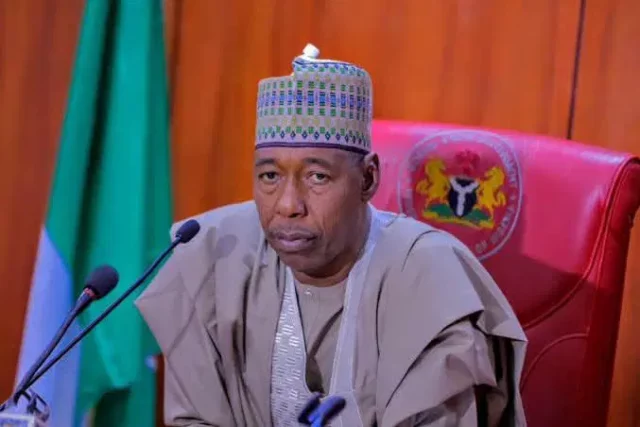
MAIDUGURI — Borno State Governor, Babagana Zulum, has said the insurgency in the state destroyed more than 5,000 school structures and forced about 2.2 million children out of school at the peak of the crisis.

Zulum stated this on Sunday in Maiduguri while inaugurating several completed projects across the state.

The governor said the destruction of schools, coupled with the loss of teachers and school administrators, severely disrupted education in Borno.

“The insurgency destroyed more than 5,000 school structures, while at its peak, an estimated 2.2 million children were out of school, with fewer than 500,000 enrolled,” Zulum said.

“Many teachers and school administrators lost their lives in the course of duty.”

He said his administration’s efforts to rebuild schools went beyond the construction of physical infrastructure, stressing that the objective was also to restore access to education and confidence in communities affected by the insurgency.

“Today, we have formally commissioned four important projects: the Larawaram Community Senior Secondary School; the Shehu Sanda Kyarimi I Primary and Junior Secondary School; the post office nine-span flyover; and the dualisation of the 2.5-kilometre road, together with five kilometres of drainage, from Budum Tandari Junction to Kasuwan Shanu,” he said.

Zulum added: “Rebuilding schools is beyond constructing physical structures. It is about restoring access to education, rebuilding confidence in our communities and providing our children with the opportunity to secure a better future.”

According to him, the state government invested N46,987,069,675.33 in basic and secondary education between the 2025 and 2026 fiscal years.

“Today’s commissioning forms part of this broader investment, alongside 136 projects that have been completed and are awaiting commissioning,” he said.

The governor said his administration had continued to expand and improve infrastructure at public pre-primary and primary schools across the state.

He said the number of usable classrooms had increased to 5,792, while usable Water, Sanitation and Hygiene, WASH, facilities rose to 4,563.

At the senior secondary level, Zulum said the number of functional schools increased from 34 across eight local government areas in 2019 to 129 across 25 LGAs by 2026.

He also said school enrolment increased from 766,551 learners in 2019 to 1,801,295 in 2026, representing an increase of more than one million learners in seven years.

Zulum attributed the growth to expanded access to education, improved public confidence and sustained investment in the sector.

LP Chieftain Files Suit Against WAEC, UNN, NYSC Over Obi’s Academic Records

0
LP Chieftain Files Suit Against WAEC, UNN, NYSC Over Obi’s Academic Records

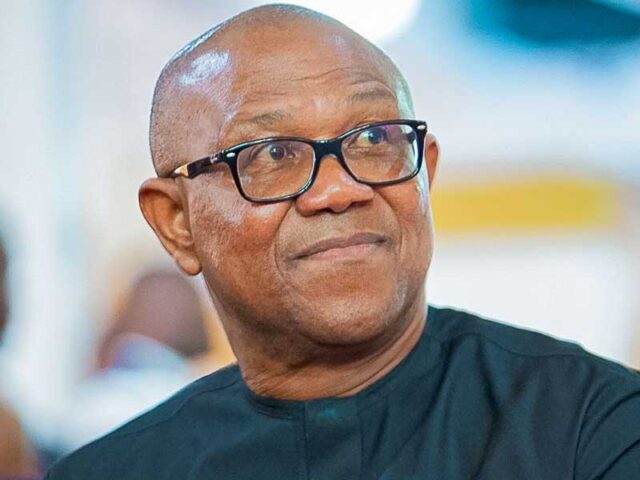
A chieftain of the Labour Party, Abayomi Arabambi, has sued the West African Examinations Council, the University of Nigeria, Nsukka, and the National Youth Service Corps over the academic credentials of the presidential candidate of the Nigerian Democratic Congress, Peter Obi.

Arabambi, in three separate suits filed at the Federal High Court in Abuja and made available to our correspondent on Sunday, is seeking orders compelling the three institutions to release official records relating to certificates allegedly issued to Obi.

The plaintiff instituted the suits pursuant to the Freedom of Information Act, 2011, alleging that the institutions either refused or failed to respond to his requests for information concerning Obi’s academic records.

The suit against WAEC is marked FHC/ABJ/CS/2064/2026 and was filed on September 1, 2026. The action against the NYSC, marked FHC/ABJ/CS/2063/2026, was also filed on September 1, while the suit against the UNN, marked FHC/ABJ/CS/2144/2026, was filed on September 9.

Arabambi’s lawyer, Anderson Asemota, filed the suits on his client’s behalf.

The plaintiff stressed that he was not asking the court to determine whether the certificates Obi submitted to the Independent National Electoral Commission for the 2027 presidential election were genuine or forged.

Rather, he said he was seeking “disclosure of the respondents’ official records from which the status and particulars of the certificate may be ascertained.

According to the plaintiff, he separately wrote to the three institutions requesting information about certificates he believed they issued to Obi.

He alleged that, as of the time the suits were filed, he had neither received the requested information nor been given reasons why they were being withheld by UNN and NYSC.

Arabambi said the information sought was in the public interest, particularly “for purposes of transparency and accountability concerning persons seeking public office.”

He also stated that he was not asking the institutions “to create any document or information which does not exist” but was seeking “access only to existing official records within the custody, possession or control of the respondents”.

In the suit against WAEC, the plaintiff specifically asked the court to compel the examination body to release a Certified True Copy of WAEC Certificate No. SC042560, issued to Obi Gregory Onwubuase in June 1978.

For UNN, Arabambi is seeking access to “the University’s certificate register, academic records, graduation records, Senate/ degree-award records and other existing official records relevant to Certificate No. D000198, insofar as such records exist.”

The plaintiff stated that he was not asking the court to pronounce on the authenticity of the certificate, but to “ascertain what the University’s own official records disclose concerning the certificate”.

In the NYSC case, Arabambi is seeking access to official records relating to NYSC Certificate No. 203495, stated to have been issued to “Obi, Gregory Peter-Onwubuase (Mr.) on May 1, 1986”.

He is also asking for the “official record, certificate, document or other material upon which the said Certificate No.203495 was predicated, based or issued, insofar as the same is in the custody, possession or control of the respondents.”

The plaintiff further wants information concerning the manner in which the name “Peter-Onwubuase” appears in the relevant NYSC records.

Court documents showed that WAEC, in a letter dated August 11, 2026, rejected Arabambi’s request, citing Sections 14(1)(a) and 14(2)(a) and (b) of the Freedom of Information Act, 2011.

However, Arabambi alleged that UNN and NYSC neither granted his requests nor communicated any reason for refusing them.

He is therefore asking the court to declare that the refusal by the respondents to furnish him with the requested information was erroneous.

He further asked the court to hold that his requests constituted valid applications for information under the Freedom of Information Act and that the failure to provide the information amounted to “a refusal and/or deemed refusal under the Act”.

Heartbeat By Sound: Scientists Develop Non-Invasive Pacemaker

0
Heartbeat By Sound: Scientists Develop Non-Invasive Pacemaker

What if a person who needs a pacemaker no longer had to undergo surgery to have one implanted?

Imagine having no wires threaded into the heart, no pulse generator implanted under the skin and, potentially, no repeat procedures to deal with implanted hardware?

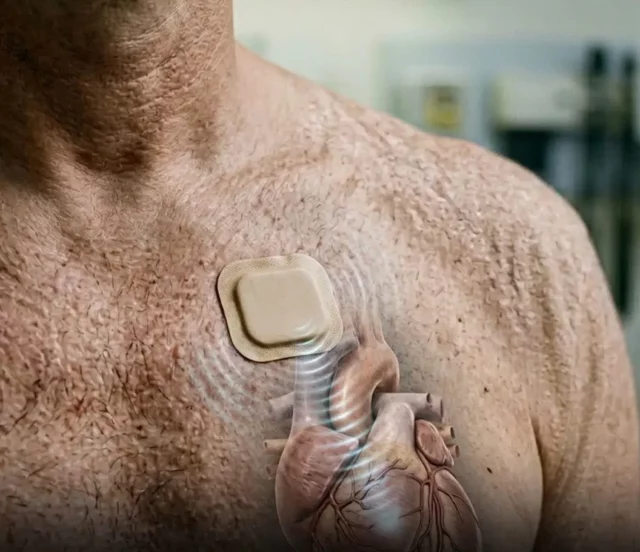
Instead, there is a small patch sitting on the chest, using sound waves to help keep the heart beating normally. This possibility, which once sounded more like science fiction than medicine, has moved a little closer to reality.

Researchers have developed an experimental wearable pacemaker that uses focused ultrasound to stimulate the heart without placing a device or electrical leads inside the body. The system, developed by scientists from the University of Southern California, Massachusetts Institute of Technology and collaborating institutions, has been tested in engineered human heart cells and animals.

They report that they were able to control cardiac activity and restore normal heart rhythm in rats with abnormal heartbeats. They also carried out experiments using pig tissue to assess whether the technology could work at a scale closer to the human heart.

The findings, published in Nature Biomedical Engineering, could open a new direction in the treatment of cardiac rhythm disorders. But there is an important caveat: this is still experimental technology, not a replacement for the pacemakers used in hospitals today.

The device is described as a non-invasive ultrasound pacemaker, or NUP. It is designed to adhere to the chest and use focused ultrasound to reach the heart. This is a significant departure from conventional cardiac pacing.

Traditional pacemakers work by delivering electrical impulses to the heart, usually through leads positioned in or around the heart and connected to a pulse generator implanted under the skin. The new system uses sound.

More specifically, it relies on a technique called sonogenetics, in which specially engineered cells are made responsive to ultrasound. The researchers modified heart muscle cells, known as cardiomyocytes, so they could express a mechanosensitive ion channel called MscL-G22S.

When focused ultrasound reaches the modified cells, the channels respond to the mechanical force by opening. Calcium ions then enter the cells, calcium is crucial to the way heart muscle contracts.

What the researchers have done is to create a system in which sound waves can activate specially modified heart cells and trigger contraction.The result is something that looks remarkably different from the familiar image of a pacemaker.

No electrical wire has to reach the heart. Instead, ultrasound travels through the chest to stimulate the target cells. But getting sound into the heart isn’t enough. It has to get to the right place. The heart is constantly moving. It also sits beneath skin, fat, muscle and other tissues. Any system designed to stimulate it from outside the body therefore has to be capable of accurately locating and targeting cardiac tissue.

The researchers addressed this by combining ultrasound stimulation with imaging. Their wearable system can identify the relevant region of the heart and direct focused ultrasound towards it. According to the study, the system achieved spatial targeting of less than 1 millimetre and was capable of controlling stimulation frequencies of up to 9 Hz.

In rats with abnormal heart rhythms, the researchers were able to use ultrasound stimulation to restore sinus rhythm. That level of control is important because cardiac pacing isn’t simply about making the heart beat.

A pacemaker has to deliver stimulation in a controlled and reliable way. An inaccurate or poorly timed stimulus could be ineffective or potentially dangerous. The experimental system is therefore designed not merely to stimulate the heart, but to do so with considerable precision.

However, there is no ultrasound pacemaker available for patients today. The work remains at the experimental stage. Researchers reported safety testing in rats during daily activities over an eight-month period and carried out additional experiments using ex vivo pig models to examine the technology at a larger scale.

But success in laboratory models and animals does not establish that the technology is safe or effective in humans. There is also a fundamental requirement that makes this approach very different from simply sticking an ultrasound patch onto an ordinary heart. The target heart cells have to be made responsive to ultrasound. That involves genetic modification so the cells express the ultrasound-sensitive ion channel.

The researchers investigated the genetic safety of their approach, but moving from experimental studies to human treatment would require extensive additional research, clinical trials and regulatory approval.
Implanted cardiac devices have transformed the treatment of people with certain rhythm disorders. But implantation is still a medical procedure, and implanted hardware can bring complications, including problems involving leads and the need for procedures associated with device management.

A genuinely non-invasive pacing system could change that equation. Instead of putting hardware inside the body, doctors could eventually have the option of delivering cardiac stimulation from outside it.

The researchers’ system combines stimulation with ultrasound imaging. That creates the possibility of a future wearable device capable of doing more than simply delivering a stimulus. It could potentially monitor cardiac activity, identify an abnormal rhythm and respond automatically.

One wearable device could eventually combine monitoring, diagnosis and treatment. That would represent a major change in the way some cardiac rhythm disorders are managed.

For now, however, patients should not expect their cardiologist to prescribe an ultrasound patch in place of a conventional pacemaker. The technology has not yet made that leap. What the researchers have demonstrated is an early proof of concept that raises a bigger question about the future of cardiac pacing.

The future, however, may sound very different. It may not involve a wire inside the heart. It may involve sound travelling through the body.

Fuel Price Rises, Deepens Pressure On Homes, Businesses

0
Fuel Price Rises, Deepens Pressure On Homes, Businesses

The surge in international crude oil prices above $100 per barrel is pushing up petrol prices across Nigeria, with major marketers raising pump prices and creating fresh pressure on transporters, commuters, households and businesses.

MRS filling stations have increased their petrol price to N1,400 per litre from N1,300, representing a N100, or 7.7 per cent, increase in Lagos and its environs.

Similarly, filling stations operated by NNPC Limited have raised their pump price to N1,375 per litre from N1,275, while some independent marketers have increased their prices to N1,400 from about N1,360 per litre.

The latest increases followed the rise in the gantry price of petrol by Dangote Petroleum Refinery to N1,350 per litre, reflecting the impact of higher crude oil prices and rising costs across the petroleum supply chain.

The development is expected to raise transportation costs and household expenses, while increasing operating costs for businesses that depend on fuel for logistics, power generation and other activities.

For transporters, the increase translates into higher daily operating expenses. Commercial buses, taxis, tricycles and other petrol-powered vehicles may require higher fares to maintain their margins.

Checks by Vanguard showed that this could place additional pressure on commuters who already spend a significant portion of their income on transportation.

The checks showed that workers, students, traders and other Nigerians travelling daily to offices, schools, markets and business centres are likely to feel the impact first.

The increase could also spread through the wider economy as higher transportation costs raise the cost of moving food, raw materials and finished products.

Distributors and retailers may pass the additional logistics expenses to consumers, potentially increasing the prices of food and other essential goods.

Households that rely on petrol-powered generators are also likely to face higher electricity-generation costs.

For small and medium-sized enterprises, the combination of higher fuel, transportation and power costs could further squeeze profit margins.

Manufacturers, retailers, logistics operators, restaurants and other businesses that rely on fuel for production, distribution or backup power may have to review their operating costs and, in some cases, increase prices.

The development could, therefore, create additional inflationary pressure, with higher energy and transportation costs feeding into the prices of goods and services.

In a telephone interview with Vanguard, the National President of Oil and Gas Services Providers Association of Nigeria, OGSPAN, Mazi Colman Obasi, said: “The immediate trigger is the sharp rise in international crude oil prices, which has increased the cost of refined petroleum products and altered the economics of domestic fuel supply.

“With Nigeria’s downstream market largely deregulated, pump prices are increasingly influenced by international crude prices, refined-product costs, freight, exchange rates and other supply-chain expenses.

“If crude prices remain above $100 per barrel or rise further, domestic petrol prices could come under additional pressure. For transporters, the immediate concern is the cost of keeping vehicles on the road. For commuters, it is higher fares.

“For households, it is increased spending on transportation, food and electricity and for businesses, it is rising logistics, production and energy costs.

‘’If the crude-price rally persists, the pressure could extend further across the Nigerian economy, deepening concerns over the cost of living and doing business.”

Earlier in her remarks, Victoria Ibezim-Ohaeri, Executive Director, Spaces for Change, had said: “For households, the most immediate concern is likely to be higher transportation and food costs.

‘’Higher fuel and logistics costs can raise the cost of moving people and goods, while households and businesses that rely on petrol- or diesel-powered generators may face additional energy expenses.

“These pressures could further reduce purchasing power, particularly for low- and middle-income households. Nigeria’s headline inflation rate currently stands at 15.43%, while food inflation is 20.31%, according to the National Bureau of Statistics, NBS.

“Businesses across manufacturing, agriculture, construction, retail and logistics are similarly exposed to higher energy, transportation and input costs. If the shock persists, firms may pass additional costs on to consumers, absorb lower profit margins, postpone investment or reduce employment.

‘’Consequently, a prolonged oil-price shock could constrain the recovery of the non-oil economy even as the oil sector benefits from higher crude prices.

“In the coming weeks, volatility is likely to remain the central concern. Continued conflict and disruption to major shipping routes could keep crude and refined petroleum prices elevated. Recent disruptions have already reduced oil flows through the Strait of Hormuz and contributed to higher shipping and fuel costs.”

Latest News

Passport: UK Mission Clarifies £70 Fee, Refunds £50

Passport: UK Mission Clarifies £70 Fee, Refunds £50

0
The Nigeria High Commission in London, United Kingdom, has clarified that the £70 administrative fee paid by some Nigerians during the ongoing passport intervention...

Popular News Now