Home Blog Page 2761

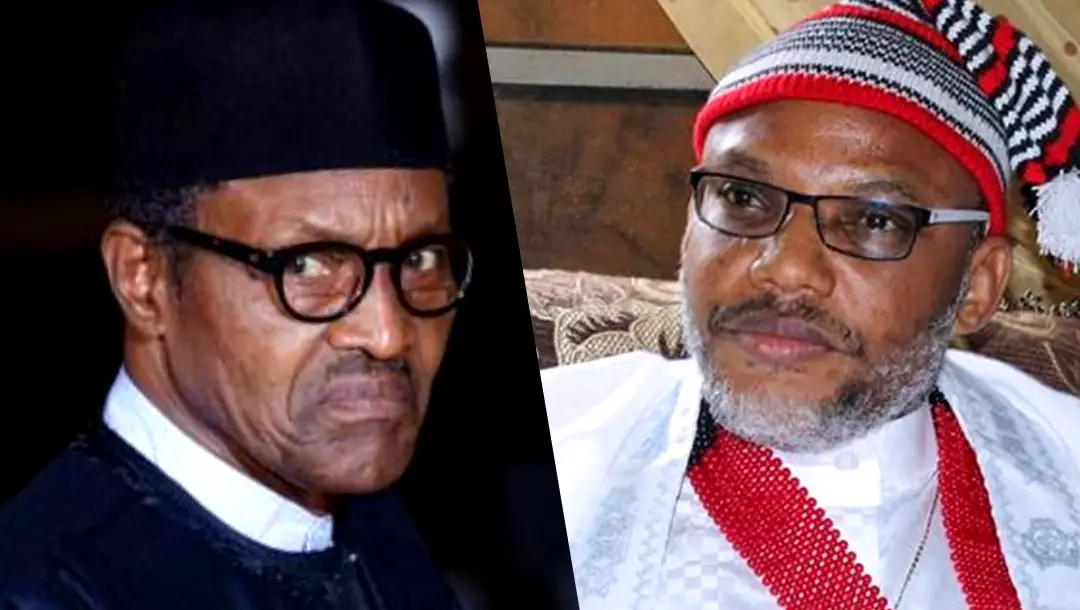
Nnamdi Kanu: No Sit-At-Home Wednesday, Thursday – IPOB

0

The Indigenous People of Biafra, IPOB, on Sunday, reiterated its earlier position that there will be no sit-at-home this Monday, on Wednesday 19th, and Thursday 20th January 2022.

IPOB however stated that the only day there will be sit-at-home is on Tuesday,18th January 2022, the day its leader Nnamdi Kanu will appear in court in Abuja.

A statement by IPOB’s Media and Publicity Secretary, Emma Powerful, yesterday entitled, “No sit-at-home in Biafra land on Wednesday, January 19th and Thursday 20th, 2022.” said that anybody issuing an order for sit-at-home on 19th and 20th of January is not a member of  IPOB.

The statement also said that such a person or such persons are working against the interest of its leader, Mazi Kanu, and the entire struggle for independence and should, therefore, be disregarded.

IPOB said that it cannot compound the suffering of Ndigbo and friends of Ndigbo by locking down South East for three days, saying that anybody enforcing sit-at-home, on Monday 17, Wednesday 19, and Thursday 20th January is a criminal and should be treated as such.

It will be recalled that IPOB last week told the southeast Governors and security agencies to wake up from their slumber and treat criminals and hoodlums still enforcing sit-at-home on Mondays or any day it did not approve as criminals that want to rob people.

However, contrary to the directive by IPOB that there will be no sit-at-home on Monday, Wednesday and Thursday, residents of Onitsha, the commercial city of Anambra State were on Sunday making unusual movements out of Onitsha apparently for fear of being trapped in the town following the rumours that there will be sit-at-home for three days.

The trooping out of the town in droves by residents resulted in the highest traffic jam since this year in the commercial city as all the exit roads from Onitsha to other Anambra communities and even Asaba, the Delta State capital and Imo and Enugu States were all blocked.

When Vanguard moved around the town, there was no sign that the heavy traffic jam would ease within a short time as all the exit roads out of the town were tightly locked with volunteers working assiduously to ensure movement of vehicles which was stagnated because of the zeal for people to leave the town.

From Onitsha to Nkpor, Obosi, Awada, Onitsha-Owerri Road, Onitsha-Enugu road, Onitsha- Nsugbe road, Onitsha-Atani road, and Onitsha-Niger Bridge to Asaba, Delta State, all exits out of the commercial city, the roads were locked.

However, IPOB in its statement read: “We the Indigenous People of Biafra, IPOB, under the command of our indefatigable leader, Nnamdi Kanu, wish to tell Biafrans and friends of Biafrans that there will be no sit-at-home on Wednesday 19th and Thursday 20th January 2022.

“We wish to state emphatically that sit-at-home will only be observed on Tuesday 18th January, the first day our leader Mazi Nnamdi Kanu will appear in court in  2022. We have not ordered any sit-at-home after Tuesday 18th January. Anybody enforcing sit-at-home on Monday, 17th, Wednesday 19th, and Thursday 20th January is not a member of IPOB  but a criminal and hoodlum working against the interest of our leader and out to rob people and therefore should be treated like a criminal.

“We want to emphasize that there will not be any sit-at-home on Wednesday 19th and Thursday 20th January 2022.

“In keeping with our avowed solidarity with our leader, the entire Biafra land will be on lockdown only on Tuesday, January 18, 2022, for obvious reasons.

“Biafrans should understand that 19th January is the judgment day in the suit by our Leader against the Federal Government which is pending before an Umuahia High Court. So, there will be no sit-at-home on that day.

“Again, we don’t want to compound the pains of our people, hence, we will limit the sit-at-home to only January 18. Biafrans and residents of Biafra are free to go about their businesses without molestations on 19th and 20th January.

“Anybody found enforcing a non-existent Monday sit-at-home on 17th, 19th and 20th is a criminal and must be treated as such.  IPOB leadership has given an order and that order is what subsists.

“IPOB is not a village or social club where everybody will behave untowardly to people like cultists. It is on the table and to the knowledge of IPOB leadership how some principal officers were encouraging evil in IPOB without minding the repercussions and consequences.

“However, we want to make it categorically clear and known to them that it will come back to him or her that encouraged evil against his or her fellow human beings. 

“Nobody is expected to obstruct or interfere with either human or vehicular movements in those days under any guise. Any detractor or agent of darkness caught obstructing people’s activities in Biafra land on January 19th and 20th in the name of enforcing sit-at-home will regret his or her actions, be warned.

“We realised that some unscrupulous elements and traitors are trying to create confusion about these days and dishing out false information and propaganda, trying to create confusion in Biafra land.

“Therefore, we want all Biafrans to go on to their normal business on these days19th and 20th January 2022 without fear.

“For the umpteenth time, IPOB is under one central command and control and doesn’t have parallel or factional leadership. The Directorate of State (DOS) under the command of our leader, Mazi Nnamdi Kanu is in charge of the global movement of IPOB.

“Anybody who is not loyal to its Directorate of States, DoS, is an impostor and should be disregarded. We expect our people everywhere to adhere to this directive and refuse to be misled  by sacked members of IPOB in Europe and America.”

Pay N24m Or Wait For Our Action, Terrorists Tell Zamfara Communities

0

Terrorists have slammed N24 million levies on nine communities in Bukkuyum Local Government Area of Zamfara State and demanded prompt payment or face assaults, Daily Trust gathered.

Ten days ago, the armed criminals operating in Gando forest attacked seven communities in Bukkuyum and Anka Local Government Areas killed scores of residents and rustled about 2,000 cows.

The levied communities include; Gaude, Tungar Gebe, Wawan Iccen Ibrahim, Wawan Iccen Salihu, Galle, Nannarki, Ruwan Kura, Gangara and Yargalma. The levies are ranging from N500,000 to N5m

A resident familiar with the matter told Daily Trust that the letters were delivered to the communities through released captives. He said the district heads who had seen the letter had already alerted authorities about the development.

“The levied communities cut across four districts and some of the villages have started mobilizing to pay the money to avoid raids by the armed criminals,” he said.

The spokesman of the state police command SP Muhammad Shehu could not be reached for comment at the time of filing this report.

School Certificate Requirement Not Enough For Public Office Holders — Gbajabiamila

0


Speaker of the House of Representatives, Femi Gbajabiamila believes the current constitutional provision where the educational qualification for elective offices is pegged at secondary school certificate should be increased.

The Speaker made the comment while delivering a paper titled ‘Building Back Better: Creating A New Framework For Tertiary Education In Nigeria In The 21st Century’ at the 52nd Convocation of the University of Lagos on Monday.

“I also sincerely believe that the National Assembly needs to look into section 131 (d) of the 1999 constitution with a view to increasing the minimum educational qualification for persons aspiring to be future Presidents of Nigeria and other top offices including the National Assembly as against the current minimum requirement of a Secondary School Certificate or its equivalent,” Gbajabiamila said.

“As we have reduced the age for eligibility to contest those offices so also, we should increase the minimum educational requirement. It will be another step in reforming our electoral system and providing strong leadership for the country.”

The Speaker said he is of the opinion that the foundations of Nigeria’s educational system are still rooted in a different age.

According to the Speaker, the educational system the nation currently runs is designed to meet the social, economic and labour demands of a different societal and economic model which does not serve the present need.

Gbajabiamila bemoaned a situation where despite the change around the globe, Nigeria has not done enough in government, the academia, and society to adjust its education and skills acquisition system to meet these new realities.

The Speaker, who is an alumnus of the University of Lagos, said: “When we consider the problems of education infrastructure, access to educational opportunities, quality of instruction, the welfare of teachers, lecturers and professors, we will do well to remember that all of these factors matter only to the extent that they are necessary to build institutions that produce citizens who can advance the cause of Nigeria.

“Our world has changed. The old certainties from which we derived assurance and built our expectations no longer exist. The value of the extractive industries that have powered our economy has deteriorated. It continues to do so rapidly, as technological advances lead us toward a future where coal, crude and gas are replaced by renewable alternatives of solar, wind and water.

“For Nigerian citizens to thrive in this new world, participate fully and productively in the new global economy and benefit from rather than be consumed by the technological advancements that are changing our world, tertiary education in Nigeria must be prepared to embrace reinvention and adapt to disruption.

“In a digital age, where socioeconomic participation is based on intellectual ability and access to information, a purposeful and well-rounded education is a fundamental human right because the individual’s ability to participate fully in society depends almost entirely on the quality of education available to them.

“Unfortunately, it is still the case that the foundations of our educational system are rooted in a different age and designed to meet the social, economic and labour demands of a different societal and economic model. As the world has changed, we have not done enough in government, academia, and society to adjust our education and skills acquisition system to meet these new realities.”

Gbajabiamila stated that a good education produces citizens invested in the progress and wellbeing of their society with the wherewithal to take positive action to make those societies better.

“When we think about education policy, when we consider laws and implement directives relating to education in our country, particularly tertiary education, our highest objective must be to deliver an education system capable of producing this archetype of an individual”, he added.

Speaking further on the education sector, Gbajabiamila expressed optimism that it could be put back on the right track, as he offered some solutions to some of the problems.

He said: “What does this moment require of us? It requires first that we be honest about the scale of the challenges we face. Honesty about the scale of the challenges we face and the realities of our present circumstances free us to engage in the sort of radical thinking and innovation that would have been considered taboo just a few years ago.

“How do we move on from our present circumstances? Most national policy discussions of higher education focus on questions of structure and financing, understandably so because the problems in this regard are many and unresolved. However, there are essential issues of curriculum, teaching methods, assessment and fairness that should engage our minds too and be part of any reform propositions.

“Wholesale reviews of our curricula and teaching methods to situate our practices in the context of global labour needs is the bare minimum. This does not take away from the need to institute a programme of aggressive and sustained investment in the physical infrastructure of classrooms and lecture halls and technology hardware and software to facilitate information exchange and innovation.”

The Speaker was delighted that despite the disruption of the educational system in the country and elsewhere occasioned by the Covid-19 pandemic, UniLag was the first public tertiary institution to adopt virtual learning.

“This great institution conducted lectures, examinations and even the post-UTME virtually. Free data was also made available to Students. Hence ICT rescued the academic calendar of our institution. These are the sort of radical thinking and innovation needed in our citadels of learning”.

He advocated close collaboration between educational institutions and the organized private sector to have a better system.

“Tertiary institutions in Nigeria need to develop a new understanding of the changing nature of work and the future of employment and allow this new understanding to inform the nature of instruction and the substance of the education they provide. Collaboration between our higher institutions and the organised private sector is vital in this regard so that we can jointly rise to the demands of the moment.

“Across the world, a symbiotic twinning of academia with the private sector has allowed for the creation of knowledge hubs that drive innovation and economic advancement. California’s Stanford University has become both the training ground for Silicon Valley’s elite and the beneficiary of enormous contributions in manpower, financial resources, and networking opportunities that have turned the institution into a powerhouse for the ages.

“I have often wondered why similar arrangements have not been recreated in our environment. We can all easily agree that many universities in the country, private and public, would benefit significantly from such close contact with private sector energy, practice, and resources. What then mitigates against this level of close collaboration? Is it the existing laws? Is it reluctance on the universities’ part or the organised private sector itself? These are some of the questions we must ask and answer as we seek to reposition tertiary education in Nigeria to meet the demands of a changing world”, he added.

The lawmaker equally called for the strengthening of the industrial training experience for students and called on tertiary institutions to make practical training a part of undergraduate studies.

The Speaker explained that, “One area where we already have the basic framework for collaboration is the Industrial Attachment programmes. What we now need to do is to identify ways to improve on this. Tertiary institutions of learning should identify and partner with private sector organizations to provide practical experiences for students as part of their academic training throughout their course.

“This would significantly improve the current practice of requiring students to undergo this portion of their training in organizations that do not allow them to get the full benefit of the experience.

“Advancing our tertiary institutions into the 21st century demands that we do whatever is required in terms of changes to legislation, regulation, and/or policy to achieve this sort of closer synergy between the private sector and our educational and training institutions.

For the sake of our nation’s future, we cannot leave the ideals of ‘Building Back Better’ for the government alone to pursue.

“Even as we look outward, we must consider the possibilities for extensive and multi-dimensional collaboration within academia. Keeping in mind that the objective is to improve productivity, tertiary institutions need to engage with the possibility of integrating university courses across departments and disciplines, merging law with economics and technology, medicine with engineering and accounting, media with governance and administration and other such partnerships.

“We must also consider statutory and operational reforms to encourage closer collaboration between tertiary institutions, both public and private. Today, our tertiary institutions exist and operate primarily in independent silos. Alternative to this is an approach wherein tertiary institutions work as part of an interdependent network to establish a collaborative research and development ecosystem, training, and resource sharing. Multi-dimensional collaborations will increasingly be the key to building modern tertiary institutions in Nigeria, capable of holding their own in the modern education system.

“And then, there is the issue of how we finance tertiary education in Nigeria. This is an area of much controversy, which is understandable in a country such as ours. However, two things remain true. The first is that building the kind of institutions we need and desire will require significant investments. Secondly, the current approach is neither adequate nor sustainable as it heavily depends on subventions from the federal and state governments.

“Therefore, we must agree to use the instruments of policy and legislation to advance a new framework for funding tertiary education in our country. Ideally, this new system should provide funding for all students who qualify so that the burden of school fees and living expenses can be deferred and paid over a period. It must also ensure that the institutions themselves get paid for their services so that resources are available to operate effectively.”

Gbajabiamila added that the House of Representatives has already commenced work on a legislative framework for funding tertiary education through student loans.

“We will continue in that effort until we successfully design a system that suitably addresses our concerns and meets our needs. As a politician, one of the most frequent requests I receive is for funding for tertiary education of otherwise bright students who cannot further their education due to lack of funds. One way this can be addressed is through a well-structured student loan policy as is seen in many countries of the world,” he said.

The Speaker said the House is currently considering a draft legislation, the Students Loan (Access to Higher Education) Bill, which he personally sponsored and which sets out to provide interest-free loans to students.

Giving details, Gbajabiamila said “The repayment of these loans shall commence two years after completion of the National Youth Service. However, we must all understand that public support for any such system will depend significantly on the tertiary institutions themselves.

“The 9th House of Representatives has education as one of its key areas of focus in its legislative agenda, which we term ‘Our Contract with Nigerians.’ We have, for instance, taken active steps to upgrade many of our public institutions, elevating some colleges of education to universities of education, amongst others. This has increased the employability and viability of research work in the country.

“Recently, the House intervened in the faceoff between the Federal Government and the academic staff Union of universities to avert a strike action. The intervention also led to the recent approval of the University Transparency and Accountability Solution (UTAS) for the payment of lecturers in Nigerian universities.

“On my part, I have always been passionate about education and believe no child must be left behind. Nothing beats education. As a representative, I have focused on ways I can sow seeds that can impact the future of society through education.

“From providing educational grants for selected students from my Surulere 1 federal constituency studying in public tertiary institutions across the country including the University of Lagos, to attracting infrastructural projects to tertiary institutions in Lagos state including this same university Such projects include the provision of free Wi-Fi in six public tertiary institutions in Lagos State as I believe the key to education in the 21st century is quick access to information.

“I have also attracted the construction of a dedicated International students hostel here in this university as part of improving educational infrastructure in the 21st century because the students learning environment is just as important as what he or she learns.”

Speaker Gbajabiamila also proposed that higher institutions of learning should adopt across the board a system of zero tolerance for individuals, students or staff who are credibly accused of harassment, intimidation, and any infringements of individual autonomy.

“Let it be the role of independent panels, made up of persons of integrity and unquestionable authority, to evaluate the credibility of complaints, taking only relevant variables into consideration and, after that proposing a course of action to which the university must be bound. Our universities must be places of learning and innovation where people feel safe and where injustice in all its forms has no place”, he added.

Earlier, the Speaker was taken around the convocation exhibition where he examined innovations and products of research by staff and students of the university.

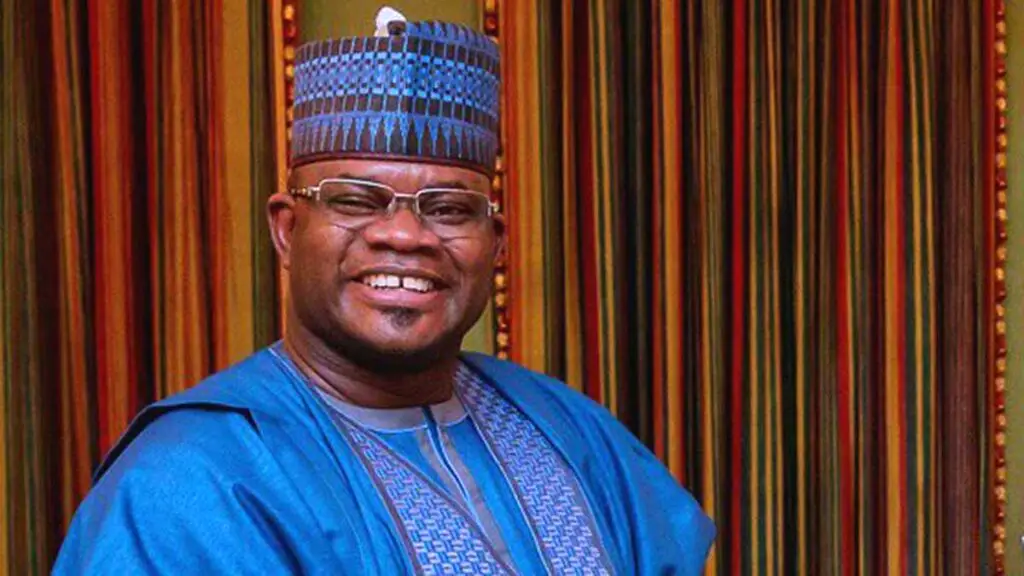
 

2023 Presidency: 600 Women Groups To Host ‘One Million Woman March’ For Yahaya Bello

0

At least 600 women groups, drawn from different parts of the country have concluded plans to converge on Abuja next week Tuesday, in a solidarity walk for Governor Yahaya Bello of the Kogi State presidential quest in 2023.

The solidarity walk is tagged, “One Million Women March for GYB”.

Operating under the auspices of Women United For Yahaya Bello (WUYABEL), the women groups, including Non-Governmental Organisations, civil society organisations, religious, professional bodies, women in media, politics, market women as well as top women entrepreneurs, among others, will storm Abuja to drum support for the Governor, ahead of 2023 presidential election.

According to the organisers, the women groups, having come to the obvious conclusion that the nation requires one with pedigree, youthfulness and capacity to succeed incumbent President Muhammadu Buhari, have taken it upon themselves to collectively canvas support for Bello, who they said had demonstrated the ability to resolve the myriads of challenges confronting Nigeria.

The Global Coordinator of WUYABEL, Dr Hanatu Adeeko who announced this in Abuja, explained that the gathering will be the first of its kind “especially now that the political stage is almost set”.

According to the women of a substance across key sectors of the Nigerian economy, “Bello, as governor, has redefined governance in Kogi State with sterling and verifiable performance, especially in the areas of women and youth empowerment, poverty alleviation programs, massive infrastructure development, and health care delivery among others,”

Dr Adeeko, a Physician, said, “He (Governor Bello) has empowered and supported women to grow. No state in Nigeria has given more positions to women than Kogi. And sincerely, the state is getting it right in critical areas. We want to encourage other Governors to walk the talk by standing with that one Governor that has made us proud. Governor Yahaya Bello must know that once he has women on his side, he can go to sleep. We believe in his capacity and will make it happen.

“This will be the first in a long while that women on their own will come together in their numbers to speak with one voice.

“We are coming to Abuja to demand that the status quo must be changed. This is the time for us to yield power to younger people, especially those who have given a good account of themselves in other places they’ve rendered service.

“We have observed closely the people that are showing interest in the presidency and if we continue to keep quiet, the change we desire may not manifest. This is the reason different women groups are coming to Abuja to say it loud and clear that it is Yahaya Bello or nobody,” he stated.

The organisers further expressed optimism that Bello’s presidency would usher in a breath of fresh air while asking Nigerians from all walks of life to support the project as it would be “a clear departure from the old order.”

FG Slams Nnamdi Kanu With Fresh Terrorism Charges

0

The Federal Government on Monday, entered fresh terrorism allegations against the detained leader of the proscribed Indigenous People of Biafra, IPOB, Nnamdi Kanu.

FG, in the amended process it filed before the Federal High Court sitting in Abuja, increased the counts in the initial charge it preferred against Kanu.

The IPOB leader who was hitherto facing a seven-count treasonable felony charge, will now enter his fresh plea to a 15-count amended charge marked FHC/ABJ/CR/383/2015, and signed by the Director of Public Prosecution, DPP, M. B. Abubakar.

FG amended the charge, barely 24 hours to the scheduled commencement of hearing by trial Justice Binta Nyako.

The court had on December 2, fixed Tuesday to hear some pending applications, including the one Kanu filed to be discharged and acquitted.

EFCC Arraigns Female Lawyer For Money Laundering

0

The Benin Zonal Command of the Economic and Financial Crimes Commission, EFCC, on Friday, January 14, 2022 arraigned Anumati Stella Ojevwe before Justice Okon Abang of the Federal High Court sitting in Warri, Delta State.

Ojevwe was arraigned on a 14-count charge of money laundering. The defendant is alleged to have received the sum of N105, 000,000 (One Hundred and Five Million) from SA-FX Global investment.

One of the charges reads: “That you Anumati Stella Ojevwe (f) on or about the 27th day of October, 2020 at Delta State within the jurisdiction of this Honourable Court directly took possession or control of the sum of N20,000,000.00 (Twenty Million Naira) deposited by a cheque number 00000064 belonging to SA-FX Global) into your bank account number 2150009622 domiciled in Ecobank which funds you knew or reasonably ought to have known forms part of unlawful act of Smart Alban Ike to wit: obtaining by false pretence and thereby committed an offence contrary to Section 15(2)(d) of the Money Laundering ( Prohibition) Act 2011 (as amended in 2012) and punishable under Section 15(3) of the same Act”.

The defendant pleaded not guilty when the charges were read to her.

In view of her plea, the prosecution counsel, K.Y. Bello prayed the court to fix a date for trial and to remand the defendant at a Correctional Facility.

Efforts by the defence counsel to secure bail for his client orally was opposed by Bello.

Justice Abang ordered the defence counsel to file a formal bail application and adjourned the matter till 30th January 2022 for a hearing.

The judge also ordered that the defendant be remanded at the Correctional Facility in Sapele, Delta State.

Gunmen Abduct Traditional Ruler In Plateau

0

The District Head of Vwang, Jos South local government area of Plateau State, Da Gyang Balak has been kidnapped.

Da Balak is the second traditional ruler to be kidnapped in the State in less than a month.

Recall that the Sum Pyem, HRH Charles Dakat was kidnapped during the Christmas period in 2021 but has since regained his freedom.

Although details of the kidnap of Da Balak are sketchy it was gathered that he was kidnapped on Sunday night around the Kuru community which hosts the National Institute For Policy and Strategic Studies, NIPSS.

He was said to be returning to Vom where his palace is located before he was intercepted on the way.

READ ALSO: PDP Governors Meet In Port Harcourt Monday, To Deliberate Taking Over Power 2023

Spokesman of the State Police Command, ASP Gabriel Ubah could not confirm the incident as he could not be reached at the time of this report but the Military Information Officer, Operation SAFE HAVEN, OpSH, Major Ishaku Takwa confirmed it saying, “Troops of Operation SAFE HAVEN in conjunction with other security agencies are on trail of the kidnappers. God’s willing, the security agencies will soon close up on the criminals.”

National Convention: APC Govs Insist On February, Pass Confidence Vote On Mai Buni

0

Governors of the ruling All Progressives Congress, APC rose from their meeting Sunday night in Abuja with a resolution to go ahead with the national convention of the party in February.

No fewer than 20 of the governors were at the meeting which took place behind closed doors at the Kebbi state Governor’s Lodge in the Asokoro District of Abuja. The meeting ended at about 11:30 pm.

The governors were said to be divided as to whether to go on with the convention in February shift it to a later date.

Among governors in attendance at the meeting were Dapo Abiodun (Ogun), Rotimi Akeredolu (Ondo), Nasir el-Rufai (Kaduna), Yahaya Bello (Kogi), Abubakar Sani Bello (Niger), Mohammed Abubakar Badaru (Jigawa), Bello Matawalle (Zamfara) and Dave Umahi (Ebonyi).

Others were Gboyega Oyetola (Osun), Babajide Sanwoolu (Lagos), Simon Bako Lalong (Plateau), Abdullahi Sule (Nasarawa), Mai Mala Buni (Yobe), Hope Uzodinma (Imo), Ben Ayade (Cross River), Abdulrahman Abdulrazaq (Kwara), Babagana Zulum (Borno), Abdullahi Umar Ganduje (Kano), Abubakar Atiku Bagudu (Kebbi) and Kayode Fayemi (Ekiti).

Briefing journalists at the end of the meeting, Chairman of the Forum and Kebbi state Governor, Abubakar Atiku Bagudu said the forum passed a vote on confidence on Gov. Buni and two other governors in the Caretaker Extraordinary Convention Planning Committee – Abubakar Sani Bello and Gboyega Oyetola.

READ ALSO: PDP Governors Meet In Port Harcourt Monday, To Deliberate Taking Over Power 2023

He said the governors also agreed to go ahead with the national convention slated for February.

He however did not give a specific date, saying the CECPC would have to consult with other stakeholders so harmonize all positions and announce a suitable date.

2023: Politicians Should Have Retirement Age – Umahi

0

Presidential hopeful and Ebonyi State Governor, Dave Umahi, says politicians in Nigeria should have retirement age and not “pursue money” till the end of their stay on earth.

The 58-year-old governor spoke on Monday when he featured as a guest on Channels Television’s ‘Sunrise Daily’ programme monitored by The PUNCH.

Umahi said, “In this country, I find it very funny for people at a certain ages in this country that are still fighting so hard for money. I thought that at certain age, we should be making efforts to reconcile with God and be grateful to him for the opportunity given to us.

“So, it is important that we begin to engage and say, look, even if you are successful and your children are not successful, then you are not successful. We must let people know the true meaning of life; nobody goes to the grave with this money but it is your legacy that will speak for you, speak for your children and for your generation.

“This is the kind of engagement that we need to do so that people will understand that everything is not about money and that every position given to us by God as leaders, God will ask us for accountability for what we did with such positions.”

When asked to throw light on those he said were concerned about money, Umahi said, “What I mean is that in this country, there is no age limit by which we can say we have retired, we tend to be pursuing money till the end of our stay on earth in Nigeria.”

“I’m not just talking about political leadership, generally, at certain age in your life, you should be able to say I need to retire and give opportunities to your children. It cuts across all areas of life.”

Asked further if there was anyone running for president alongside himself who should retire and allow the “children” to take over, the governor said, “Not in my mind at all.”

The PUNCH had earlier reported that Umahi visited the President, Major General Muhammadu Buhari (retd.), on January 11, 2022 in Aso Rock and informed the 79-year-old former military leader of his decision to run for President in 2023.

Read Also: Shoot Any Prison Attacker Dead, Aregbesola Charges Prison Officers

His declaration came a day after 69-year-old All Progressives Congress National Leader, Bola Tinubu, also visited the President in Aso Villa and announced his “lifelong” presidential dream.

Speaking on the television programme on Monday, Umahi said announcing his presidential ambition at Aso Villa some 24 hours after Tinubu’s was only coincidental and not planned.

Umahi defected from the Peoples Democratic Party to the ruling APC in November 2020 amid the rising clamour for the South-East zone to produce the next President of Nigeria.

Aside from Tinubu and Umahi, several presidential hopefuls have emerged in the last few days including media personality, Dele Momodu; former Secretary to the Government of the Federation, Pius Anyim; former Governor of Abia State and Majority Whip of the Senate, Senator Orji Kalu; former Deputy Governor of the Central Bank of Nigeria, Kingsley Moghalu, among others.

A few northern politicians have also been rumoured to nurse presidential ambition. The politicians include former Vice President Atiku Abubakar, who had contested for presidency on three occasions, Sokoto State Governor, Aminu Tambuwal and an ex-governor of Kano State, Rabiu Kwankwaso. While neither of them had yet to officially declare their presidential bid, there are strong indications they are eyeing the exalted position.

Though party primaries that would lead to the emergence of candidates are expected to hold later in the year, permutations, political bickering and serial defections continue as the race for who succeeds Buhari gets intense, while Nigerians wait with bated breath to see who would occupy the exalted office in Aso Rock in 2023.

Source

Shoot Any Prison Attacker Dead, Aregbesola Charges Prison Officers

0

The Minister of Interior, Rauf Aregbesola, on Monday, ordered prisons officers to shoot dead anybody who attempts to attack any correctional centre in the country.

The minister gave this order while inspecting the facility at the Agodi Custodial Centre, Ibadan.

He said the officer must make it impossible for anyone to penetrate the facility because it is a red zone.

Aregbesola said any attack on any correctional centre is an attack on the state and such must never be allowed again.

The minister said any attempt to attack correctional centres should be a suicide attempt and perpetrators must not be allowed to live to tell the story.

He said, “The most important thing is the security impregnability of this facility. Make this facility impregnable.

“It is a red zone, a danger zone. Whoever attempts to breach the security here is already dead. He must not live to tell the story. Other people will tell his or her story.

“Any effort to breach our facility is not acceptable. Don’t shoot to injure, shoot to kill. Don’t shoot to disable, shoot to kill.

“This is a total embodiment of the state to guarantee the security of the people.

“We will do our best regarding your welfare to ensure effective service. I must commend your work for not recording any case of COVID-19 in your facility.

“But most importantly, you must be effective in preventing the penetration of this facility. You must have the capacity to repel viciously any attempt to penetrate this facility.”

Aregbesola at a recent Ministerial Press Briefing at the Aso Villa, 4,860 inmates of the Nigerian correctional centres have escaped from those facilities between 2020 and 2021 alone following successful jailbreaks in Benin, Owerri, and Oyo, among others.

Also, only 954 of that number have been rearrested. That was before the recent jailbreak at the Jos Medium Security Custodial Centre, which resulted in 9 fatalities and the escape of 252 inmates. The 252 on the loose are apart from the 10 rearrested

Source

Latest News

Popular News Now