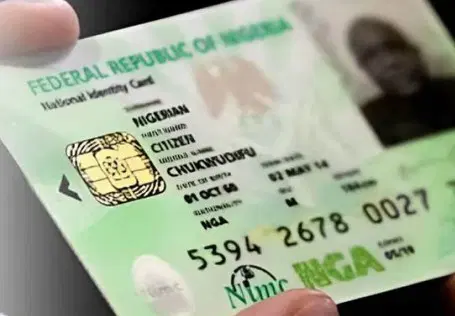
The Federal Government plans to enforce NIN requirements for domestic air travel effective from 1 January 2027, which has sparked debate, with travelers weighing security benefits against practicality and passenger rights, ABNTV reports.

For many Nigerians, domestic air travel is already costly. The proposed requirement to present a National Identification Number before boarding has now heightened passengers’ concerns.
The controversy followed the Federal Government’s introduction of the Verified Passenger Access System, a biometric facial recognition platform designed to verify passengers travelling on domestic flights.
At the recent launch of the platform, the Minister of Aviation and Aerospace Development, Festus Keyamo, ordered airlines to comply, warning that from 1 January 2027, operators must integrate the system before boarding passengers on scheduled domestic flights.


But while the government considers the initiative a necessary step towards improving airport security, passengers have raised questions about its wider implications, particularly data privacy, freedom of movement and the possible exclusion of travellers without NIN.
They wondered why Nigerians must submit additional personal details to travel within the country, especially when other recognised forms of identification could adequately serve the same purpose.
Some passengers interviewed at the Lagos airport on Monday dismissed the policy as unnecessary, arguing that mandatory NIN verification would hardly address Nigeria’s wider security challenges.
Mrs Juliet Adeoye, a mother of three, expressed particular concern about the policy’s implications for foreign nationals and Nigerians with children who hold dual or foreign citizenship.
“Two of my children are citizens of another country. Are you saying that from January, local flights won’t be open to them because they don’t have NIN? This is just like saying a social security number in the UK is required to book a domestic flight.
“I have been wondering where this is coming from since I read the news, but I strongly hope they will have a rethink before the set date,” she said.
Another passenger, Mr Kelvin Jones, recognised the government’s security objectives but questioned the decision to make NIN the mandatory identification document for domestic air travellers.
He maintained that alternative, dependable identity verification methods could be adopted without creating barriers to domestic air travel.
“What the Nigerian government is saying, in essence, is that you cannot fly locally without being a Nigerian. That will not work. No, over what? I believe that when they get our feedback, they will tweak the idea,” he said.
Nigerians have equally taken to social media to express concerns about how the platform would verify foreign travellers and protect passengers’ personal data.
An X user, Adesina Adegbite, who posted through @fatiscoproduct, questioned how foreign nationals travelling through domestic airports would be authenticated under the new system.
“How will foreigners travelling through domestic airports pass through the NIN verification system? What means of identification would be used to verify them?” he asked.