The federal government on Wednesday urged state governments, local government education authorities, and private school proprietors to join the Digitalized Nigeria Education Management Information System.
The federal government’s accurate and comprehensive education data is indispensable for effective planning, policy formulation, and improved learning outcomes across the country.
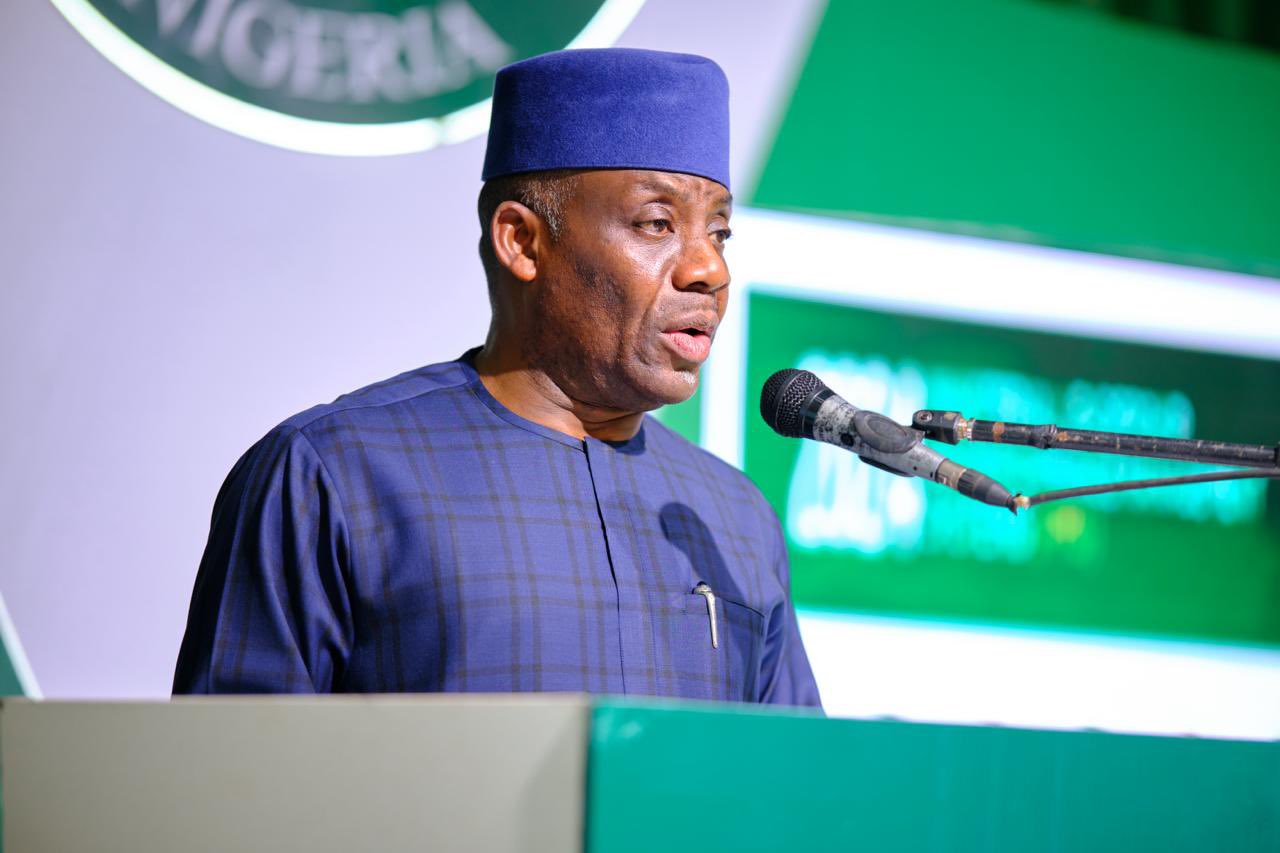
Minister of Education, Tunji Alausa, made the call in Abuja during the official launch of the digital platform, describing reliable data as the backbone of every successful education reform and warning that governments cannot effectively address challenges in the sector without credible statistics.
The DNEMIS is a digital platform designed to serve as Nigeria’s central repository of education data, providing real-time information on schools, classrooms, teachers, learners, computer laboratories, water, sanitation and hygiene facilities, electricity, and other critical infrastructure required for planning, monitoring, and resource allocation.
“You have to get the data right. Data allows us to monitor, design interventions, evaluate outcomes, and plan proactively for the future. Without accurate data, meaningful development is impossible,” Alausa said.
He explained that the platform would fundamentally change the way education data is collected, analyzed, and utilized, enabling governments at all levels to identify infrastructure gaps, deploy teachers more efficiently, monitor enrollment trends, and direct investments to communities where they are most needed.
According to him, commissioners for education, local government education authorities, and school administrators would now have access to real-time information to support evidence-based decision-making and improve service delivery.
The minister said the initiative comes as Nigeria seeks to strengthen education planning in one of Africa’s largest education systems.
According to the latest statistics released through the Federal Ministry of Education’s Digitalized Nigeria Education Management Information System, Nigeria has 213,235 schools, but only 124,548 schools have submitted data, representing a 58.4 percent reporting rate.
The platform has so far captured 40,130,454 learners, 1,193,877 teachers, 730,447 classrooms, and 607,508 toilets, highlighting both the scale of Nigeria’s education system and the significant data gaps the government hopes to close.
Education experts have long argued that weak and fragmented education data has hampered effective policymaking, resulting in poor teacher deployment, uneven infrastructure distribution, and inefficient allocation of scarce resources across schools.
The federal government believes the new digital platform will address those shortcomings by providing one integrated database for education planning nationwide.
Alausa disclosed that although the project experienced implementation delays, the intervention of development partners accelerated its rollout.
“We were ready to invest whatever it took because without data, we would not know where development is needed. Our partners helped us overcome significant challenges and shortened the implementation timeline considerably,” he said.
He commended development partners, including the World Bank, the European Union, the Norwegian government, UNICEF, and other international organizations, for supporting the development of the platform.
The minister also acknowledged the contributions of ICT experts and international collaborators who partnered with Nigeria to build what he described as an integrated and sustainable education information system.
He pledged that the federal government would continue strengthening collaboration with development partners to ensure the platform remains functional, inclusive, and beneficial to every level of the education sector.
Addressing private school owners, Alausa urged them to upload their data onto the national platform, assuring them that the exercise was not aimed at increasing taxation.
“When you saw the demonstration, almost 90 per cent of public school data had been captured, but private schools were only at about 50 per cent. I want to encourage every private school to register and upload its data.