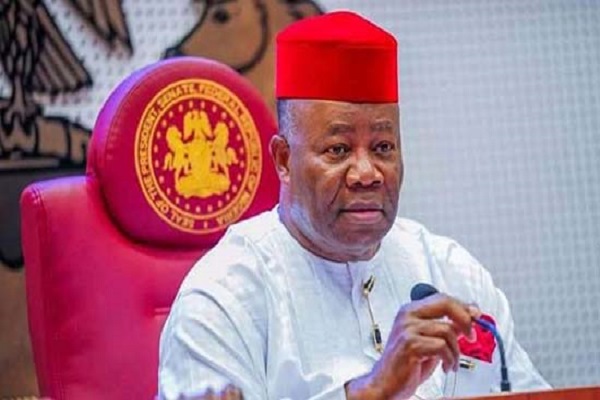
Barely a year to the inauguration of the 11th National Assembly, the Senate on Tuesday moved to tighten its internal rules, effectively narrowing the path to its most powerful offices and edging out a class of incoming lawmakers, including serving governors and former senators eyeing leadership positions.
In a move widely seen as pre-emptive, the red chamber, after about three hours of a closed-door session, amended Orders 4 and 5 of its Standing Rules, restricting eligibility for both presiding and principal offices to ranking lawmakers with defined legislative experience.
The amendments come amid growing interest by outgoing governors and political heavyweights, many of whom are positioning themselves to enter the Senate in 2027 to contest for top leadership roles such as Senate President and Deputy Senate President.
Under the Revised Order 4, the Senate reinforced a strict hierarchy for the emergence of presiding officers, stating that “Nomination of senators to serve as Presiding Officers shall be in accordance with the ranking of senators and shall be strictly adhered to.
“The order of ranking is (i) Former President of the Senate, (ii) Former Deputy President of the Senate, (iii) Former Principal Officers of the Senate, (iv) Senators who had served at least one term of four years, (v) Senators who had been members of the House of Representatives. (vi) In the absence of i to v, senators elected into the Senate for the first time,” it stated.
Beyond this ranking structure, the Senate introduced a more stringent provision in Order 5, effectively excluding first-time and non-consecutive lawmakers from contesting principal offices.
The amended rule states: “Any senator shall not be eligible to contest for any principal office of the Senate unless he has served as a senator for at least two consecutive terms immediately preceding nomination.”
The implication is far-reaching: senators-elect who were not members of both the 9th and 10th National Assemblies would be ineligible to vie for key leadership roles in the 11th Assembly.
Presiding offices in the Senate include the Senate President and Deputy Senate President, while principal offices comprise Senate Leader, Deputy Senate Leader, Chief Whip, Deputy Whip, Minority Leader, Deputy Minority Leader, Minority Whip and Deputy Minority Whip.
The rule changes come against the backdrop of an intensifying scramble for Senate seats ahead of the 2027 general elections, driven largely by governors completing their constitutionally allowed two terms.
No fewer than 10 state governors and several former governors are already angling to secure senatorial tickets, leveraging their influence over party structures to emerge as consensus candidates in their respective states.
At least 12 of the 36 state governors are in their second and final terms, with 10 set to complete their tenure by May 29, 2027.
The looming transition has triggered a wave of political realignments, with many seeking to maintain relevance and influence by moving to the National Assembly.
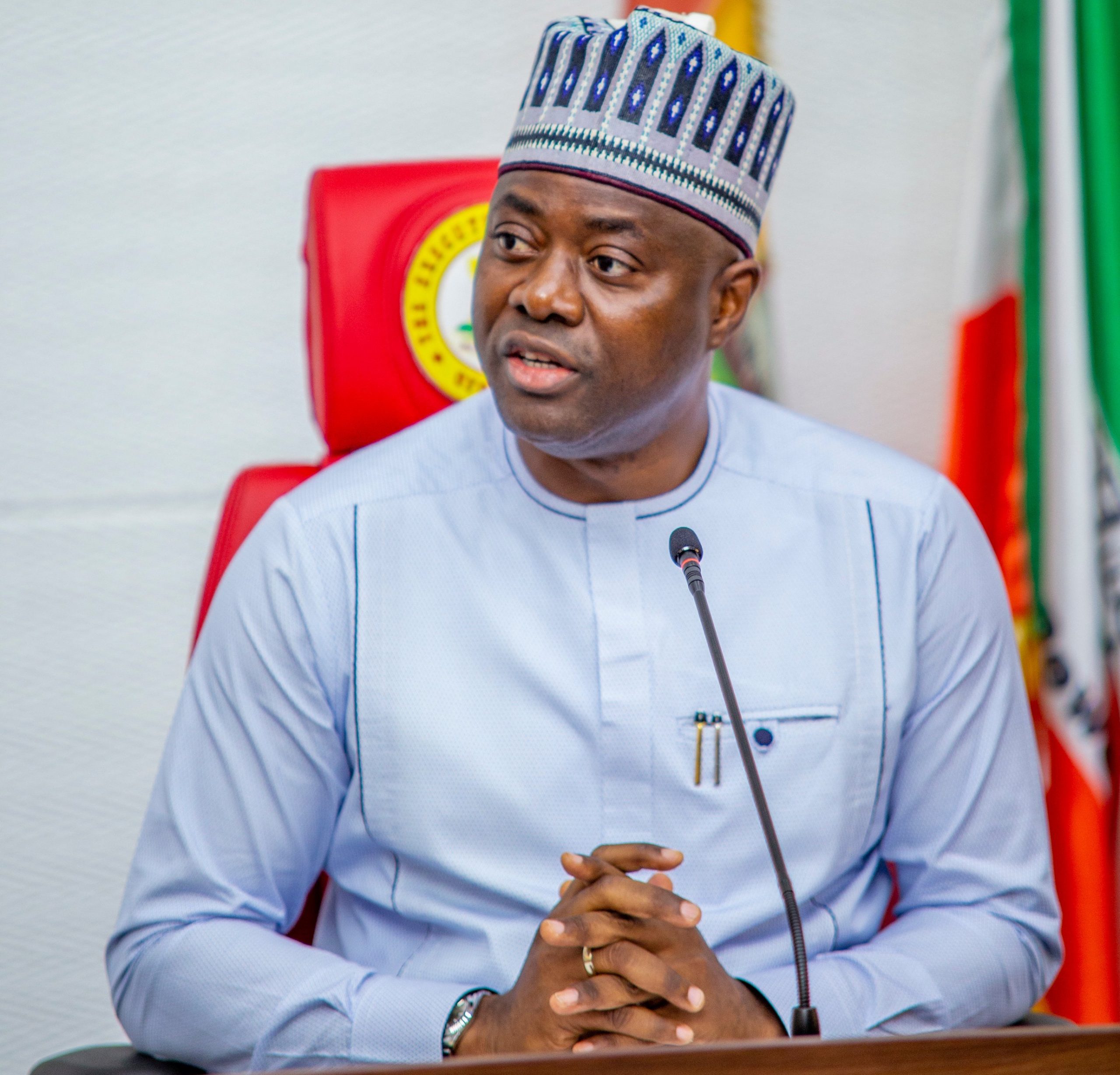
Eight of the affected governors are from the ruling All Progressives Congress, while Oyo State Governor Seyi Makinde belongs to the Peoples Democratic Party, and Bauchi State Governor Bala Mohammed is aligned with the Allied Peoples Movement.