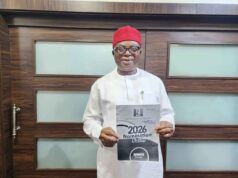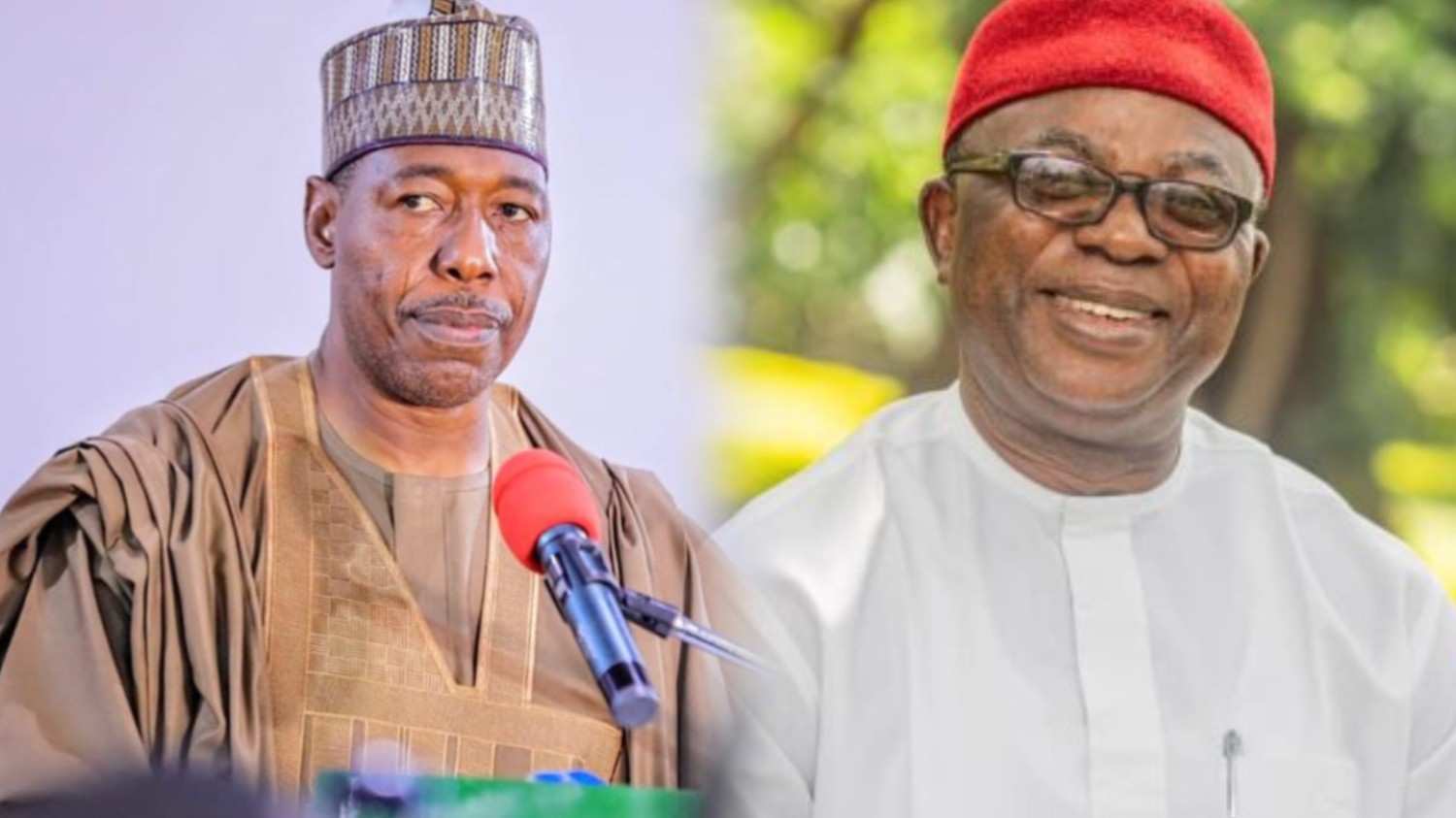
A member of the Governing Board of the North East Development Commission (NEDC), Rep. Sir Sam Onuigbo, has commended the Governor of Borno State, Babagana Umara Zulum, for his recent directive mandating that Local Government funds from the Federal Accounts Allocation Committee (FAAC) be paid directly to the 27 Local Government Councils in the state.
Onuigbo described the move as a bold and commendable step that sets a sterling example for other state governors to emulate, noting that it aligns with ongoing reform efforts of the Federal Government to strengthen transparency and accountability at the grassroots.
In a letter of commendation dated February 2, 2026, Onuigbo who also serves as Chairman of the Security, Special Intervention and Climate Change Committee of the NEDC, praised Governor Zulum’s “emblematic gesture of transparency and ethical leadership,” stating that posterity would remember the directive as a landmark decision in deepening local governance in Nigeria.
He noted that the governor’s declaration to route council funds directly to Local Government treasuries rekindles hope in the democratic system, particularly as it addresses long-standing concerns about state-level control over council allocations, which he said has often stifled development at the grassroots.
Recall that in the penultimate week, Governor Zulum ordered that monthly federal allocations be paid directly to the 27 Local Government Areas of Borno State. The governor explained that the policy was aimed at boosting transparency and empowering council chairpersons to drive development initiatives in their respective communities.
In his letter, Onuigbo, a former two-term member of the House of Representatives, said he decided to publicly commend the governor for demonstrating courage and purposeful leadership by upholding constitutional provisions, democratic due process, and the welfare of the masses.
“My attention was drawn to a piece of joyous report regarding Your Excellency’s firm directive that the monthly (federal) allocations to the 27 Local Government Councils of Borno State should be paid directly to the various councils,” Onuigbo wrote.
“I was also elated that Your Excellency’s order was specifically to boost transparency in local government finances and empower the Local Government Council Chairpersons to actualize and speed up grassroots development.”
Onuigbo further revealed that he has long been at the forefront of advocating for financial autonomy for Local Government Councils, stressing that his calls for governors to relinquish control over council funds often came at significant personal and political cost.
“As a former Commissioner in my state, as yourself, I had first-hand knowledge of how financial constraints hampered Local Government Council bosses from the optimum performance of their constitutional responsibilities,” he added.
While offering prayers for divine wisdom for Governor Zulum, Onuigbo expressed optimism that the new funding framework would enable Local Government chairpersons in Borno State to demonstrate leadership in tackling insecurity, unemployment, and anti-social behaviour among youths.
He also recalled the charge by President Bola Ahmed Tinubu to state governors to allow resources accruing to states to trickle down to the grassroots to help cushion the economic challenges facing citizens.
According to Onuigbo, democracy can only deliver meaningful dividends to the masses when every tier of government effectively performs its constitutional role.