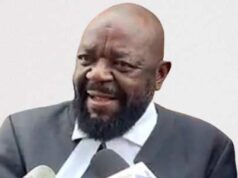
Prominent human rights lawyer Barrister Christopher Chidera has criticized the continued detention of Nnamdi Kanu, leader of the Indigenous People of Biafra (IPOB), describing it as a politically driven act with no solid legal foundation.
Speaking to journalists in Abuja, Chidera argued that Kanu’s prolonged incarceration stems from his bold criticism of the Nigerian government rather than any legitimate legal wrongdoing.
“Kanu is being punished for speaking truth to power,” Chidera said. “There is no substantial legal justification for his ongoing detention.”
He questioned the government’s failure to formally charge Kanu over controversial statements, such as the unsubstantiated claim that former President Muhammadu Buhari had died and been replaced—an allegation widely dismissed as misinformation.
“If such a statement is considered dangerous propaganda, why hasn’t he been charged accordingly?” Chidera asked.
The lawyer further alleged that Kanu’s detention is part of a calculated effort to suppress his influence in the South-East.
“They underestimate the bond between Nnamdi Kanu and his people,” Chidera said. “He doesn’t rely on propaganda. He stands on truth, consistency, and personal sacrifice. Few have endured what he has in the fight for freedom.”
Beyond Kanu’s case, Chidera issued a broader appeal for critical thinking and unity across the African continent, asserting that Africa’s challenges are rooted more in intellectual inertia than in colonial legacies.
“Africa’s greatest problem isn’t colonialism—it’s our failure to think critically,” he stated.
“Until Black Africans begin to question power, demand evidence, and value logic over emotion, we will remain trapped—not by external forces, but by our own mental complacency.”
Chidera also denounced a recent article published by a major online platform titled “How Nnamdi Kanu Sought to Please South-Easterners with Hilarious Propaganda”, calling it a “malicious fabrication” intended to undermine Kanu and sow division.
He urged the media and the public to remain vigilant against narratives aimed at silencing dissent and emphasized the need to defend fundamental rights, particularly the freedom of expression.
“Dissent is not a crime,” Chidera said. “A democracy must protect all voices, especially those that challenge the status quo.”