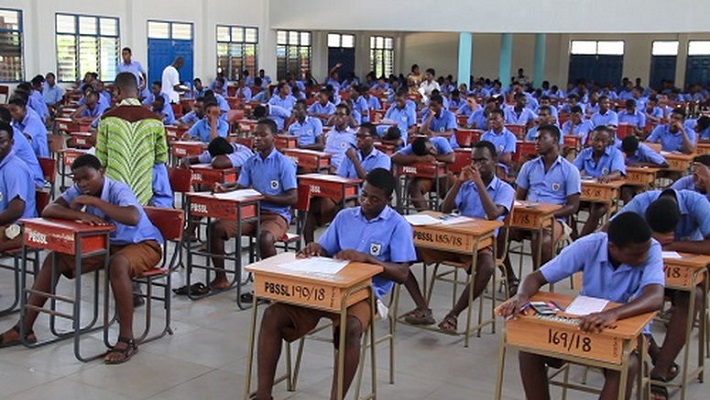
The announcement by the Minister of Education, Dr. Tunji Alausa, that from next year, the West African Examinations Council (WAEC) and the National Examinations Council (NECO) will begin conducting Senior Secondary Certificate Examinations (SSCE) using Computer-Based Testing (CBT), has sparked widespread debate.
While WAEC and NECO assert their readiness, many stakeholders argue that the country lacks the necessary infrastructure to implement such a transition successfully.
WAEC, NECO Defend Readiness
Speaking during a Zoom meeting organized by the Education Writers Association of Nigeria (EWAN), themed “CBT for SSCE: Is Nigeria ready?”, WAEC’s Head of National Office, Dr. Amos Dangut, and NECO Registrar, Prof. Dantani Wushishi, stated that both bodies had already begun integrating CBT into some aspects of their exams and only needed to build upon existing efforts.
Dr. Dangut emphasized logistical advantages, saying, “It will save logistics issues. It will be a matter of touching the keyboard. We started the computer-based test over a year ago. The plus is greater than the minus. For us in WAEC, we are good to go. We have started and we are consolidating.”
Prof. Wushishi suggested using facilities from other agencies like JAMB and NOUN, stating, “Are we ready? you asked. Ready means fully prepared, but in real life, you cannot be fully prepared but you continue to innovate and keep improving on what you are doing. We have introduced a lot of ICT innovations into what we are doing.
“The directive is presidential. The minister’s pronouncements were anchored on some critical issues. We have 76 subject areas we handle and 120 papers in 26,000 centres / schools.
“Education is on the concurrent list in the constitution and states are to be part of it. How many schools have CBT centres? It will require a lot of funds. JAMB has over 800 CBT centres and National Open University of Nigeria has across the country. Those are useful too. We use CBT in the conduct of November/December examination but is it not school based exam?”
On improving awareness and facility mapping, he added, “When we met with the minister, he agreed that there should be awareness and we are talking with stakeholders for each to know the roles they would play. We are already mapping our physical and CBT centres. We only need some modifications. Those doing CBT exams took some years to arrive at where we are starting from. It is about technological adoption.”
Ministry Backs CBT for Reducing Malpractice
Supporting the move, Hajia Binta Abdulkadir, Director of Senior Secondary Education at the Federal Ministry of Education, stated: “Examinations are fundamental to education globally. They are means of assessment. We will look inward to make use of available facilities. If we don’t, we won’t start at all. CBT exams record low malpractice than paper exams. There is need to punish exam saboteurs. Dual education system is good. You don’t de-emphasise certificate.”
Skepticism From Experts and Stakeholders
Despite government assurances, several stakeholders voiced strong concerns.
Education advocate Rasheed Rabana criticized the move, saying: “What we have been doing in the past is not really CBT in the real sense of it. WAEC and NECO mode of examination is not adaptable to CBT. Harvard University in the United States is one of the pioneers of computer use and CBT, but they still conduct paper exams.
“It is only multiple choice exam that is adaptable to CBT. We are destroying our exams. Let us just set the issue of infrastructure aside, that is the least of our problem, the mode of our exams is unadaptable to CBT.”
Dr. Niyi Sunmonu, President of the Congress of University Academics (CONUA), also expressed concern: “On the directive to migrate all examinations to Computer-Based Testing, CBT, by next year, I believe the intention is commendable. It is aiming to modernise assessment, improve efficiency, and reduce malpractice.
However, the feasibility raises a number of serious concerns that must be carefully considered: “Access and equity for candidates in remote areas: Many candidates from underserved or remote areas may not have regular access to computers and/or stable internet connectivity. More importantly, they may lack the digital literacy required to confidently navigate a CBT interface.
“Rolling out a nationwide policy without addressing these disparities could result in the exclusion or unfair disadvantage of a large segment of the student population.
“Nature and Pattern of Examination: While CBT works well for objective, multiple-choice-type assessments, many disciplines require more complex forms of evaluation, including essays, problem-solving, diagrams, or technical drawings.
“These forms are not easily adapted to standard CBT platforms. A blanket implementation risks oversimplifying assessment and undermining the depth and rigour required in many fields.
“Infrastructure and technical reliability: The current state of digital infrastructure in many schools and centres is not yet robust enough to support large-scale, glitch-free CBT deployment. Issues like power outages, insufficient computer terminals, network (internet) failures, and software glitches could severely disrupt the examination process and compromise its credibility.
“In essence, while transitioning to CBT could be a step in the right direction, it must be done gradually, inclusively, and with a clear-eyed view of the challenges ahead. The focus should be on capacity building, infrastructural development, and piloting CBT across suitable exam types before a full-scale implementation is adopted.”
Parents and Lecturers Raise Alarm
NAPTAN’s National President, Alhaji Haruna Danjuma, dismissed the proposal: “It is not possible. Will all the schools be fixed with computers? In my state, we have over 500 basic education schools, in my local government, we have over 200 primary schools, then we should install ICT facilities in all the schools.
“What about the electricity to power the facilities assuming we have them in place. How many computer instructors do we have to take care of the children? We are sitting on a time bomb.”
Prof. Nassir Adesola, ASUU Lagos Zonal Coordinator, urged caution: “Nothing is wrong with CBT actually but we need to interrogate the motivation for adopting its use. We need to be fully aware of the possible low points and the implication on the sanctity of our examinations.
“The modalities for its use, i.e. multiple choice, written, hybrid, and the opportunity for students to fully express themselves. This is more appreciated when grading is done manually, compared to some keywords driven programmed grading.
“A pilot use to identify challenges and smoothen rough edges would be better before plunging into it. We need to really expand our technology all round, from hardwares to softwares, electricity, logistic matters for remote locations, etc. The human factor too.”
NANS Urges Caution and Stakeholder Engagement
Comrade Adeyemi Samson Ajasa, PRO of the National Association of Nigerian Students (NANS), recommended using UTME as a trial model: “Let us use JAMB’s UTME as a litmus test. How has it fared? Meanwhile, remember that UTME is a day exam and SSCE runs for a little over a month. Are the facilities in place? Do we have CBT centres across the 774 local governments in the country? Let us assume that we do, remember that most of the LGs are made up of more than one community. Who is going to be responsible for the cost of logistics of candidates who want to write the exam? Is it the already pressed and hapless parents?
“Even if WAEC and NECO are going to make use of the facilities that JAMB is using now and others, they cannot be enough. We have not mentioned the issue of network, power supply, security concerns and others. The government should call a meeting of stakeholders including students, parents, experts etc to discuss the proposal. We need to make haste slowly.”
Experts Warn of Diminishing Writing Skills, Science Limitations
Dr. Isaac Areo, a former University of Abuja lecturer now in Rwanda, warned: “My main worry is that CBT will negatively affect the writing skills of our students. Just relate with some of our students, you will notice that they mostly speak better than they write. I doubt if all schools, whether private or public, can be provided with the facilities that can take all the students writing the exam in their own premises. That would mean some students would be taken to centres probably far away from their schools, then who is going to be responsible for the logistics?
“There is also the issue of computer fright. Not everybody can feel comfortable in front of the computer. Let us take it gradually. Objective questions can be CBT and then others still paper exam. The UTME conducted by JAMB is one thing and the SSCE is a different ball game.”
Educationists: CBT Policy Shouldn’t Be Enforced by Fiat
Educationists Beatrice Aketuamhen and Ariyo Ismail both stressed that UTME and SSCE differ fundamentally.
“UTME is just a day exam and SSCE is about a month or even more than a month. What about security concerns, logistics, and even electricity to power the computers? We all know the cost of energy now in the country. It is a long time thing, not something that can be done by fiat,” said Aketuamhen.
Ismail added: “Lagos and Abuja are not Nigeria as a whole. We like to copy and paste. We tend to pretend. Does every community have the expected facilities for such an exercise? The problem in the education sector is bigger than the issue of CBT.”
Lawmakers Say No to Killing Practical Skills
Chinedu Ogah, a member of the House of Representatives, warned that CBT could erode science education: “The issue about our education is that the system has simply collapsed. We are rushing things by talking about CBT when we have no network in the hinterlands.
“When it came up in the National Assembly, I told them that if we want to do the right thing, let us urge the federal government to deploy ICT to all primary and secondary schools.
“By then, it becomes a course to study in all our schools. They will get acquainted with ICT. Then gradually, they will upgrade. By then, there must have been network services in all the local governments, wards. And that is when you can talk of going into CBT mode.
“Talking about WAEC adopting use of CBT, I am a science student. How will you now combine titration when you are mixing carbon dioxide with CO2 to get a result?
“If you have an equilibrium when you are now doing a thesis and you bring what is called load, fulcrum and force, how do you measure it by bringing the equation?
“In Mathematics, when you have a quadratic equation, quadratic elimination by permutation method, how do you do that with ICT? I said in this way, we talk what cannot work. We are killing our education. We are killing our science.
“Science is purely practical. Our students need to know what practical is all about. And that is the only thing we have in this country. We believe everything is fake and they cannot lead us anywhere.”