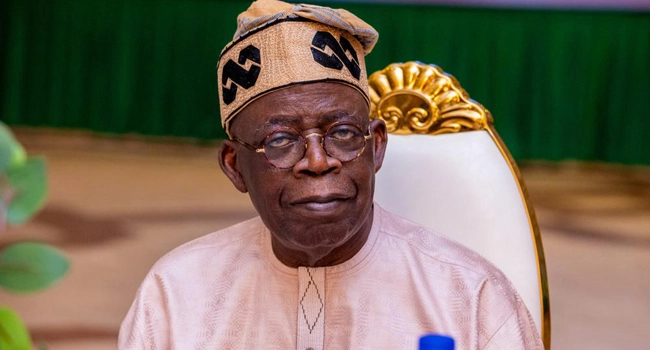
President Bola Tinubu has restated his administration’s unwavering commitment to protecting the rights, dreams, and future of every Nigerian child.
In a statement marking the 2025 National Children’s Day, Tinubu described children as the “heartbeat of the nation’s future” and vital to the country’s growth, innovation, and leadership.
“Across every school, community, and home in Nigeria today, you are the most precious part of our national fabric,” he said.
“I reaffirm our constitutional, moral, and intergenerational duty to safeguard every Nigerian child, protect their rights, and nurture their dreams.”
This year’s Children’s Day theme, “Stand Up, Speak Up: Building a Bullying-Free Generation”, was described by the president as both timely and urgent. He emphasized the importance of fostering a culture where all children feel safe, respected, and heard—both in physical spaces and digital environments.
“Violence, bullying, and neglect have no place in today’s Nigeria,” he declared.
Citing global statistics, Tinubu noted that more than one in three children around the world experience bullying regularly. In Nigeria, studies estimate that up to 65% of school-age children have suffered from physical, psychological, or social aggression.
“This is unacceptable. A child who learns in fear cannot learn well. A child who grows in fear cannot grow right,” the president said.
Under his Renewed Hope Agenda, Tinubu said child protection is a top priority. This includes the full implementation of the National Plan of Action on Ending Violence Against Children (2024–2030), which he recently launched. The plan provides a comprehensive strategy to prevent abuse, prosecute offenders, and support victims, supported by robust funding and multi-sectoral coordination.
The president also announced ongoing efforts to strengthen legal protections for children. This includes the review of the Child Rights Act (2003) and the Violence Against Persons (Prohibition) Act (2015) to expand protection, close legal gaps, and ensure consistent enforcement nationwide.
He noted that the Cybercrime Act is actively being used to combat cyberbullying and online exploitation of children.
Tinubu expressed satisfaction that all 36 states in Nigeria have domesticated the Child Rights Act, underscoring a shared national commitment to child welfare. However, he stressed that laws alone are not enough.
“Parents, teachers, carers, religious leaders, lawmakers, and citizens all have a role to play. We need a holistic, community-driven approach,” he said.
He added that the government is scaling up the Child Protection Information Management System (CPIMS) to enable real-time response to reported cases. The Ministry of Women’s Affairs is also strengthening local child protection systems, training frontline workers, and leading nationwide campaigns against harmful traditional practices.
In line with the Renewed Hope Agenda, the government plans to establish a strong institutional framework solely focused on child protection and development to ensure accountability and long-term impact.
President Tinubu concluded with a call to action for all stakeholders to sustain and deepen their commitment to child rights.
“Let today mark a renewed movement to build a Nigeria where no child suffers in silence, no child is left behind, and every child grows in dignity, peace, and love,” he said.