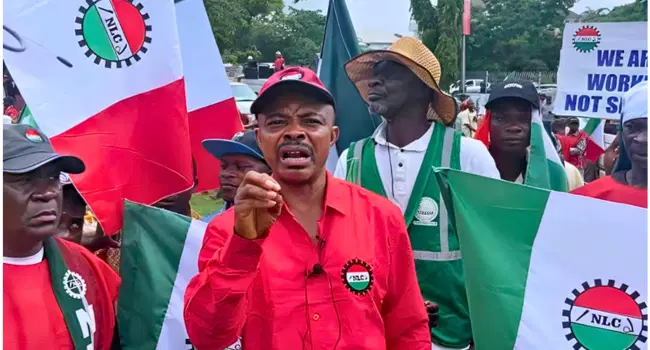
As Nigeria marked the 2025 International Workers’ Day with rallies, parades, and speeches nationwide, a sharp contrast emerged between government commendations and labour union frustrations over the state of workers’ welfare.
Governors, especially those elected on the platform of the Peoples Democratic Party (PDP), praised Nigerian workers for their resilience and role in national development. However, across many states, labour leaders highlighted worsening economic conditions, unpaid salaries and pensions, and a growing disconnect between government promises and workers’ realities.
PDP Governors Acknowledge Workers’ Struggles
In a joint statement issued by Dr Emmanuel Agbo, Director-General of the PDP Governors Forum, on behalf of Forum Chairman and Bauchi State Governor Bala Mohammed, the governors commended workers for their “unwavering dedication and sacrifice” under difficult economic conditions.
“We recognise your struggles in navigating an extremely harsh economic environment marked by rising inflation, unstable energy supply, and escalating costs of essential commodities,” the statement read. “We are committed to improving your welfare. Your advocacy must remain peaceful, constructive, and democratic.”
NHRC Calls for Rights-Based Economic Reforms
The National Human Rights Commission (NHRC) joined labour unions in condemning the state of workers’ welfare. NHRC Executive Secretary, Dr Tony Ojukwu, said inflation has severely eroded purchasing power, violating workers’ rights to a decent standard of living.
“Workers cannot afford housing, healthcare, or even food. The government must adopt reforms that prioritise dignity, justice, and access to essential services,” he said.
Labour Protests, Wage Demands Across States
In Kwara State, NLC Chairman Saheed Olayinka decried the economic hardship faced by workers and pensioners, calling for implementation of wage awards and pension reviews. Protests briefly disrupted the Workers’ Day event in Ilorin as staff of the Michael Imoudu Labour Institute accused the DG of high-handedness.
Governor AbdulRahman AbdulRazaq assured workers of his administration’s commitment to collaboration and urged them to embrace innovation in a changing economy.
In Plateau State, Governor Caleb Mutfwang reaffirmed his resolve to support workers, saying, “We recognise the suffering and are working to ease economic pressure.” NLC and TUC leaders demanded payment of wage awards and resolution of promotion arrears.
Rivers State Governor Siminalayi Fubara, suspended from office, praised workers’ strength. However, NLC Chairman Alex Agwanwor accused the government of neglecting pensioners and failing to meet financial obligations.
In contrast, Bayelsa workers praised Governor Douye Diri for timely salary payments. Diri donated two buses to NLC and TUC, pledging continued support.
Governors Announce New Minimum Wages
In a major highlight, Kebbi State Governor Nasir Idris and Edo State Governor Monday Okpebholo announced new minimum wages of N75,000. Kebbi also ended casualisation and made hundreds of new hires.
In Kaduna, Governor Uba Sani declared that no worker earns below N70,000, while Abia Governor Alex Otti reiterated his administration’s commitment to prompt payments.
Ebonyi Governor Francis Nwifuru pledged immediate gratuity payments after retirement and announced digitisation of payroll. Labour leaders called for additional housing and transport support.
Tensions in Other States
In Nasarawa, NLC Chairman Ismaila Oko lamented that workers are treated like “second-class citizens,” demanding wage awards and promotion reviews.
In Ondo State, labour unions rejected plans to demolish workers’ quarters, insisting on renovation instead. “Workers can’t afford new housing during an economic crisis,” said NLC Chairman Ademola Olapade.
In Ekiti, workers called for improved security as frequent farmer attacks and kidnappings threaten livelihoods. TUC Chairman Sola Adigun also warned of shrinking civil liberties and interference in labour movements.
In Benue, Governor Hyacinth Alia reiterated support for workers and assured them that salary payments and security reforms are priorities.
Conclusion
As Nigeria’s workforce commemorated its annual celebration, the contrast between official praise and grassroots dissatisfaction underscored a widening rift. While several governors used the day to announce wage increases and reforms, labour unions nationwide made it clear that promises alone would not suffice — workers want action, accountability, and tangible improvement in their daily lives.