Calm has returned to Cotonou following a failed coup attempt in the Benin Republic on Sunday, the United States Embassy confirmed on Monday, lifting its earlier shelter-in-place advisory for American citizens in the country.
In a statement, the embassy said it had reassessed conditions on the ground after a turbulent 24 hours. “The US Embassy in Cotonou assesses that the situation in Cotonou is calm and has returned to normal. We are lifting the shelter-in-place recommendation,” the statement read, while urging American citizens to continue exercising caution, avoid crowds and demonstrations, and maintain a low profile.
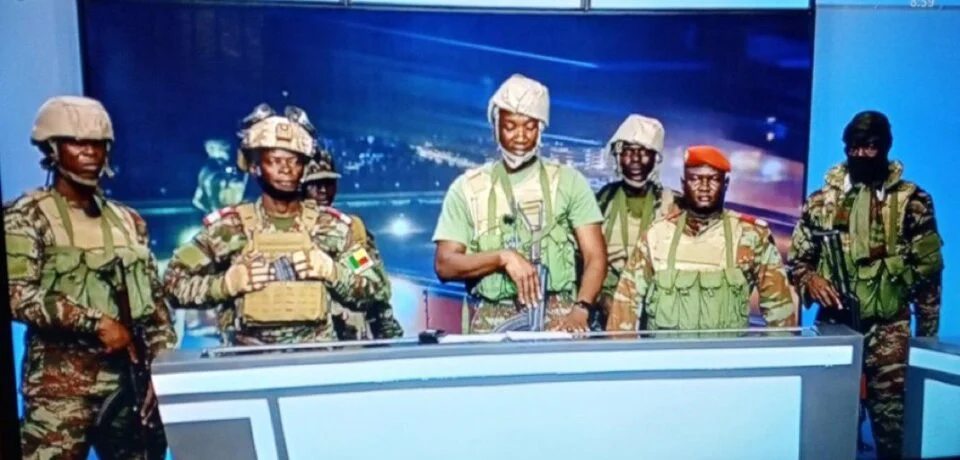
The advisory adjustment followed a dramatic series of events in which a faction of soldiers, calling themselves the “Military Committee for Refoundation,” attempted to overthrow President Patrice Talon.
The mutineers appeared on state television claiming they had dissolved the government and suspended the constitution, shortly after an unsuccessful assault on the president’s heavily guarded residence.
The soldiers briefly seized the national broadcaster to project legitimacy and rally support, contributing to widespread uncertainty. Borders were reportedly closed, and political parties suspended, further heightening tension across the country.
By later Sunday, Interior Minister Alassane Seidou announced that loyalist forces had regained control of key locations in Cotonou. Officials confirmed that at least 14 soldiers involved in the uprising were arrested, while others fled. Two senior army officers, Chief of Army Staff Abou Issa and Army Chief Colonel Faizou Gomina, who had been taken hostage during the coup attempt, were released on Monday following government action supported by Nigerian forces.
AFP journalists in Cotonou observed a city gradually returning to normal, with traffic resuming and roads reopening, although some military tanks remained stationed across key locations. President Talon appeared on television later on Sunday, reassuring citizens that the situation was “completely under control” and warning that the coup plotters would face punishment.
The attempted coup in Benin follows a spate of military interventions in West Africa, including in Niger, Burkina Faso, Mali, Guinea, and, most recently, Guinea-Bissau. The Beninese government called for swift assistance from Nigeria, which deployed troops and conducted military strikes in Cotonou to help suppress the mutiny. ECOWAS also announced the deployment of troops from Ghana, Ivory Coast, Nigeria, and Sierra Leone to support the preservation of constitutional order in Benin.
International reactions were swift. The United Nations, the African Union, France, and regional bodies condemned the coup attempt, reaffirming support for democratic governance.
Under Benin’s constitution, Talon is completing his second term and is not eligible for a third. Finance Minister Romuald Wadagni, Talon’s designated successor, is considered the frontrunner for the upcoming April presidential election. Critics have, however, accused Talon of authoritarianism despite economic achievements, while the main opposition party has been excluded from the ballot.
Benin’s political history has been marked by repeated coups and attempted takeovers since independence in 1960, making the swift suppression of Sunday’s coup a rare instance of rapid stabilization and restoration of constitutional order in the country.