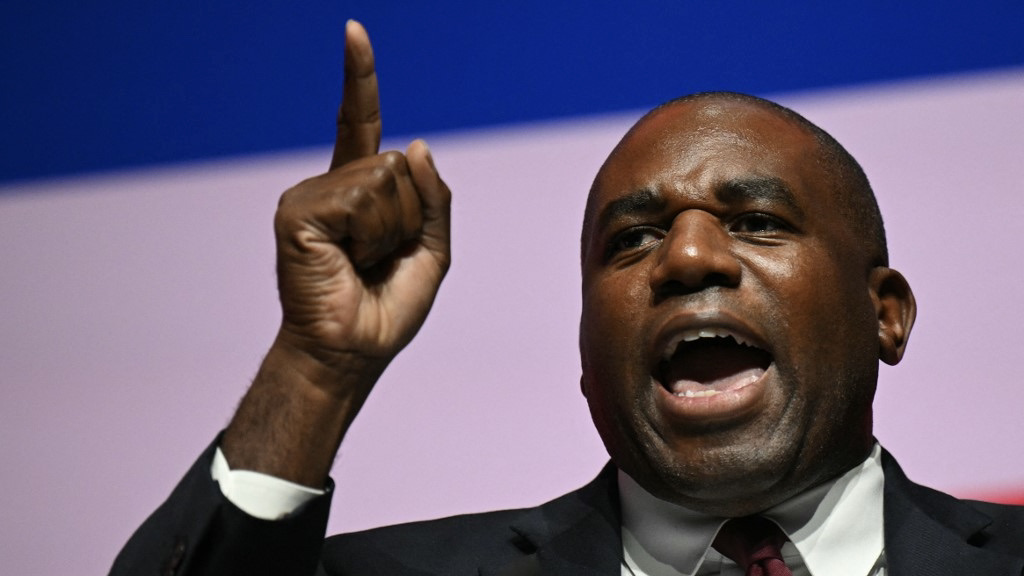
The UK government has suspended trade negotiations with Israel, summoned its ambassador, and introduced new sanctions targeting West Bank settlers, as Foreign Secretary David Lammy described the escalating military campaign in Gaza as “morally unjustifiable”.
This decision comes amid intensifying warnings of starvation in Gaza following Israel’s latest military offensive launched over the weekend. The humanitarian situation in the region, compounded by an 11-week blockade on food, fuel, and medical supplies, has prompted international concern.
In a heated parliamentary session, Conservative shadow foreign secretary Dame Priti Patel criticized the government’s measures, suggesting “the actions would be welcomed by Hamas.” Despite this, several MPs called for the government to go even further.
Reacting to the UK’s stance, an Israeli foreign ministry spokesperson asserted that “external pressure will not divert Israel from its path in defending its existence.”
Officials indicated that the worsening humanitarian crisis, the absence of progress toward a ceasefire, and public pressure from MPs and constituents influenced the UK’s actions. There’s also growing dissatisfaction from allies, as President Donald Trump notably excluded Israel from his recent Middle East tour, and Vice President JD Vance postponed a planned visit.
In a joint statement issued Monday, the leaders of the UK, Canada, and France had warned the Israeli government to stop its “egregious” military expansion and to “immediately allow humanitarian aid to enter Gaza”.
Though Israel reportedly allowed five aid trucks into the territory, the UN’s humanitarian chief described this as “a drop in the ocean of what is urgently needed”. By Tuesday, the UN confirmed Israel had authorized 100 aid trucks, but none had yet distributed supplies.
UK Prime Minister Sir Keir Starmer condemned the current conditions as “intolerable”, emphasizing that “humanitarian aid needs to get in at pace.”
In the House of Commons, David Lammy cited disturbing rhetoric from an Israeli minister, stating that the aim of recent operations was “cleansing Gaza”, “destroying what’s left”, and relocating Palestinians “to third countries”. He told MPs:
“We must call this what it is. It is extremism, it is dangerous, it is repellent, it is monstrous, and I condemn it in the strongest possible terms.”
Lammy acknowledged Israel had experienced “a heinous attack” on October 7, 2023, and reiterated the UK’s support for its right to self-defense. However, he warned the Netanyahu government had embarked on a “morally unjustifiable” and “utterly counterproductive” course that undermines efforts to recover hostages and alienates allies.
He criticized Prime Minister Benjamin Netanyahu’s administration for “isolating Israel from its friends and partners around the world” and announced the suspension of trade negotiations.
The UK’s Middle East Minister, Hamish Falconer, met with Israeli Ambassador Tzipi Hotovely, stating, “Today I summoned Israel’s ambassador to the FCDO. I made clear the UK’s opposition to expanded military operations in Gaza and rising violence and intimidation by Israeli settlers against Palestinian communities in the West Bank. The UK will not stand by as this happens.”
Lammy also announced sanctions against individuals and companies involved in West Bank settler violence, saying they had been “carrying out heinous abuses of human rights”. The measures include asset freezes and travel bans on three individuals and four entities.
Dame Priti Patel pushed back against the government’s approach, stating, “Strong words will do little to resolve the real challenges that are taking place and the suffering we are seeing taking place day in, day out.”
She further warned that the UK’s actions “should be the cause of concern” given that they had been “supported by Hamas, a terrorist organisation.”
Calls for stronger action followed Lammy’s statement, with Labour backbenchers questioning whether international law had been breached. MP Abtisam Mohamed accused Netanyahu of making “an explicit admission that Israeli officials intend to carry out ethnic cleansing.”
In response, Lammy defended previous steps, saying the partial suspension of arms sales ensured “none of us are complicit in any acts that breach international humanitarian law,” but acknowledged the need for further measures given the continuing conflict.
Labour MP Dr. Rosena Allin-Khan described the “weaponisation of food” as “morally reprehensible”, calling for an arms embargo and additional sanctions targeting Israeli officials.
Lammy assured MPs that the government was prepared to escalate measures, offering an “absolute commitment” to take further action “if needed over the coming days and weeks”.
He also addressed growing calls for Palestinian statehood recognition, confirming he is “in close dialogue” with France and Saudi Arabia on the matter. However, UK diplomats have indicated a preference to use formal recognition as leverage in broader peace talks rather than as a symbolic gesture.
Reacting on X, Israeli foreign ministry spokesperson Oren Marmorstein called the UK’s sanctions “unjustified“ and said, “External pressure will not divert Israel from its path in defending its existence and security against enemies who seek its destruction.”
He also dismissed the significance of the trade suspension, claiming the UK had not been advancing the deal recently, and added, “If, due to anti-Israel obsession and domestic political considerations, the British government is willing to harm the British economy—that is its own prerogative.”
Meanwhile, the European Union—Israel’s largest trading partner—has announced plans to review its trade agreement with the country in response to its actions in Gaza.