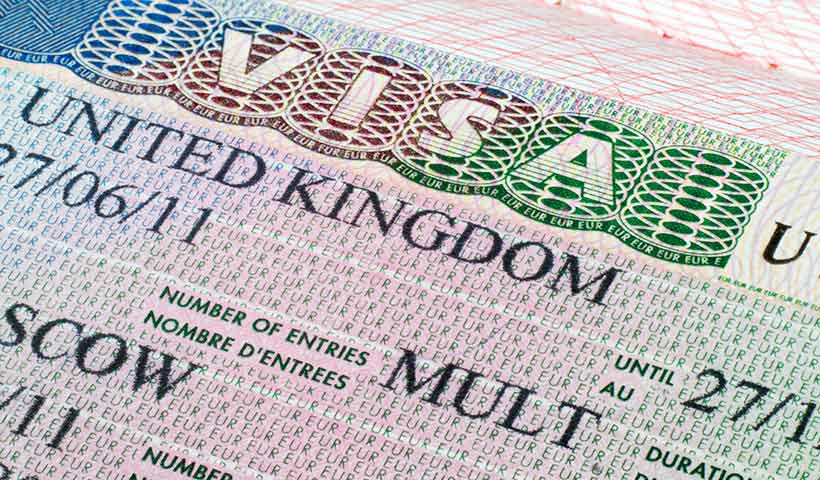
British children born overseas could be denied entry to the UK from next week following a change in passport rules.
Under the new rule, which takes effect from February 25, British dual citizens will have to present a British passport when travelling to the UK, or obtain a “certificate of entitlement” valued at £589.
Unlike foreign citizens, they cannot simply travel to the UK by applying for an electronic travel authorisation, ETA, the new visa-waiver scheme that allows foreigners to visit the UK for up to six months for £16.
The new rule, according to the Home Office, applies to children and babies, even if they are traveling with a parent who has a British passport. It warned that any dual British citizen who does not have a British passport would be denied entry at the point of boarding flights to the UK, or at the border. Border Force will have “discretion” about whether to let them in.
The Home Office said the changes were a key part of its efforts to modernise Britain’s digital border systems.
A government source said the changes were designed to help the Home Office distinguish between dual British citizens and illegal visa overstayers.
The department also pointed out that the “certificate of entitlement” will now last permanently so applicants only need to apply once.
A spokesperson for the Home Office said the policy should only be a last resort and the government prefers for British citizens to apply for a passport.
“Public information advising dual nationals to carry the correct documentation has been available since October 2024 and a substantive communications campaign about the introduction of ETA has been running since 2023,” the spokesman said.
“This requirement applies to all British citizens regardless of other nationality and is the same approach taken by other countries, including the United States, Canada and Australia.”