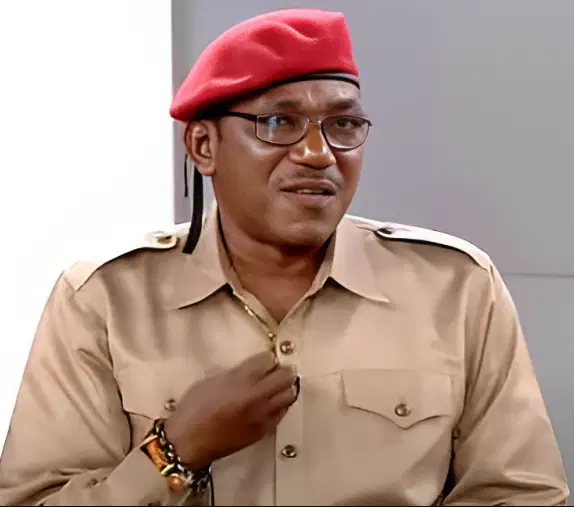
Former Minister of Youth and Sports Development, Solomon Dalung, has criticised President Bola Tinubu’s decision to remove fuel subsidy, saying the move was taken without consultation and adequate understanding of government processes.
Dalung made the remarks during an interview on Channels Television on Thursday, where he faulted the administration’s justification for the policy, describing it as a reflection of “poverty of ideas and knowledge.”
“The admission that subsidy removal was the only option is a demonstration of poverty of ideas and knowledge because in life, there are too many alternatives. For them to single out this issue defines the vested interest in the withdrawal of fuel subsidy,” Dalung said.
He argued that fuel subsidy removal was not necessary at the time it was announced, insisting that the real challenge was not the subsidy itself but how it was managed.
“I don’t see it as something that was necessary at that point in time. If we know as a fact that the subsidy regime has been investigated by the National Assembly, the fraud had been established, companies were indicted, meaning that the problem is not even the withdrawal of subsidy but the subsidy management itself,” he said.
The ex-minister accused the Federal Government of failing to hold those responsible for years of alleged fraud in the subsidy system accountable, adding that the President’s decision to announce the policy instead of going after subsidy fraudsters was an endorsement of fraud.
“This government is not interested in holding those who have defrauded this country for many years but chose to make a sweeping statement, ‘subsidy has been withdrawn’. For me, it is an endorsement of fraud,” he maintained.
While acknowledging that the policy has already been implemented, Dalung maintained that the manner in which it was carried out revealed a lack of understanding of governance structures.
“Granted, it has been done, but it was done in a manner that demonstrated again that the President, as at that time, did not even understand the working of the government and the complex nature of the country called Nigeria,” he said.
According to him, the decision was taken without the benefit of consultations and institutional input, as the government had not been fully constituted.
“He needed consultation. As at that time he made the statement, there was no government. It was only the President and the Vice President that had been sworn in, and that wasn’t government,” Dalung said.
“A government means a cabinet, advisers, and policy makers taking a decision like that,” he added.