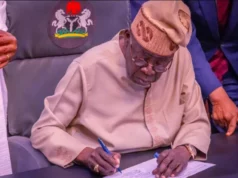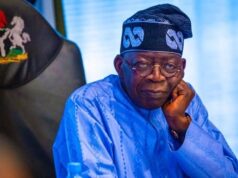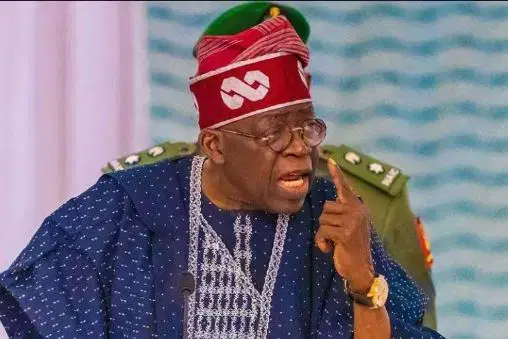
On Tuesday, President Bola Tinubu announced that his administration would not change its mind about its economic reforms.
He also vowed to sustain transparency and accountability in governance.
Speaking when he received a World Bank delegation led by Managing Director of Operations, Anna Bjerde, at the State House, Abuja, the President said the reforms, though painful at the beginning, were necessary to strengthen Nigeria’s economy and create opportunities for its young population.
“Since we went into this journey of reform, we have our hands on the plow, and we’re never going to look back.
“It is very clear that initially it was painful and difficult, but those who win are not those who give up along the way in their difficult times,” Tinubu stated.
He emphasized that Nigeria, as the heart of the African continent, must take necessary steps to transform its economy, particularly through agricultural mechanization and support for farmers.
The President specifically called on the World Bank to assist in establishing mechanization centers to help farmers, enhance seedling programs, and facilitate access to locally produced fertilisers as Nigeria’s petrochemical industry increases output.
“How do we help the farmers to convert local market for fertilisers to improve their yields and move them from ordinary small-scale holders to huge cooperatives and commercial farmers that can bring opportunity to Nigerians?” Tinubu asked.
He noted that his administration’s commitment to reform required difficult decisions, including ending the fuel subsidy regime and unifying the exchange rate, despite the initial shock of high inflation.
“It was difficult for a leader to look the other way in any corrupt environment for an opportunity that can give a function of money in subsidy regime and multiple exchange rates.
“We gave it up, let the world and the country benefit from a stable currency.
“And yes, the first reaction was high inflation, but it has come down dramatically. Naira is stable today,” the President said.
Tinubu urged the World Bank to explore various financing options that could accelerate Nigeria’s growth, reduce intermediaries, manage risks, and develop the skills of Nigerians.
“What is the value of encouragement for an Africa that is taking this huge population on an assurance of prosperity?