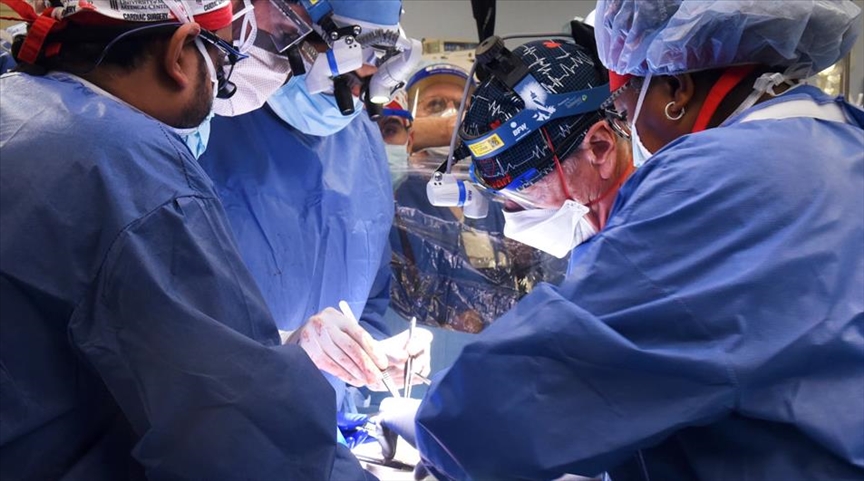
Surgeons at Ronald Reagan UCLA Medical Center in Los Angeles have successfully performed the world’s first full human bladder transplant, marking a significant breakthrough in the treatment of severe bladder disorders, hospital officials announced on Sunday.
The groundbreaking procedure was carried out on May 4 and involved 41-year-old Oscar Larrainzar, a father of four who previously had a large portion of his bladder removed due to cancer. Larrainzar also underwent the removal of both kidneys after battling end-stage kidney disease, leaving him reliant on dialysis for seven years.
In a single eight-hour operation, Larrainzar received both a new kidney and a new bladder from the same organ donor.
“The surgeons first transplanted the kidney, followed by the bladder; they then connected the kidney to the new bladder using the technique they had pioneered,” the University of California, Los Angeles (UCLA) said in an official statement.
Dr. Nima Nassiri, one of the lead surgeons, said the results were immediately promising.
“The kidney immediately made a large volume of urine, and the patient’s kidney function improved immediately,” Nassiri said.
“There was no need for any dialysis after surgery, and the urine drained properly into the new bladder.”
Nassiri, alongside fellow surgeon Dr. Inderbir Gill, explained that full bladder transplants had never been attempted before due to the complexity of the pelvic vascular system, which posed significant technical challenges.
“This first attempt at bladder transplantation has been over four years in the making,” Nassiri said.
Previously, patients requiring bladder reconstruction had limited options. Doctors could create an artificial bladder using segments of the intestine or insert a stoma bag to collect urine—methods associated with various short- and long-term risks.
With this successful transplant, the medical team hopes to offer a safer and more effective alternative.
“This procedure offers new hope for patients with severe bladder damage or dysfunction and may eventually become a new standard of care,” Nassiri added.