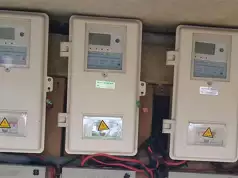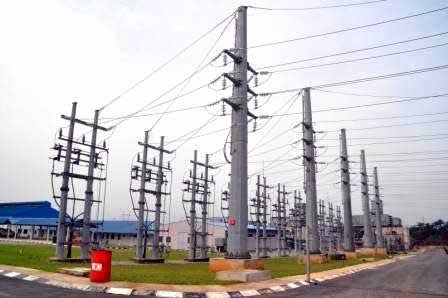
Power sector operators and experts have raised concerns, expressed fears, and projected opportunities as some states assumed responsibilities for regulating electricity markets within their various domains.
This follows the recent revelation by the Nigerian Electricity Regulatory Commission that seven states now control their electricity markets in accordance with the Electricity Act 2023.
The states are Enugu, Ondo, Ekiti, Imo, Oyo, Edo, and Kogi. Other states, including Lagos, Ogun, Niger, and Plateau, are expected to complete their transitions between June and September.
Anambra, having recently passed its electricity law, is also gearing up to join the list.
Before President Bola Tinubu signed the new Electricity Act in 2023 with the Federal Government, the Nigerian Electricity Regulatory Commission was the only agency regulating electricity in Nigeria.
However, the decentralization of the sector by the act has now given states the authority to control and regulate electricity within their domains, granting them the freedom to generate, transmit, and distribute power.
This marks a historic shift in Nigeria’s electricity governance, from a centrally regulated structure to one where states are empowered to generate, transmit, distribute, and regulate electricity within their borders and only submit to national oversight by the NERC.
This shift, while hailed by stakeholders as a leap towards energy decentralization and market competitiveness, is already raising questions over capacity gaps, regulatory clarity, subsidy management, and potential friction between state and federal oversight. This is because NERC appears to be losing relevance in the very sector it was created to govern.
While officials at NERC expressed reservations about some states’ ability to manage their power markets, some industry experts said the development had created opportunities with challenges.
The PUNCH reports that the seven states that now have the power to generate, transmit, and distribute electricity will also regulate the same and grant approval to licensees without the influence of NERC.
The regulator also disclosed during a presentation at the power stakeholders’ meeting in Lagos recently that 11 out of the 36 states had commenced the process of transitioning to self-regulation of electricity.
Discussions at the meeting focused on the transition to state electricity markets, with participants highlighting current sector challenges and proposing practical and collaborative solutions.
“So far, 11 states have commenced the transition process, with seven states — including Enugu, Ondo, Ekiti, Imo, Oyo, Edo, and Kogi — already transitioned,” NERC stated in its presentation.
The stakeholders emphasised the importance of capacity building, regulatory coordination, and investment readiness to ensure sustainable, state-led electricity markets under the framework of the Electricity Act 2023.
Once regulatory functions are transferred from the NERC, the states will regulate their electricity markets.
Similarly, the electricity distribution companies operating in the seven states and other licensees would be controlled by the states, instead of the federal government’s regulatory commission.
In states where NERC has ceased to operate, the Discos hitherto operating in those states would be mandated to incorporate a subsidiary company to assume responsibilities for intrastate supply and distribution of electricity in those states.
For instance, as the Enugu Electricity Regulatory Commission commenced operations, the Enugu Electricity Distribution Company set up a subsidiary named Mainpower Electricity Distribution Limited, which was licensed by the state regulator.
This means that the main Enugu Electricity Distribution Company is now operating under different regulations. While some experts expressed worries over the development, others said it could be a positive turnaround for the power sector.
In line with the Electricity Act, the NERC has since April 2024 issued 11 transfer orders to states that have applied and met the necessary conditions. Each order comes with a six-month timeline for full operational handover.
For instance, Lagos and Ogun are set to complete the transition this month, Niger in July, and Plateau in September. Meanwhile, Anambra has formally set the ball rolling with the establishment of the Anambra State Electricity Regulatory Commission, following the passage of the state’s electricity law signed by Governor Charles Soludo.
Despite the optimism, industry sources warn that many of the states may not be adequately prepared for the complex regulatory and operational responsibilities ahead.
Operators worry
A senior official at NERC, who spoke to The PUNCH on condition of anonymity due to lack of authorisation to speak on the matter, said, “The new electricity market is more likely to impact distribution, which is also a stronghold in the value chain. Managing the new change in the electricity market is going to overwhelm the state governments.
“They actually don’t understand the implication of it yet, but NERC is doing everything in its power to make it easy for these states. A major issue is manpower; you need experienced hands to handle some issues, and if you can’t find someone to do that in your team, there will be issues.
“And for the practical responsibilities that come with it.
“From the onset, it was clear that any state seeking to assume electricity regulatory oversight within its domain would be taking on a heavy burden,” he said. “Yes, we’ve seen 11 states obtain approval for autonomy, but the truth is many of them are yet to move beyond the paperwork. It’s one thing to declare interest, it’s another to actually roll up your sleeves and get the work done.”
Adegbemle noted that out of the 11 states that had secured autonomy, only four have gone ahead to establish any form of regulatory framework or policy direction, while the rest have remained inactive.
“There’s no visible sign of regulatory activity in most of these states. They’ve written to the Nigerian Electricity Regulatory Commission, received the green light, but stopped there. No laws. No institutions. No implementation. It appears many of them are only playing to the gallery,” he said.
According to him, the decentralisation process is not an easy path and requires significant groundwork, from setting up institutions to training personnel and developing regulatory models tailored to local realities.
“This is not a walk in the park. It’s a technically intensive space. Some states are only just realising that once they take on this responsibility, electricity from the national grid will be invoiced at full cost, and they’ll need to decide whether to pass that cost to their residents or offer some form of subsidy. That realisation has caused many to pause,” he stated.