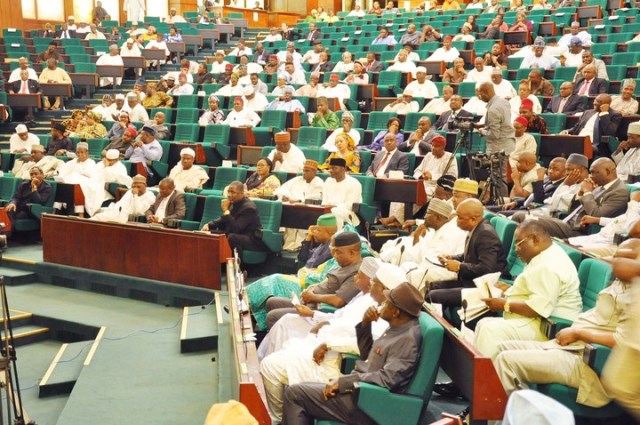
The House of Representatives, yesterday, mounted a robust defence of the newly assented Electoral Act 2026, saying that the law, though “imperfect,” was enacted in strict compliance with constitutional and parliamentary procedures and reflects the collective will of the National Assembly.
This came as the African Democratic Congress, ADC, said it will mobilise Nigerians nationwide to protect the integrity of future elections, accusing President Bola Tinubu of weakening democratic credibility by signing the amended Electoral Act into law.
Also, Civil Society Organisations, CSOs, warned that unresolved loopholes in the new electoral law were threatening the credibility of th 2027 polls and flayed Tinubu’s hasty signing of the electoral blll into law.
Meanwhile, the Middle Belt Forum, MBF, said the amended Electoral Act signed Wednesday by President Tinubu has brought the Nigerian electoral process back to square one.
Speaking at a briefing convened by a coalition of CSOs in Abuja, the House Spokesman, Akin Rotimi, dismissed claims that the legislature ignored public opinion in adopting key provisions of the Act, particularly on electronic transmission of results.
Rotimi also expressed sympathy to protesters affected by a tear-gas incident at the National Assembly, describing it as regrettable and unconstitutional.
“Protesters who attend the National Assembly(protest) are entitled and constitutionally protected. It should never have happened, and we are looking into the circumstances,” he said, and urged civil society groups to guard against infiltration by “nefarious characters” during demonstrations.
Amid sharp criticism from civic groups over Section 63 and other contentious provisions, the lawmaker insisted that due process was strictly observed throughout the review of the 2022 Electoral Act, culminating in the 2026 amendment.
“Democratisation is a process. What we have may be imperfect, but it was done in the best interest of Nigerians,” he said.
He stressed that the conference committee, constituted to reconcile differences between the House and Senate versions, acted within its mandate and could not introduce entirely new provisions outside matters already before both chambers.
“For the first time, the law expressly mandates and recognises the IReV and electronic transmission of Form EC8A. The presiding officer shall mandatorily transmit results. Only if that fails does the manual process come in as a fallback,” he clarified.
On why the House adopted what many perceived as the Senate’s position on electronic transmission, Rotimi explained that the conference committee process required compromise.
“It was bipartisan, APC, PDP, Labour Party, APGA , 12 members from each chamber. What emerged was new wording, not a simple adoption of one side.
“Walking out of plenary is part of expressing dissent. But majority decision prevails. The process was credible,” he said.
Addressing concerns that the bill was assented to by President Tinubu,within 24 hours of transmission to the Presidency, Rotimi argued that urgency was necessary to provide certainty in the electoral calendar.
“With electoral timelines already announced by INEC, it was important to avoid gaps that could undermine the process. Certainty is critical in electoral matters,” he said.
He welcomed calls for INEC to conduct a public simulation of its electronic transmission system ahead of the 2027 polls.
“Let’s test it, identify gaps, and fix them,” he urged.