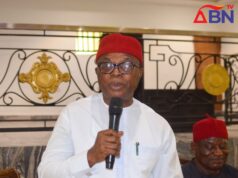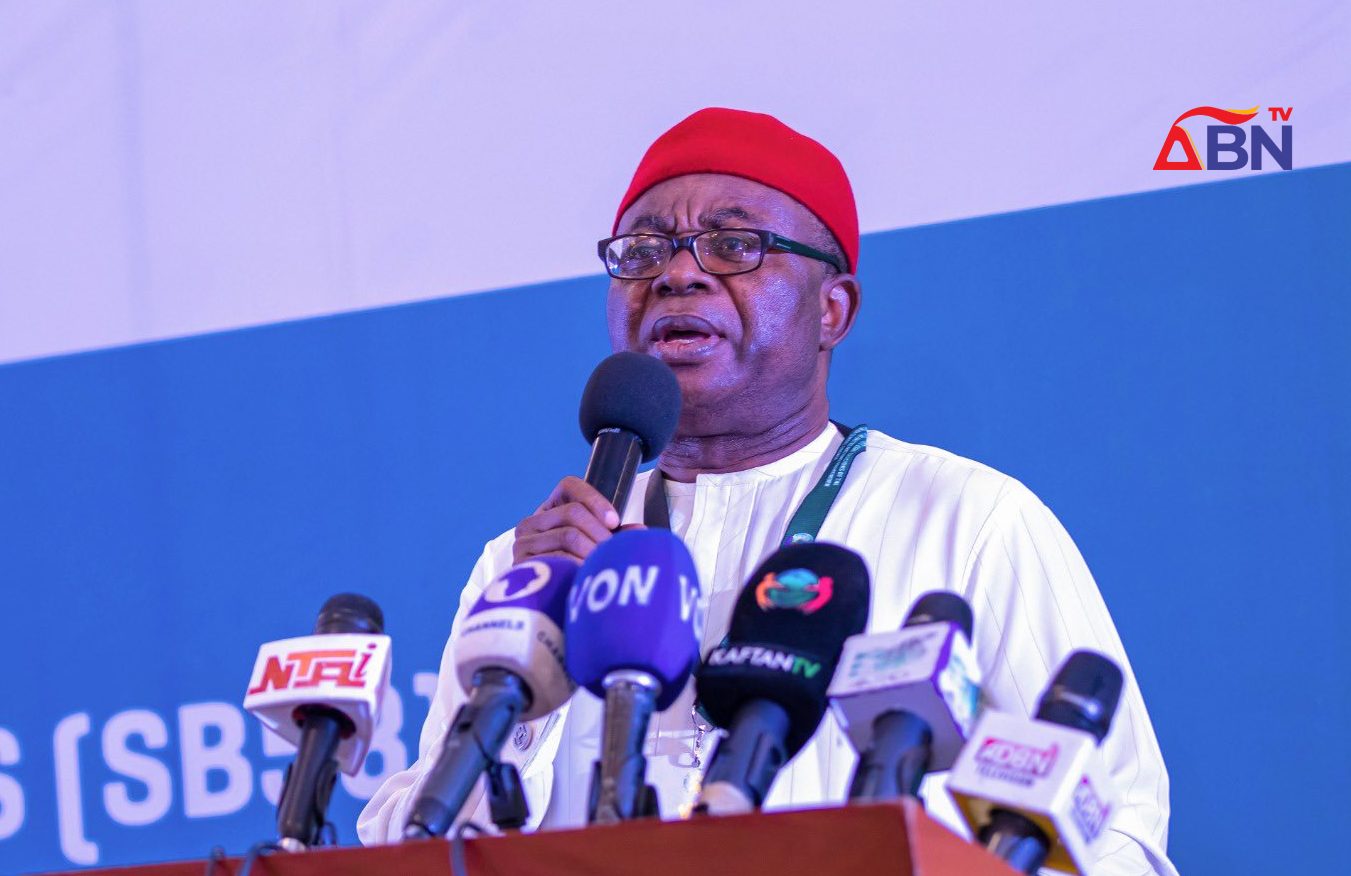
Chairman of the Security, Climate Change, and Special Interventions Committee on the Governing Board of the North East Development Commission (NEDC), Rep. Sam Onuigbo, has reiterated the critical role of legislation in driving effective climate action across Africa.
Speaking to journalists in his Abuja office on Wednesday, Onuigbo underscored that laws serve as essential guardrails for policy implementation, ensuring that climate action strategies remain structured and effective. He emphasized that even policymakers must operate within the confines of legal frameworks to avoid inconsistencies and inefficiencies.
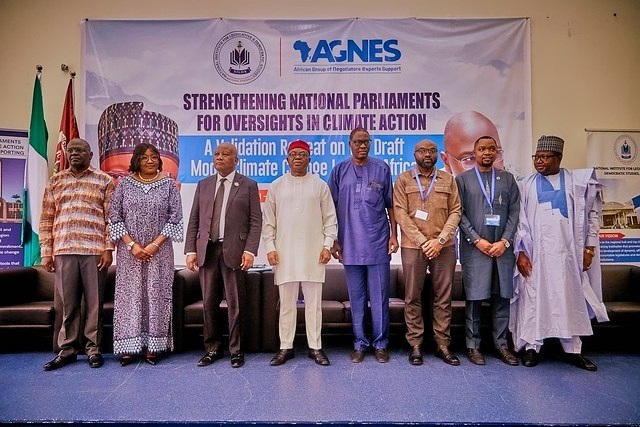
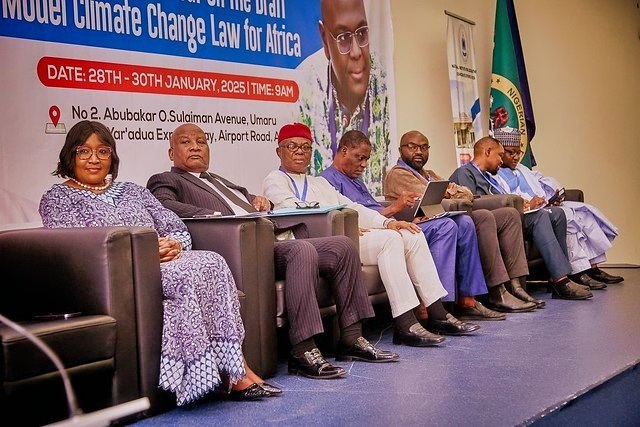
His remarks came in the wake of the recent validation retreat on the Draft Model Climate Change Law for Africa, organized by the African Group of Negotiators Experts Support (AGNES) in collaboration with the National Institute for Legislative and Democratic Studies (NILDS). According to Onuigbo, the retreat was a significant step towards equipping African nations with a harmonized legislative approach to climate change.
“African nations stand to benefit immensely if we work together in the global fight for sustainability. Currently, only Kenya, Nigeria, South Africa, and Uganda have enacted Climate Change laws. A model law will help promote broader continental inclusion,” he stated.
Onuigbo, widely recognized as the father of Nigeria’s Climate Change Law, lauded the efforts of AGNES team lead, Dr. George Wamukoya, and NILDS Director General, Prof. Abubakar Sulaiman, for facilitating the retreat. He stressed the necessity for African nations to adopt legislative measures that will not only ensure policy continuity but also protect the continent against climate-related disasters.
“African countries lack the infrastructural advantages of developed nations to respond effectively to climate disasters. We must, therefore, take proactive legislative steps to ensure sustainable development,” Onuigbo noted.
He further highlighted that different African countries operate under varying political structures, making it imperative that climate laws be adaptable to their governance systems. However, he insisted that critical provisions must be incorporated to ensure consistency and effectiveness.
Onuigbo also pointed out that constant consultation among national parliaments and regional bodies such as ECOWAS and SADEC is crucial for aligning climate policies with the African Union’s Climate Change and Resilient Development Strategy (2022-2032). He explained that the presence of representatives from UNEP, UNFCCC, and UNDP at the retreat underscored its significance in fostering global partnerships for climate resilience.
Recalling the 2023 West African Regional Parliamentary Meeting on Climate Change in Lagos, Onuigbo reiterated the challenges of passing Nigeria’s Climate Change Act, particularly the bureaucratic bottlenecks that initially threatened its success. He urged African parliamentarians to remain resolute in overcoming similar hurdles in their respective countries.
“Climate change is an existential issue. African nations have the opportunity not just to mitigate its impact but also to transition into fully developed economies built on resilience, green energy, and sustainability,” he asserted.
The validation retreat, held from January 28 to 30, 2025, at NILDS headquarters in Abuja, marks a crucial step in Africa’s commitment to climate governance. NILDS DG, Prof. Sulaiman, reinforced the importance of collective action among Africa’s 54 nations, highlighting the urgent need to bridge infrastructure gaps and mobilize resources to combat climate challenges, particularly flooding.
The outcomes of the retreat are expected to shape legislative frameworks that will guide African nations in their climate action plans, fostering regional cooperation in tackling one of the most pressing global challenges of the 21st century.