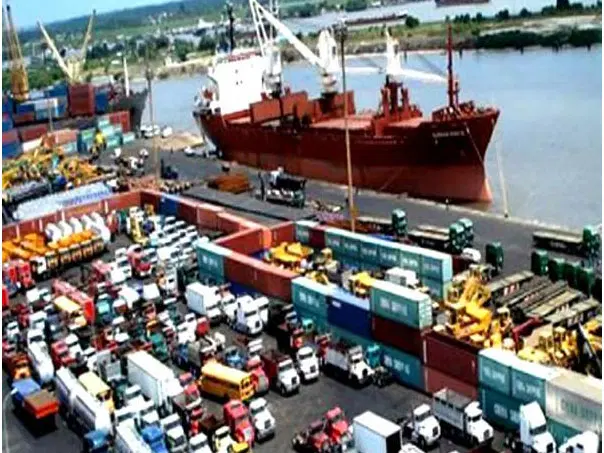
The Nigerian Ports Authority (NPA) has reported a 24.8 per cent surge in cargo throughput to 129.3 million metric tons in 2025, up from 103.6 million metric tons recorded in 2024, underscoring a strong expansion in Nigeria’s maritime sector.
According to the NPA’s 2025 Operational Performance Report, exports played a leading role in driving trade growth during the year. Although imports continued to dominate overall cargo volumes, exports accounted for 39 per cent of total throughput, compared to 59.2 per cent for inward traffic, while transshipment contributed 1.8 per cent. Analysts said the steady rise in export activity reflects progress in the Federal Government’s economic diversification agenda, aimed at boosting non-oil exports and reducing reliance on crude oil.
Containerised cargo, a key barometer of trade performance, also recorded significant growth. Total container traffic rose by 25.7 per cent to over 2.1 million Twenty-foot Equivalent Units (TEUs). Export containers grew by 3.1 per cent, while import-laden containers surged by 32.8 per cent. Notably, transshipment containers increased by 205.8 per cent, strengthening Nigeria’s position as a regional logistics hub serving West and Central Africa.
Port performance data showed that Lekki Port led the nation in cargo handling, accounting for 40.6 per cent of total throughput. Onne Port followed with 19.1 per cent, while Apapa Port handled 16.7 per cent. Lekki Port also attracted the largest vessels, with an average Gross Registered Tonnage (GRT) of 55,712, slightly ahead of Onne at 53,022 GRT.
Overall ship calls rose by nearly 12 per cent to 4,477 vessels, reflecting broad-based growth in maritime operations.
Liquid bulk cargo remained dominant at 54.7 per cent of total volumes, while containerised cargo accounted for 24 per cent.
Managing Director of the NPA, Dr. Abubakar Dantsoho, described the performance as one of the most significant annual increases in Nigeria’s maritime history. He expressed confidence that ongoing port modernisation initiatives and the planned implementation of the National Single Window system would further enhance efficiency, competitiveness and trade growth.