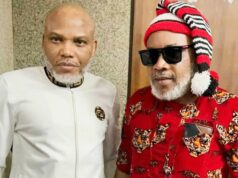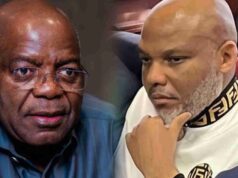
The trial of the detained leader of the Indigenous People of Biafra (IPOB), Mazi Nnamdi Kanu, resumed today, 7th May 2025, at the Federal High Court in Abuja with renewed scrutiny over the Federal Government’s handling of the case, as well as the legality of evidence presented by the prosecution.
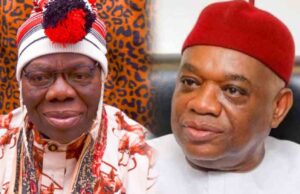
From the moment Kanu arrived in court, surrounded by his formidable legal team led by the respected legal luminary, Chief Kanu Agabi (SAN), it was clear that the defense was prepared to challenge every point raised by the prosecution. The team includes distinguished counsels such as Onyinyechi Benson, Aloy Ejimakor, Emeka Etiaba, Maxwell Opara, and many others.
During today’s session, the prosecution continued its attempt to link Kanu to a series of broadcasts, many of which were historical in nature — including addresses dating as far back as 2011 during the World Igbo Congress in the United States.
READ ALSO: Nnamdi Kanu’s Broadcasts Take Centre Stage As Court Adjourns Trial To May 8
The prosecution presented flash drives containing audio and video materials said to be past broadcasts of the IPOB leader, in which he spoke passionately about the plight of the Igbo people and indigenous communities in Nigeria. In one such broadcast, Kanu warned of Fulani herdsmen invasions and called for vigilance and self-defense, which he emphasized was a constitutional right.
Kanu, in the recordings, maintained that IPOB is a peaceful movement and repeatedly called for a referendum, not war. “Referendum is not a crime,” he said, urging indigenous groups to awaken and protect their people from state-backed violence and terrorist attacks.
As segments of the EndSARS-era recordings were played, including calls from distressed individuals across Southern Nigeria reporting attacks on protesters, Kanu’s broadcasts were framed as reactions to systemic violence and neglect, not incitement.
One caller from Aba during the broadcast was heard crying out, “They are killing us now!” — a chilling reminder of the real-time fear and violence many Nigerians faced during protests. Kanu’s call for self-defense was positioned by his legal team as a justified reaction to impunity and extra-judicial killings, not terrorism.
The defense also raised critical concerns about the process used to proscribe IPOB as a terrorist group — noting it was done via an ex parte motion without IPOB representation in court, a point unchallenged by the prosecution today.
At a point, the prosecution tried to reference a letter from a former Attorney General, but again, the defense objected, insisting that the document had not been duly served — a concern the trial judge, Justice Omotosho, acknowledged.
Despite the prosecution’s continued push, the defense maintained that IPOB’s activities, as outlined by Kanu, were legal and grounded in the fundamental rights to self-determination, speech, and peaceful assembly.
The judge adjourned the case till May 8, 2025, for the continuation of the hearing and further cross-examination of the prosecution’s witness.