Nigeria is seeking partnership with Canada to drive and deepen mining reforms in a bid to upscale productivity in the mining sector.
This was made known in a statement signed by the Special Assistant on Media to the Minister of Solid Minerals Development, Segun Tomori.
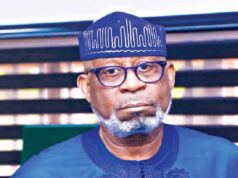
According to Tomori, the Minister of Solid Minerals Development, Dele Alake underscored Nigeria’s readiness to leverage Canada’s advanced mining technology and expertise to strengthen ongoing reforms in the nation’s mining sector.
He said Alake emphasized the imperative of enhanced bilateral collaboration to accelerate growth, attract investment, and entrench global best practices in the industry.
This was when the Minister received the Canadian High Commissioner to Nigeria, H.E Pasquale Salvaggio, in his office on Thursday, while he reflected on history, recalling Canada’s principled support for Nigeria during the pro-democracy struggle that followed the annulment of the June 12, 1993 presidential election.
He noted that Canada’s firm stance galvanized international backing for democratic restoration, culminating in the return to civil rule in 1999.
Alake said: “Canada stood firmly on the side of the Nigerian people during our pro-democracy struggle. The cooperation we enjoyed from the Canadian High Commission was exemplary and deeply encouraging. We regarded Canada as an archetypal pro-democracy ally.
“Today, we are committed to strengthening that relationship, particularly in mining and mineral development, where Canada’s global reputation for excellence is well established.”
According to the statement, the Minister reaffirmed Nigeria’s commitment to partnering with Canada to de-risk the mining environment, attract foreign direct investment, enhance capacity building for mining professionals, formalize and regulate artisanal mining, and promote technology transfer to support the rapid development of the sector.
Highlighting investment incentives, he (Alake) listed tax waivers on imported mining equipment, full repatriation of profits after meeting statutory obligations such as taxes and royalties, and other fiscal measures designed to create an investor-friendly climate.
Meanwhile, the Canadian High Commissioner to Nigeria, H.E. Pasquale Ambassador Salvaggio expressed appreciation for Nigeria’s acknowledgment of Canada’s historic role in the country’s democratic journey and commended the Minister for recognizing Canada’s leadership in the global mining industry.
He also noted that Nigeria remains Canada’s second-largest trading partner in Africa, noting significant potential to expand bilateral trade across key sectors, particularly mining.
He commended the Tinubu-led administration through the Minister of Solid Minerals Development for the establishment of the Nigeria Solid Minerals Company, NSMC, describing it as a strategic initiative capable of boosting investor confidence and catalyzing sectoral growth.
The Ambassador also highlighted the strong ties between Canada and the Nigerian diaspora, adding that both nations are richly endowed with natural resources that can be optimally harnessed through strengthened cooperation.
“I am confident that Nigeria could become Canada’s largest trading partner in Africa within the next five to ten years, given its dynamism, entrepreneurial spirit, and commercial outlook.
“Nigeria is currently the sixth-largest recipient of Canadian development cooperation globally, which underscores the depth of our partnership”, he said.
Meanwhile, Ambassador Salvaggio further emphasized the High Commission’s readiness to facilitate increased Canadian investment in Nigeria, urging the Minister to revisit the stalled Foreign Investment Promotion and Protection Agreement (FIPA), noting that its ratification would significantly enhance investor confidence and guarantee investment security.
He also conveyed Canada’s willingness to expand capacity-building initiatives, including replicating the 2025 training programme for Nigerian mining professionals at the University of Calgary, Alberta, alongside additional technical exchange programmes to deepen expertise in modern mining practices.
In response, the Minister acknowledged that while the FIPA predates the current administration, the Federal Government is prepared to review and expedite its ratification process.
He reiterated the unwavering commitment of President Bola Tinubu to attracting increased Foreign Direct Investment (FDI) as a pathway to economic growth and job creation for the nation’s teeming youth population.
Both countries agreed to establish a joint working group to identify priority areas of cooperation within the mining sector and develop actionable timelines to ensure tangible outcomes from the renewed bilateral engagement.