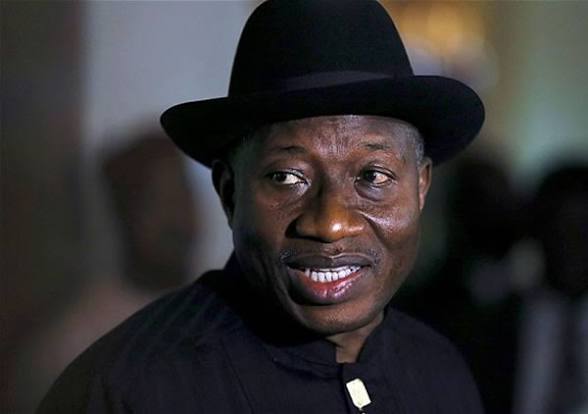
Former President Goodluck Jonathan has urged the National Assembly of Nigeria to review the country’s electoral litigation process and consider establishing a specialised Constitutional Court to handle election disputes.
Jonathan made the call in Abuja during the 70th birthday celebration and book launch of Gbenga Daniel.
He argued that creating a dedicated court for electoral matters would simplify the current process and reduce the strain on the political system by ensuring disputes are resolved in a single phase.
According to him, the existing three-tier structure for governorship election cases—spanning election tribunals, the Court of Appeal, and the Supreme Court—has become cumbersome and inefficient.
Reflecting on past experiences, Jonathan cited a 2011 case in which a governorship candidate lost due to a technical requirement on the use of red ink for voting, even though voters had used other colours due to lack of supply. He noted that while subsequent legal amendments allowed such cases to reach the Supreme Court, the prolonged litigation process remains a major concern.
He recommended that Nigeria adopt a model similar to that used in some Francophone African countries, where Constitutional Courts exclusively handle political and electoral disputes.
“If the Supreme Court remains the final authority on governorship elections, then cases should not pass through multiple stages. A single, specialised tribunal would be more effective,” he said.
Jonathan also challenged the judiciary to take a firmer stance in electoral matters, stressing that strong and impartial decisions are essential for credible politics.
Using a football analogy, he likened judges to referees, warning that weak oversight could encourage misconduct among political actors.
Speaking on the celebrant, Jonathan described Daniel as a pragmatic and constructive leader who brought discipline and analytical thinking into politics. He also praised his decision to document his life experiences in books, noting that firsthand accounts help correct public misconceptions.
The event was attended by several dignitaries, including President Bola Tinubu, represented by the Minister of Finance, Wale Edun, as well as former President Olusegun Obasanjo and other prominent figures.