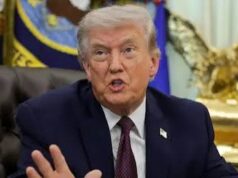
Iran has confirmed a two-week ceasefire announced by U.S. President Donald Trump, the Tasnim news agency, which is close to the Islamic Revolutionary Guard Corps (IRGC), reported early on Wednesday.
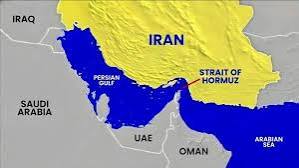
Iranian Foreign Minister Abbas Araghchi said safe passage through the Strait of Hormuz would be possible for two weeks in coordination with Iran’s armed forces “and with due consideration of technical limitations.”
Trump had made reopening the waterway a condition for the ceasefire and had threatened to target Iran’s energy sector and infrastructure, including bridges, if Tehran failed to comply, setting a deadline of 0000 GMT.
The Strait of Hormuz, crucial to global oil and gas trade, has been largely closed since the United States and Israel launched large-scale attacks on Iran on Feb. 28.
According to a senior U.S. official, Israel will also adhere to what Trump described as a “double sided CEASEFIRE.”
Pakistan, which has mediated between Tehran and Washington, said that an immediate ceasefire between Iran and the US had taken effect.
Prime Minister Shehbaz Sharif wrote on X that the Islamic Republic of Iran and the U.S., along with their allies, had agreed to an “immediate ceasefire everywhere,” including in Lebanon.
“I warmly welcome the sagacious gesture and extend deepest gratitude to the leadership of both the countries and invite their delegations to Islamabad on Friday … to further negotiate for a conclusive agreement to settle all disputes,” Sharif said.
Trump earlier said Sharif had asked him to refrain from carrying out the threatened attacks.
The U.S. has received a 10-point proposal from Iran and believed it offered a “workable basis” for negotiations, Trump wrote on his platform Truth Social.
According to The New York Times, the plan calls for lifting all sanctions imposed on Iran.