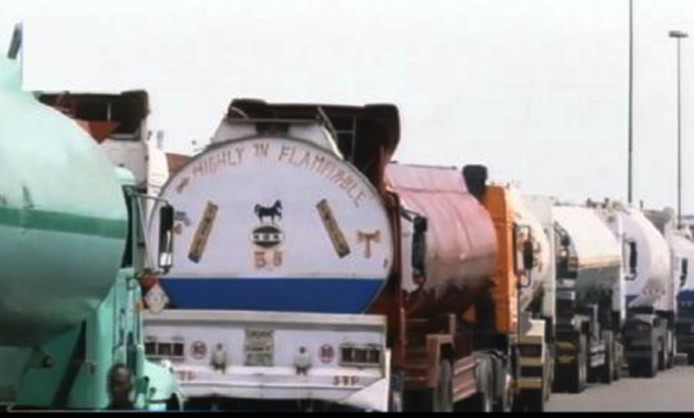
The Western Zone of the Independent Petroleum Marketers Association of Nigeria (IPMAN) has announced that, beginning October 1, petroleum tankers will no longer be allowed to load more than 45,000 litres of fuel.
The zone’s chairman, Chief Oyewole Akanni, revealed this in an interview with the News Agency of Nigeria (NAN) on Friday in Ibadan.
Akanni explained that the decision emerged from a joint meeting involving IPMAN, the government, and key industry stakeholders aimed at reducing the frequency of tanker-related accidents on Nigerian roads. Among those involved in the meeting were the Petroleum Tanker Drivers (PTD), Nigerian Association of Road Transport Owners (NARTO), Nigerian Midstream and Downstream Petroleum Regulatory Authority (NMDPRA), and other oil marketers.
“Before now, some tankers carried up to 90,000 or 60,000 liters, which was dangerous.
“Those big tankers damage our roads, as the trucks are made to carry far more than they were designed for.
“And when overloaded, they become unstable and fall, causing accidents,” he said.
Akanni added that the government has also made it mandatory for all tankers to be fitted with safety covers to prevent fuel spillage in the event of an accident.
“With these covers, even if a tanker falls, fuel won’t spill, except if the tank is punctured,” he said.
However, he expressed concern over the actions of vandals who intentionally puncture fallen tankers in order to steal fuel, describing it as a persistent problem.
The IPMAN chairman also noted that the PTD had identified night driving as a major contributor to accidents, often due to driver fatigue.
“We have, therefore, instructed drivers not to drive at night.
“Once it is 7.00 p.m., they must park and continue their journey by 7.00 a.m. the next day, but some still disobey this directive,” he said.
Akanni emphasized that IPMAN remains committed to working with stakeholders to minimize tanker-related accidents and fatalities. He said the rise in incidents had prompted federal intervention and highlighted the urgent need for stricter regulations, public education, and comprehensive safety reforms.
“These are marked by systemic failures, including overloading, poor infrastructure, and inadequate enforcement, alongside dangerous public practices like fuel scooping,” he said.
(NAN)