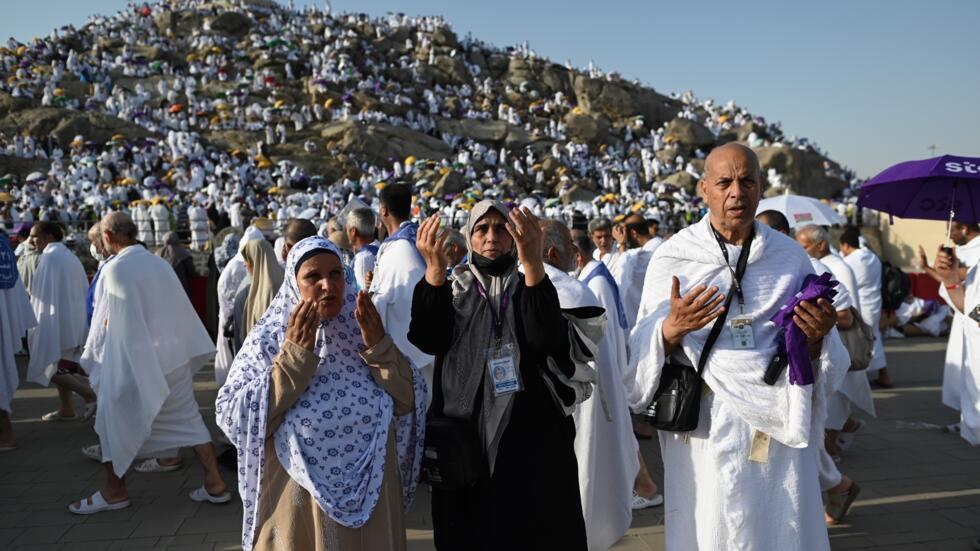
Thousands of Muslim pilgrims ascended Mount Arafat on Thursday for the spiritual peak of the annual hajj pilgrimage, as Saudi authorities issued warnings to avoid the searing midday heat.
Pilgrims began arriving at the sacred hill and surrounding plains before dawn, where it is believed Prophet Mohammed delivered his final sermon. Clutching colourful umbrellas and dressed in white garments symbolizing purity, many gathered early to take advantage of the relatively cooler morning hours.
While some will retreat to their tents during the day, most will remain in the area for hours, offering prayers and reciting the Koran in what is considered the most physically demanding stage of the pilgrimage.
After sunset, the pilgrims will proceed to Muzdalifah, located between Arafat and Mina’s vast tent city, to collect pebbles for the symbolic “stoning of the devil” ritual.
“This is something that I used to see every year on the TV screen during Hajj, and I always thought, ‘I wish I could be here,’” said 33-year-old Ali from Pakistan.
“I’ve been trying to get here… for the past 3 years,” he added as he gazed at the mount. “I feel very blessed.”
Hundreds of worshippers scaled the mount itself, while many more gathered at its base, praying or taking photos to capture the moment.
Earlier in the week, Saudi officials had issued an advisory urging pilgrims to remain sheltered between 10:00 a.m. and 4:00 p.m. on Thursday to avoid the harshest hours of sun exposure.
To mitigate the heat, mist-spraying fans and cooling units were installed at the base of the mount. Temperatures during this year’s pilgrimage have already surpassed 40°C (104°F).
Last year’s pilgrimage was marred by tragedy, with 1,301 deaths attributed to extreme heat as temperatures soared to a record 51.8°C. Most of the deceased were unregistered pilgrims who lacked access to essential amenities, such as air-conditioned tents and transport.
“I came here early to avoid the sun, and later I will pray inside my tent,” said 54-year-old Adel Ismail from Syria.
In response to last year’s disaster, Saudi authorities have intensified preparations for this year’s event, significantly expanding heat mitigation measures and emergency response efforts.
The hajj ministry announced that over 40 government agencies and 250,000 personnel have been mobilised. Shaded areas have increased by 50,000 square metres (approximately 12 acres), while more than 400 cooling units are being deployed and thousands of additional medics are on standby.
“It’s a big dream for me that I had almost given up hope of realising,” said Iman Abdel Khaleq, a woman in her fifties who broke into tears of joy as she stood at the foot of Mount Arafat. “It’s a big dream for me that I had almost given up hope of realising,” she told AFP.
To prevent a repeat of last year’s tragic outcomes, authorities have also intensified efforts to stop unregistered pilgrims from entering Mecca. Measures include frequent security raids, drone surveillance, and mass text alerts warning of the risks.
Access to the hajj is governed by a quota system, with permits distributed by lottery in each country. However, the high cost of the pilgrimage has led many to attempt it without proper documentation — risking arrest or deportation if caught.
Saudi Arabia earns billions of dollars annually from the hajj and the year-round umrah pilgrimage, both central to the kingdom’s religious and economic identity.
— AFP