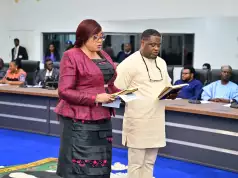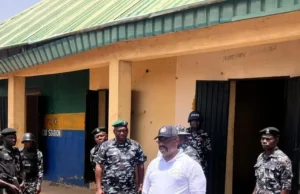
Cross River State Governor, Senator Bassey Otu, has commissioned the Southern District office of the Homeland Safety and Security Agency in Calabar as part of a statewide drive to strengthen community-based security architecture.
The governor, represented by his Chief of Staff, Chief Emmanuel Ironbar, said the initiative underscores his administration’s resolve to build on existing security gains amid rising insecurity across Nigeria where banditry, kidnapping, armed robbery and cult-related violence continue to threaten lives and property, especially in rural and hard-to-reach areas.
“Before now, many could not sleep with their eyes closed due to insecurity, but today, the story has changed.
“This initiative will further eliminate criminal activities and enhance community safety,” he said.
Ironbar commended Nsan and the volunteers for their commitment, stressing that recruitment would be thorough and community-driven to ensure credibility.
He urged personnel to remain vigilant and proactive in reporting suspicious activities.
The commissioning, which took place simultaneously across the three senatorial districts — Calabar for the South, Ikom for the Central and Ogoja for the North — aims to position the Homeland Security outfit as the first line of intelligence gathering and rapid response at the grassroots.
Director (South) of the agency, Chief Michael Nsan, disclosed that over 1,300 volunteers are already supporting operations in the Southern District in collaboration with conventional security agencies.
Their efforts, he noted, helped reduce crime significantly during the last festive season.
Nsan added that the agency has set up strategic intelligence teams, while volunteers are undergoing training and screening for formal recruitment. To improve mobility, the state government provided 14 motorcycles for patrol in difficult terrains.
According to him ,security forces are often overstretched by nationwide threats of banditry and kidnapping, the Homeland Safety and Security Agency offers a vital complementary structure.
He added that It promotes community intelligence, quicker local response, and partnership with traditional institutions, thereby enhancing overall safety, restoring public confidence and supporting socio-economic activities.