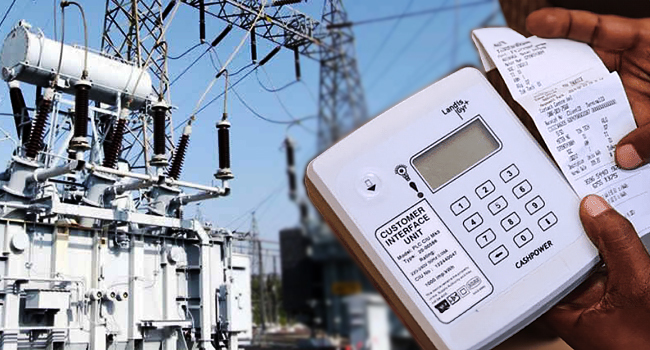
The Federal Government’s electricity tariff subsidy surged to ₦1.94 trillion in 2024, a significant increase from ₦610 billion in 2023, marking a 219.67% rise.
This sharp spike comes despite the Band A tariff hike introduced in April 2024.
According to the Nigerian Electricity Regulatory Commission (NERC), the escalation in subsidy costs is mainly attributed to macroeconomic shocks, including the floating of the naira by President Bola Tinubu in June 2024 and the removal of fuel subsidies, both of which triggered high inflation levels.
The NERC report revealed that the government incurred this ₦1.94 tn subsidy to bridge the gap between cost-reflective tariffs and the actual tariffs paid by electricity customers. However, only ₦371.34 million—a mere 0.019%—of the subsidy was actually disbursed.
“It is important to note that due to the absence of cost-reflective tariffs across all DisCos (distribution companies) in 2024, the government incurred a subsidy obligation of N1.94bn (62.59 per cent of total NBET invoice) during the year, which translates to an average of N161.85bn per month. This subsidy obligation of the FG is largely attributable to the FG’s policy to freeze allowed tariffs paid by customers despite the increase in cost-reflective tariffs,” the report stated.
For context, the NERC 2023 annual report noted: “The cumulative Minimum Remittance Obligation for DisCos was 52.92 per cent (N685.69bn out of N1.29tn NBET invoices), meaning that the government incurred a subsidy obligation of N610.06bn (47.08 per cent of total NBET invoices).”
The government reportedly froze customer tariffs at December 2022 levels, despite rising operational costs due to currency devaluation and inflation. As a result, subsidy obligations rose sharply to ₦633.30bn in Q1 2024, a 303% increase compared to the 2023 quarterly average of ₦157.15bn, and a 1,699% jump from the 2022 average of ₦35.21bn.
“The FG directive to freeze all customer tariffs at the December 2022 approved rates despite the increase in the cost-reflective tariffs arising from the major increase in FX rates caused the FGN subsidy to reach N633.30bn in 2024/Q1; this represents a 303 per cent and 1,699 per cent increase, respectively, compared to the average quarterly subsidy liability incurred in 2023 (N157.15bn) and 2022 (N35.21bn).”
In April 2024, the government implemented a tariff adjustment for Band A customers, who consume about 40% of all energy distributed nationwide. This led to a 39.99% decrease in the subsidy burden in Q2, bringing the figure down to ₦380.06bn.
“Effective 01 April 2024, the tariffs for Band A customers, who account for ~40 per cent of total energy consumed across all the DisCos, were reviewed to cost-reflective rates (in most DisCos). This adjustment led to a significant decrease (-39.99 per cent) in FG subsidy obligations between 2024/Q1 (N633.30bn) and 2024/Q2 (N380.06bn).”
However, a subsequent freeze on all customer tariffs at July levels caused subsidy liabilities to climb once again. Q3 recorded ₦464.12bn, and Q4 reached ₦471.69bn, marking quarterly increases of ₦84.06bn and ₦91.63bn, respectively.
“However, the FG directive that froze all customer rates at the July rates for the rest of 2024 led to increases in the quarterly subsidy obligation of the FGN: +N84.06bn (+22.12 per cent) in 2024/Q3 and +N91.63bn (+24.11 per cent) in 2024/Q4. This is because although allowed tariffs were frozen, the cost-reflective tariffs increased due to macroeconomic factors,” the report stated.
The average national cost-reflective tariff was ₦175.31/kWh, while the average allowed tariff stood at ₦100.27/kWh, leaving a subsidy gap of ₦75.04/kWh. Among the highest recipients were:
-
Abuja DisCo – ₦285bn
-
Ikeja DisCo – ₦272bn
-
Ibadan DisCo – ₦236bn
-
Eko DisCo – ₦231bn
-
Benin DisCo – ₦169bn
-
Enugu DisCo – ₦161bn
Yola DisCo recorded the highest cost-reflective tariff at ₦266.64/kWh due to factors like insecurity and vandalism. Since their allowed tariff remained unchanged, Yola received nearly double the average subsidy per unit of electricity delivered.
Mounting Debts Amidst Unpaid Subsidies
Despite the ballooning subsidy burden, the Federal Government paid only ₦371.34 million in 2024: “NBET reported that the Federal Government paid only N371.34m out of the N1.94tn subsidy obligation for 2024; this translates to a 0.019 per cent settlement,” NERC stated.
Power Generation Companies (GenCos) are said to be owed nearly ₦5 trillion. To streamline payments, a DisCo Remittance Obligation (DRO) system replaced the Minimum Remittance Obligation framework in January 2024. This system requires DisCos to pay NBET based on what their allowed tariffs can cover, with the federal government covering the remainder.
Yet, Minister of Power Adebayo Adelabu admitted the government’s inability to meet these obligations, hinting that consumers should prepare for cost-reflective tariffs.
Expert Opinions
Power sector expert Bode Fadipe linked the rising subsidies to the devaluation of the naira: “There are certain components of the power sector materials that are denominated in US dollars… FX will always affect tariffs. During tariff adjustments, two fundamental factors considered are the value of the naira vis-à-vis the US dollar and the inflation rate.”
He lamented the government’s failure to meet its obligations: “It’s rather unfortunate. It continues to bug the mind… the power sector as it is currently constituted… may not see salvation for the next 20 to 30 years.”
Fadipe further questioned the feasibility of total subsidy removal: “When you say total subsidy removal, my concern is, what is the actual price of a unit of electricity? … a lot of people will steal more electricity.”
Dangote: Private Sector Must Step Up
Aliko Dangote, President of the Dangote Group, urged Nigerian investors to look toward the power sector: “We as a company alone are producing, group-wide for our own consumption, over 1,500 MW. So, Nigeria should not be three times what we are producing as a country. Nigeria should be at about 50,000 MW to 60,000 MW.”
He continued, “What we have done here (in building the refinery) just shows that there’s nothing impossible. All this can be replicated in our power sector. There’s no reason why Nigeria should be doing 5,000 MW.”
Dangote also called for reinvestment in Nigeria: “We, the private sector, Nigerians, most especially us, should stop taking our money abroad and invest the money here to make sure that we develop our own country and continent…”