The total amount disbursed to state governments and the Federal Capital Territory as financial support for infrastructure and security projects has increased to N2.45tn, official records from the Office of the Accountant-General of the Federation have revealed.
The amount disbursed between March 2024 and August 2025, which spanned over 17 months, was aimed at bolstering infrastructure development and strengthening security operations at the subnational level, as part of ongoing efforts to address widespread insecurity and bridge critical infrastructure gaps across the country.
These details were contained in internal documents from the OAGF, submitted at the December 2025 Federal Accounts Allocation Committee meeting, obtained on Friday.
The disbursements were made under a special intervention programme funded through non-oil revenue savings, as part of efforts to ease fiscal pressure on subnational governments and accelerate project execution at the grassroots.
The document, titled “Ledger of Savings on Intervention to States Infrastructure and Security,” showed that the payments were drawn from non-oil revenue savings, totalling N2.45tn within the 17 months. However, the document did not disclose how much each state received or whether the funds were disbursed separately from the monthly revenue allocation.
Details of the transactions indicated that the total receipts by the Federal Government over the period stood at N2.45tn, from which N2.45tn was paid out to state governments and the Federal Capital Territory, leaving zero balance as of 25 August 2025.
The document disclosed that total disbursements in 2024 amounted to N1.184tn, following four transactions in April (N259bn), May (N222bn), September (N370bn), and December (N333bn).
In 2025, payments rose further to N1.266tn, driven by six transfers spread across February (N216bn), April (N200bn), May (N250bn), June (N250bn), July (N250bn), and August (N100bn), underscoring a sustained pace of funding releases to beneficiaries over the two-year period.
Each payment is recorded as a “Payment for Intervention to States and FCT”, while corresponding inflows are titled “Transfer from Non-Oil Savings.”
Recall that on July 20, 2023, President Bola Tinubu approved the establishment of the Infrastructure Support Fund for the 36 states of the federation as part of measures to cushion the effects of the petrol subsidy removal on the people.
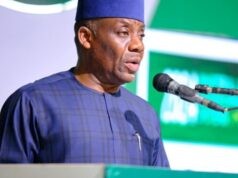
Providing more details on the establishment of the ISF for the 36 states, the then Special Adviser to the President, Special Duties, Communications and Strategy, Dele Alake, said, in a statement, “The new infrastructure fund will enable the states to intervene and invest in the critical areas of transportation, including farm to market road improvements; agriculture, encompassing livestock and ranching solutions; health, with a focus on basic healthcare; education, especially basic education; power and water resources, that will improve economic competitiveness, create jobs and deliver economic prosperity for Nigerians.
“The committee also resolved to save a portion of the monthly distributable proceeds to minimise the impact of the increased revenues, occasioned by the subsidy removal and exchange rate unification, on money supply, as well as inflation and the exchange rate.”
He added, “These savings will complement the efforts of the ISF and other existing and planned fiscal measures, all aimed at ensuring that the subsidy removal translates into tangible improvements in the lives and living standards of Nigerians.”
A breakdown of the transactions shows that monthly receipts into the account and subsequent disbursements largely followed a predictable pattern, punctuated by periods of sharp spikes that reflected major intervention payments to states. In March 2024, the Federal Government received N300bn as a transfer from non-oil savings but did not make any disbursement to states in that month. This was followed in April 2024 by a payment of N259bn to states, even as only N100bn was received into the account during the period.