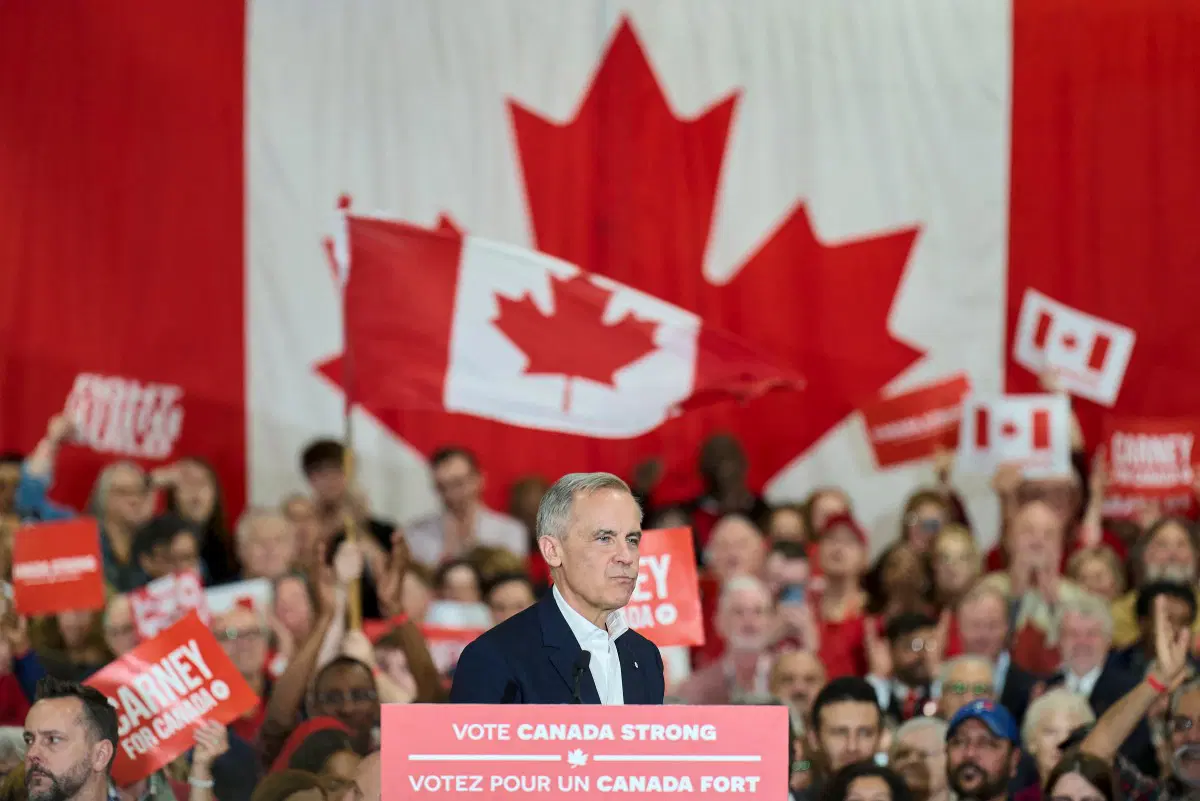
Canada heads to the polls Monday in a pivotal election, one that will determine the country’s approach to a newly aggressive United States under President Donald Trump.
The race — triggered by the abrupt resignation of Justin Trudeau — has centered on how Canada should confront Trump’s escalating trade war and annexation threats. It now appears set for a historic turnaround.
The Liberal Party, led by newly installed Prime Minister Mark Carney, is narrowly favored to win after a late surge in support, reversing months of Conservative dominance under Pierre Poilievre.
Carney’s Rise and the Trump Effect
Carney, 60, a former investment banker and central bank governor in both Canada and Britain, only became prime minister last month after Trudeau stepped down amid plummeting popularity.
Despite never holding elected office, Carney has leveraged his global financial experience as a key argument for why he is best suited to lead Canada through this tumultuous period.
He has pledged to:
- Revitalize internal trade.
- Expand Canada’s economic opportunities beyond reliance on the United States.
- Stand firm against U.S. economic aggression.
“We don’t need chaos; we need calm. We don’t need anger; we need an adult,” Carney emphasized in the campaign’s final days, positioning himself as a stabilizing leader amid Trump’s provocations.
Carney has consistently warned:
“The United States under Trump wants to break us so they can own us.”
Poilievre’s Pitch for Change
Conservative leader Pierre Poilievre, 45, has tried to shift the focus back to domestic concerns — housing shortages, crime, and the cost of living—issues that contributed to the Liberals’ collapse in support before Trudeau’s resignation.
Poilievre criticizes Trump’s tactics but insists that “a lost Liberal decade” left Canada vulnerable to American hostility.
“You cannot handle another four years of this,” he told supporters over the weekend, urging voters to reject what he calls a continuation of Trudeau’s unpopular policies.
Tight Race, Historic Stakes
Polling suggests a razor-thin margin. According to CBC’s final poll aggregator:
- Liberals: 42.8%
- Conservatives: 38.8%
Supporters on both sides reflect the stakes:
- Jeff Sims, from Quebec, says Carney’s“ credentials—“two central banks under his belt”—make” him the right choice.
- Janice Wyner, a Conservative supporter from Oakville, dismissed Carney as a “Trudeau clone” and said she fears for her grandchildren’s future if Liberals remain in power.
Many voters, like Nadine Sokol near Ottawa, cite “the threat coming from the U.S.” as their top concern.
A Massive Turnout Expected
Nearly 29 million Canadians are eligible to vote, with a record-breaking 7.3 million already casting advance ballots.
Polls open at 8:30 am local time in Newfoundland and Labrador, with the election spanning six time zones across the vast country.
Canadians will elect 343 members of Parliament. A party needs at least 172 seats for a majority. The Liberals won a majority in 2015 but have governed with a minority since 2019.
The performance of smaller parties — the left-wing New Democratic Party (NDP) and the separatist Bloc Québécois — could play a critical role, but polls suggest both may struggle this time around.
If the Liberals secure victory, it would mark one of the most dramatic election reversals in Canadian political history — and the beginning of a new and uncertain chapter in Canada-U.S. relations.