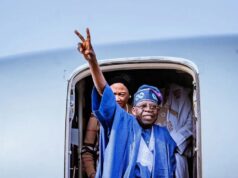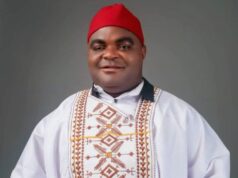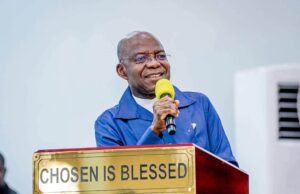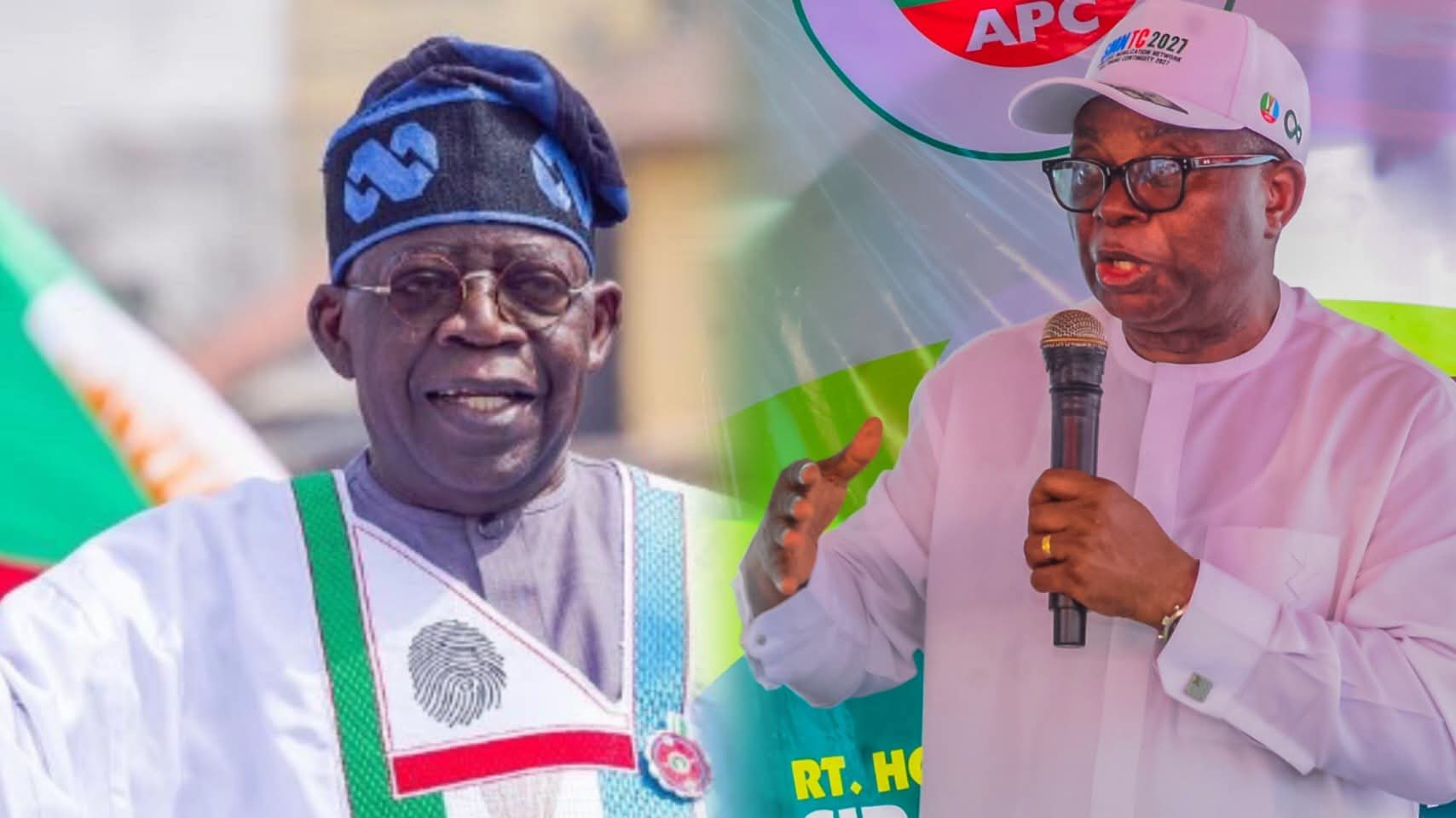
Former member of the House of Representatives and President of GLOBE Legislators, Rt. Hon. Sir Sam Ifeanyichukwu Onuigbo, has called on Nigerians to support the re-election of President Bola Ahmed Tinubu in 2027, insisting that continuity in governance is necessary to consolidate ongoing economic reforms, complete major infrastructure projects and strengthen national development.
Onuigbo made the call on Monday, November 2, 2026, in Umuahia, Abia State, during an interactive session with members and stakeholders of the Strategic Mobilisation Network for Tinubu Continuity 2027 (SMN TC2027).
Speaking on the theme, “The Case for Continuity, Consolidation and Prosperity,” the former federal lawmaker, who also serves as Patron of the network, said the organisation was established to build a formidable grassroots mobilisation structure capable of communicating the achievements and policies of the Tinubu administration to Nigerians ahead of the 2027 presidential election.
According to him, the country’s development requires consistency in policy implementation, particularly in areas where difficult economic decisions have already been taken.
Onuigbo maintained that abandoning ongoing reforms midway could undermine the progress recorded and delay the benefits expected from government investments.
“We are not saying that Nigeria has arrived at its destination. We are saying that important steps have been taken, major reforms have been initiated and investments have been made,” he said.
“There is still work to be done, and there are still challenges to address. But we believe that the right thing to do is to consolidate the progress, correct the weaknesses and complete the work already started.”
Onuigbo Defends Tinubu’s Economic Reforms, Acknowledges Hardship
Reflecting on the economic situation inherited by President Tinubu in May 2023, Onuigbo identified rising inflation, declining government revenue, foreign exchange challenges, mounting debt obligations and the fuel subsidy regime as some of the major difficulties confronting the country at the time.
He argued that the removal of petrol subsidy and unification of foreign exchange rates, although painful, were necessary decisions intended to reposition the Nigerian economy.
The APC chieftain acknowledged that the reforms had imposed considerable hardship on Nigerians, particularly through increased transportation costs, food prices and pressure on household incomes.
He, however, insisted that the long-term benefits of the policies should not be sacrificed because of the immediate difficulties.
Citing economic figures in his presentation, Onuigbo claimed that Nigeria’s headline inflation had declined to 14.63 per cent in September 2026 after previously reaching 36.4 per cent.
He also cited economic growth figures of 3.87 per cent in 2025 and 4.43 per cent in the second quarter of 2026 as indications of improving economic activity.
Onuigbo explained that declining inflation does not necessarily mean that prices have returned to previous levels, but rather that the rate of price increases has slowed.
He stressed that the real test of the administration’s economic policies would be their ability to improve purchasing power, create employment and reduce the cost of living.
Foreign Reserves, Oil Production and Refining Capacity
The former lawmaker further identified improvements in foreign reserves, government revenue and petroleum production as developments which, in his view, strengthen the argument for continuity.
He claimed that Nigeria’s foreign reserves had reached approximately $55 billion in October 2026, describing the development as an indication of growing economic stability.
Onuigbo also highlighted what he described as increased crude oil production and the expansion of domestic refining capacity, particularly through the Dangote Refinery.
According to him, expanding local refining capacity could reduce Nigeria’s dependence on imported petroleum products, conserve foreign exchange and create employment opportunities.
He equally commended the Presidential Initiative on Compressed Natural Gas and Electric Vehicles, noting that alternative transportation energy sources could help reduce operating costs for commercial transporters and ordinary Nigerians.
NELFUND, Infrastructure and Access to Credit
Onuigbo identified the Nigerian Education Loan Fund (NELFUND) as one of the administration’s important social interventions.
Citing figures presented during the session, he said the programme had supported more than 1.64 million students, with over ₦372.62 billion reportedly disbursed in student loans.
He argued that expanding the initiative would enable more students from financially disadvantaged backgrounds to access tertiary education.
The former federal lawmaker also highlighted major federal infrastructure projects, including the Lagos-Calabar Coastal Highway and Sokoto-Badagry Superhighway, as investments requiring sustained commitment.
He said such projects were important for improving transportation, connecting communities and opening up economic opportunities.
Onuigbo further pointed to the Nigerian Consumer Credit Corporation (CREDICORP) and other financing initiatives as opportunities for traders, artisans, entrepreneurs and small business owners to access capital.
He urged members of the mobilisation network to familiarise themselves with these programmes and explain their potential benefits to Nigerians.
Food Security and Insecurity Remain Major Challenges
Despite his endorsement of the administration’s policies, Onuigbo acknowledged that food insecurity, unemployment and rising living costs remained serious concerns.
He called for sustained investments in agricultural mechanisation, irrigation, improved seedlings, fertilisers, storage facilities and food processing to increase production and reduce prices.
According to him, Nigerians should judge agricultural interventions not merely by government announcements but by their impact on farmers’ incomes and the affordability of food.
He also identified insecurity as a major challenge requiring stronger security institutions, improved intelligence and sustained military operations.
Onuigbo expressed support for ongoing discussions around state policing, describing the proposal as a potential means of bringing security operations closer to local communities.
‘Defend Tinubu With Facts, Not Insults’ — Onuigbo Tells Supporters
Turning to the responsibilities of the Strategic Mobilisation Network, Onuigbo urged members to adopt a disciplined, respectful and evidence-based approach to political engagement.
He said the organisation must move beyond political meetings and social media campaigns to engage Nigerians directly in markets, schools, workplaces, professional associations and communities.
The former lawmaker stressed that supporters of the President must be willing to listen to the genuine concerns of citizens rather than dismissing complaints about economic hardship.
“If somebody tells us that food is expensive, we should not argue with that person. If a trader complains about the cost of transportation, we should acknowledge the challenge. If a young graduate complains about unemployment, we should understand the frustration,” he stated.
He warned members against circulating unverified information, exaggerating government achievements or making promises that could not be substantiated.
“We must defend the President with facts, not insults. We must respect people who disagree with us because political differences should never destroy relationships or divide our communities,” Onuigbo said.
He maintained that the success of the network would depend on its ability to earn public confidence, communicate effectively and build meaningful relationships with Nigerians.
Network to Intensify Grassroots Mobilisation Ahead of 2027
Onuigbo disclosed that discussions on establishing the Strategic Mobilisation Network began during a meeting held on August 28, 2026, when stakeholders identified the need for an organised structure to engage different segments of Nigerian society.
He explained that the network would focus on reaching market associations, students, professionals, artisans, traditional institutions, religious organisations and community groups.
According to him, members would be expected to identify their areas of influence, engage relevant stakeholders and document the concerns raised during their interactions.
He said the organisation’s activities would be guided by four principles: continuity, consolidation, completion and prosperity.
Explaining the principles, Onuigbo said continuity would sustain policies producing results, consolidation would strengthen existing gains, completion would ensure the delivery of outstanding projects, while prosperity would represent the ultimate objective of improving citizens’ living standards.
He urged members to approach the assignment with seriousness, stressing that the organisation’s success should be measured by its impact rather than attendance at political gatherings.
“The success of this network will not be determined by the number of people who attend our meetings. It will be determined by our ability to build relationships, communicate effectively, earn public confidence and translate that confidence into electoral support,” he said.
Onuigbo concluded by expressing confidence that President Tinubu’s administration had laid foundations which, in his assessment, deserved to be sustained through another four-year mandate.
He called on members of the network to intensify their engagement with Nigerians ahead of the 2027 general elections, while acknowledging that the administration must continue addressing economic hardship, insecurity and other challenges confronting the country.
“We are not asking Nigerians to believe that everything is perfect. We are asking them to believe that Nigeria’s progress is worth sustaining and that the work already started deserves to be completed,” he declared.
The Umuahia interactive session formed part of the network’s preparations for grassroots political mobilisation ahead of the 2027 presidential election.
Editor’s note: Economic statistics and performance claims in this report are attributed to Onuigbo’s presentation and have not been independently verified. His remarks represent his political assessment of the Tinubu administration.