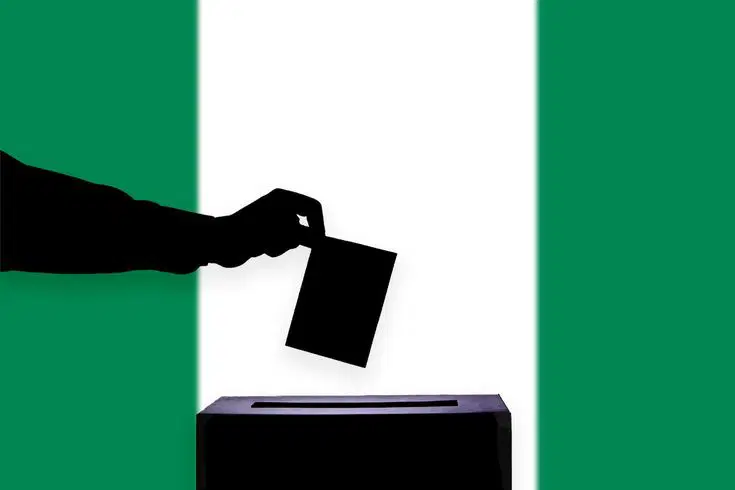
As Nigeria approaches the 2027 general election, the country stands again at a familiar crossroads: the choice between narrow, sectional calculation and the broader national demand for justice, fairness and peace. Elections are not merely contests for power. In a plural society such as Nigeria, they are also referendums on whether citizens believe the state belongs to all of them.
Few Nigerian voices expressed this truth more memorably than the late elder statesman and Dan Masanin Kano, Alhaji Yusuf Maitama Sule. In May 2015, Sule led a delegation of the Northern Leaders Forum to congratulate then President-elect Muhammadu Buhari. His counsel on that occasion remains strikingly relevant today.
Sule told Buhari: “With justice, you can rule Nigeria well. Justice is the key.”
It was a simple statement, but one carrying the weight of Nigeria’s history. The country’s recurrent crises—ethnic suspicion, religious tension, electoral violence, insecurity, economic exclusion and the erosion of public trust—are not disconnected accidents. They are symptoms of a deeper disorder: the feeling among many citizens that fairness is selective, opportunity is unequal and power is used to reward loyalty rather than serve the common good.
Sule understood this. “Behind every crisis anywhere in the world is injustice,” he said. And the antidote, he insisted, is “justice.”
That insight should guide every political party, candidate, campaign organisation and voter ahead of 2027. A nation cannot be held together by slogans alone. Neither can it be governed successfully by force, intimidation or the temporary advantage of incumbency. Sule warned: “The world itself can never be governed by force, never by fear, even never by power. In the end, what governs is the mind. What conquers is the spirit and the weapons of governing the mind and conquering the spirit are justice and fair play.”
Nigeria’s 2027 election will therefore test not only the popularity of candidates, but the moral seriousness of the political class.
Justice, in the sense Sule meant it, is broader than court judgments or legal technicalities. It includes fair representation, equitable distribution of public resources, respect for the rule of law, protection of minorities, credible elections and equal treatment before public institutions.
It means that a farmer in Zamfara, a trader in Onitsha, a teacher in Lagos, a fisherman in Bayelsa and a herder in Sokoto should all be able to expect the state to protect their lives, respect their rights and respond to their needs without discrimination.
Sule put it plainly: “If you do justice to all and sundry — and I say all and sundry — because Allah says, ‘If you are going to judge between two people, do justice irrespective of the tribe, religion or even political inclination; justice must be done to whosoever deserves it.’”
That standard is demanding. It rejects the politics of “our turn” when it becomes a cover for exclusion. It also rejects the politics of revenge, where one group’s victory is treated as another group’s defeat. Nigeria needs leaders who can rise above such thinking.
The late Dan Masanin Kano was equally clear that justice must not be selective. “I am not asking you — and I know you will not — to discriminate against any part of Nigeria,” he told Buhari. “But I am asking you to do justice to all parts of Nigeria.”
For political parties preparing for 2027, fairness must begin before the first ballot is cast. It must be visible in candidate selection, zoning arrangements, internal party democracy, campaign financing and the treatment of aspirants.
When parties manipulate primaries, impose candidates, marginalise women and young people, or allow money to determine nomination, they weaken the legitimacy of the eventual winner. A flawed process produces a fragile mandate. And a fragile mandate makes governing harder, especially in a country where citizens are already sceptical of political promises.
Fairness also requires issue-based campaigns. Nigeria’s problems are real: insecurity, unemployment, inflation, poor infrastructure, weak public services, climate pressure on agriculture and widespread poverty. These challenges do not respect ethnicity or religion. Candidates should therefore be judged on their plans to secure communities, create jobs, reform institutions, expand opportunities and restore public confidence.
A campaign built on fear, sectional resentment or religious division may win attention, but it cannot build a nation. Sule’s warning remains urgent: force, fear and power cannot govern the mind or conquer the spirit. Only justice and fair play can.
Sule linked justice directly to peace and development. “Justice will bring about peace,” he said. “Peace and stability are the pre-requisites of development.”
No society develops sustainably in an atmosphere of fear. Investors hesitate where contracts are uncertain and violence is common. Farmers abandon land where insecurity prevails. Young people lose hope where merit is ignored and corruption rewards the connected. Communities retreat into distrust when they believe the state protects some citizens more than others.
Peace is not merely the absence of gunfire. It is the presence of confidence: confidence that elections will count, that courts will be impartial, that public offices will serve the public, and that no region, faith or class will be permanently shut out of opportunity.
The 2027 election offers Nigeria a chance to rebuild that confidence. But it will require more than campaign rhetoric. It will require electoral institutions that are visibly independent, security agencies that act professionally, political actors who accept results peacefully, and citizens who refuse to be used as instruments of violence.
Nigeria does not lack talent, resources or ideas. What it often lacks is the disciplined commitment to justice that turns diversity into strength rather than division. Maitama Sule’s message was not addressed to one president alone. It was addressed to every Nigerian leader, in every generation, and to every citizen who hopes for a better country.
As 2027 approaches, voters should ask hard questions: Which candidate will uphold the rule of law even when it is inconvenient? Which party will distribute opportunity fairly? Which leader will govern for all Nigerians, not merely for those who funded a campaign or share a regional identity?
The answer should not be based on sentiment, ethnicity or fear. It should be based on justice.
Sule’s counsel remains a compass: “With justice, you can rule Nigeria well. Justice is the key.” If Nigeria’s political class embraces that key, the 2027 election can become more than another contest for office. It can become a renewal of the national promise—a step towards a country at peace with itself, fair to all its people, and capable at last of fulfilling its vast potential.