The Federal Government plans to submit the 2027 budget proposal to the National Assembly in September in an attempt to advance the budget cycle amid persistent implementation challenges and overlapping fiscal years.
The plan is contained in the Federal Government of Nigeria 2027 Personnel Costs Budget Call Circular dated September 4, 2026 and signed by the Director-General of the Budget Office of the Federation, Tanimu Yakubu.
The document, obtained by The PUNCH on Sunday from the website of the Budget Office of the Federation, provides guidelines for ministries, departments and agencies preparing and submitting their personnel cost proposals for the 2027 fiscal year.
The Budget Office disclosed that the draft 2027-2029 Medium-Term Expenditure Framework and Fiscal Strategy Paper had been concluded since July to facilitate the early presentation of the spending plan.
“As you are aware, the 2027-2029 draft Medium-Term Expenditure Framework and Fiscal Strategy Paper was concluded by July 2026 in line with the Fiscal Responsibility Act 2007 to facilitate the submission of 2027 Budget to the National Assembly by September 2026,” the Budget Office said.
Although the circular did not provide a specific presentation date, the timetable indicates that the government intends to send the spending plan to lawmakers about three months before the beginning of the 2027 fiscal year.
Nigeria’s budgets have faced persistent implementation challenges, with overlapping fiscal cycles becoming a recurring feature since 2024.
The Federal Government earlier partly blamed budget underperformance on conflicting macroeconomic projections by agencies responsible for fiscal and monetary policy, prompting the Economic Management Team to establish a committee to harmonise key assumptions used for budgeting and economic planning.
Following findings from a joint budget retreat and technical validation workshop, the government said differences in projections for crude oil prices and production, exchange rates, inflation and non-oil revenues had created inconsistencies in budget planning and contributed to actual fiscal outcomes falling short of expectations.
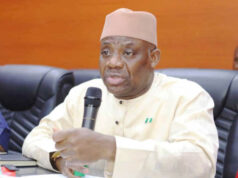
The Minister of Finance and Coordinating Minister of the Economy, Taiwo Oyedele, said harmonising the assumptions should reduce discrepancies between budget expectations and actual economic outcomes.
Ahead of the September target, the Budget Office has fixed 4pm on Friday, September 18, 2026, as the deadline for MDAs to submit hard and soft copies of their 2027 personnel budget proposals and accompanying information.
The circular also introduced a new requirement compelling MDAs to submit the laws establishing them alongside their budget proposals, following the controversy over the inclusion of a fake agency in the 2026 budget.
The Budget Office said, “To further strengthen the budget preparation process and mitigate against any entry of unestablished agencies in the FGN Budget, it has become compulsory for MDAs to submit budget proposals along with their respective Establishment Acts as failure to do so, may lead to rejection.”
The directive follows the fake agency scandal involving the Presidential Foreign Intervention Promotion Council, which was allocated about N1.3bn in the 2026 budget despite questions about its legal existence.
The House of Representatives launched an investigation into the matter and moved to verify agencies contained in recent federal budgets against the laws establishing them.
The controversy also prompted President Bola Tinubu to order a forensic investigation into government processes and internal controls surrounding the inclusion of questionable agencies in the budget.
The Independent Corrupt Practices and Other Related Offences Commission subsequently uncovered two additional fake government agencies linked to Adeniyi Adeyemi, the self-proclaimed Director-General of the PFIPC, as investigations into the alleged fraud deepened.
While briefing State House correspondents after presenting the commission’s interim investigation report to Tinubu at the Presidential Villa, Abuja, ICPC Chairman, Dr Musa Aliyu, said investigators established that Adeyemi was never appointed by the Federal Government.
The commission also found that the PFIPC had no legal backing, having neither been established by an Act of the National Assembly nor an executive order.
According to the interim findings, the appointment letter used by Adeyemi was forged, while the fake PFIPC unlawfully took over the offices and official instruments previously used by the defunct Presidential Economic Advisory Council.
The ICPC recommended the prosecution of Adeyemi, disciplinary action against public officials alleged to have aided the operation of the fake agency, and reforms to strengthen internal controls across government institutions.